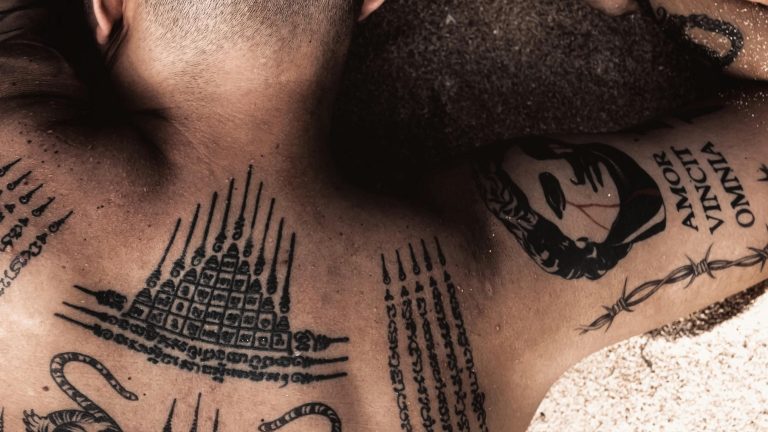
Most workplaces have loosened up on visible ink, but plenty have not. If you are walking into an interview, starting a new job, or working in an environment with a visible tattoo policy, knowing how to cover your tattoo for work efficiently matters. The goal is to look put together, not to look like you are hiding something.
How to Cover a Tattoo for Work
Covering a tattoo for work comes down to two things: placement and how much coverage the situation requires. Clothing handles most placements cleanly and is always the first option to reach for. Makeup fills the gap where clothing cannot. The sections below break it down by where the ink sits.
Arm & Sleeve Tattoos
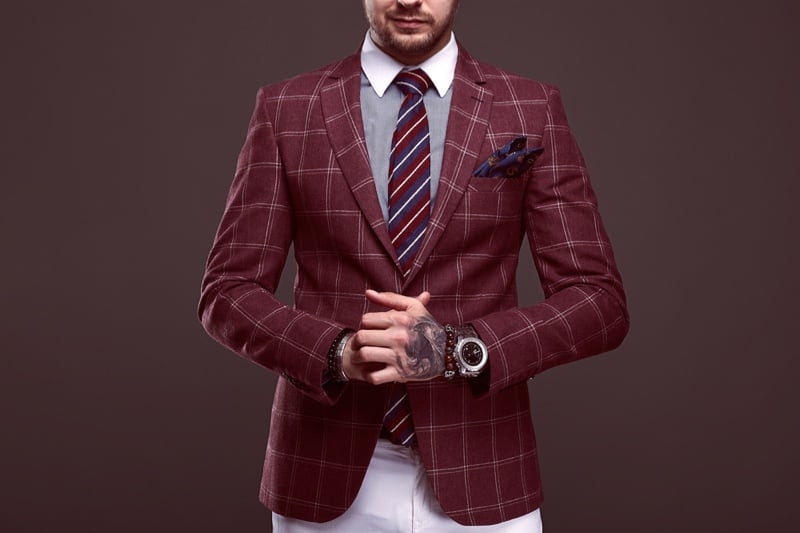
Clothing is your easiest option for arm tattoos. A long-sleeve shirt handles most forearm and wrist ink without any extra effort. If the sleeves on your dress shirts run short or roll up, a blazer or sport coat over the top fills the gap and looks sharper anyway. For a full sleeve, a fitted long-sleeve base layer under a button-down keeps everything covered without adding bulk.
Cover-up sleeves are another option. They come in a range of skin tone shades, are made of nylon-spandex so they stay in place, and are thin enough to wear under a shirt without showing. They get the job done, but they are a backup option. A well-fitted long-sleeve shirt or lightweight jacket looks significantly more professional and does not require any explanation if it shifts.
Hand & Wrist Tattoos
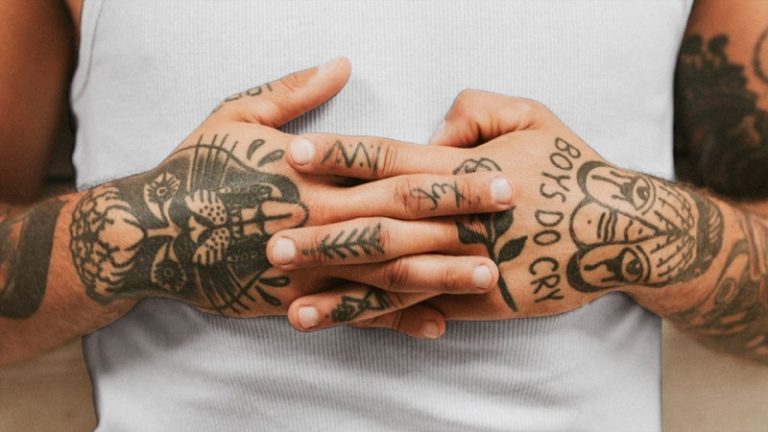
Wrist and hand placements are harder to conceal with clothing alone. This is where tattoo cover-up makeup comes in. Full-coverage products formulated for tattoos, like Dermablend or KVD Good Apple, can effectively hide even saturated ink. The process takes time to do properly: color correct if needed, build coverage in thin layers, and set with a translucent powder to keep it in place through a full workday.
Do not apply makeup to a tattoo that is still healing. Wait until the skin has fully settled, which takes a minimum of three weeks on the surface and closer to three months for the deeper layers. If you are sweating or working in a humid environment, touch-ups are part of the deal.
Neck Tattoos
A neck tattoo in a conservative work environment is one of the trickier situations. For ink on the back of the neck, longer hair covers it without any visible effort. For the sides or front of the neck, a turtleneck is the most reliable option and looks clean in a professional setting. A high-collar button-down gets you part of the way there on lower neck placements.
Makeup works here too, though the neck moves a lot and coverage can shift through the day. If you go this route, use a setting spray on top to extend wear. Silk scarves get mentioned in a lot of cover-up guides, but they tend to read as a deliberate addition rather than a natural part of a work outfit for most men. A turtleneck or collared shirt is a cleaner solve.
Ankle & Lower Leg Tattoos
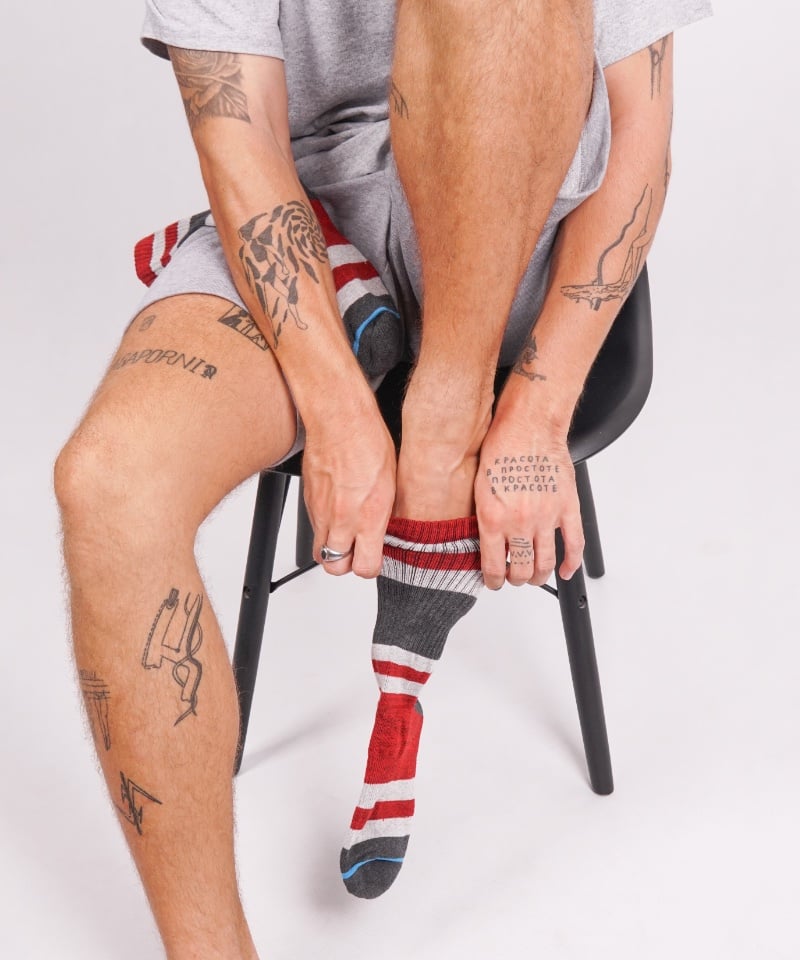
Ankle tattoos are easy to cover with trousers that sit at the right length. The issue is when pants ride up during the day. Longer socks worn over the tattoo solve that without requiring anything else to change about what you are wearing. Crew-length or over-the-calf dress socks keep the area covered through a full day of sitting, walking, and moving.
High-top footwear covers the ankle but tends to read as too casual in most professional environments unless your workplace is relaxed about footwear. Stick with the sock solution for formal or client-facing settings.
Back & Torso Tattoos
Back and torso tattoos rarely need any special effort to cover. A standard shirt handles them. The situation where they become an issue is when your shirt rides up, which is more common with untucked shirts and certain seated positions. Tucking your shirt in eliminates the problem entirely. For lower back tattoos specifically, make sure your shirt has enough length that it stays put when you sit down or reach across a desk.
Common Mistakes
Reaching for cover-up makeup when clothing would do the job is the most common one. Makeup takes time, requires upkeep through the day, and can transfer. If a long-sleeve shirt or a blazer handles the placement cleanly, use that instead.
Wearing cover-up sleeves without anything over them reads as unusual in most professional environments. Treat them as an underlayer, not a standalone solution.
Waiting until the morning of an interview to figure out your cover strategy is where people run into trouble. Test whatever method you are planning well in advance so you know how it holds up and whether you need to adjust anything.
Frequently Asked Questions
How do you cover a tattoo for work? The approach depends on placement. Arm and leg tattoos are best covered with clothing: long sleeves, trousers, and dress socks handle most situations cleanly. Hand, wrist, and neck tattoos that cannot be covered with clothing require full-coverage tattoo makeup, applied in thin layers and set with powder to last through the workday.
Can an employer make you cover your tattoos? Yes. Employers can include tattoo coverage in their dress code policies, particularly in client-facing, formal, or public-sector roles. They cannot prevent you from having tattoos, but they can set requirements around visibility during work hours. Policies vary widely by industry, so check the specific guidelines for your workplace.
What makeup covers tattoos for work? Full-coverage products formulated for tattoos hold up significantly better than standard concealer. Dermablend Leg and Body Makeup and KVD Good Apple Full-Coverage Foundation are two options that provide dense coverage without cracking through the day. Apply in thin layers, color correct first if the ink is dark or colorful, and lock it in with a translucent setting powder.
Should you cover tattoos for a job interview? If you do not know the company’s policy, cover them. It is easier to show ink once you have the job and understand the culture than to make assumptions going into an interview. Industries like finance, law, healthcare, and education tend to have stricter visible tattoo policies than creative fields or startups.
Do cover-up sleeves work for professional settings? They work for coverage but they are not a polished look on their own. Wear them under a long-sleeve shirt or beneath a blazer rather than as a standalone option. They are a useful backup when your clothing options are limited, not a replacement for a well-fitted long-sleeve outfit.