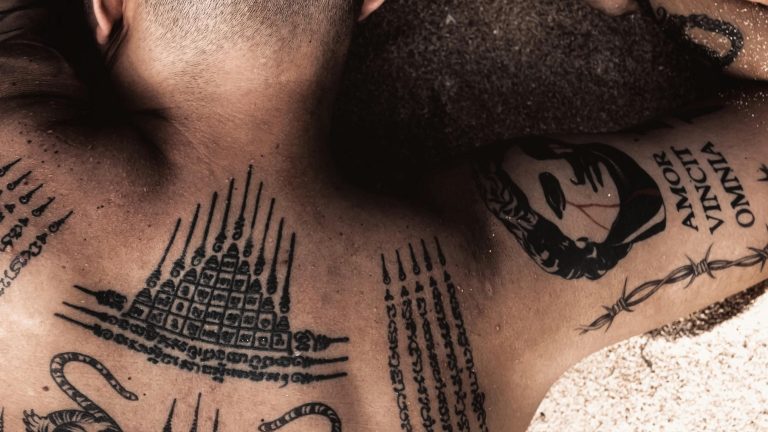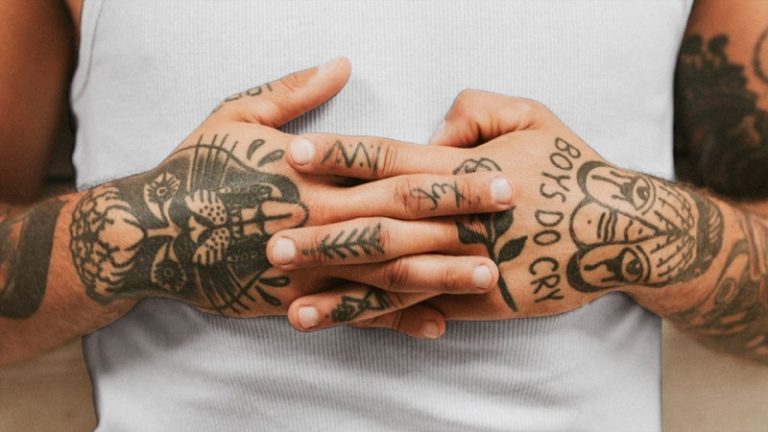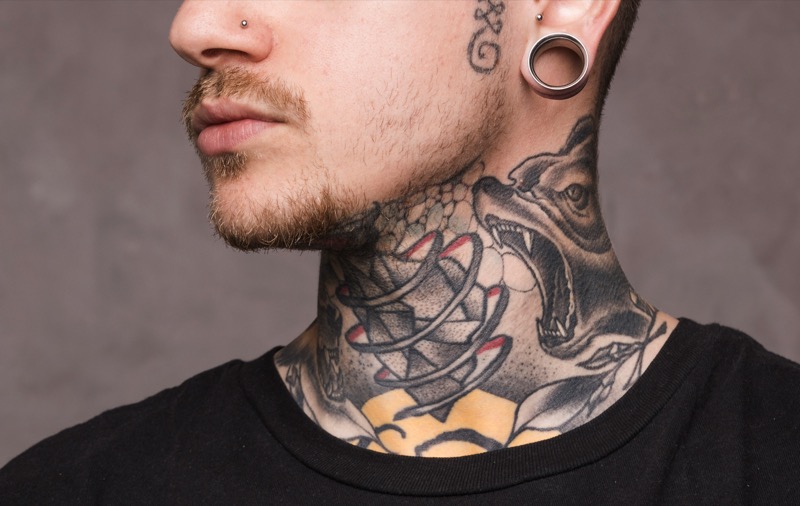
The neck is one of the most visible spots on your body, and that visibility is the whole point. Neck tattoos for men are a commitment that goes past the design itself. Every shirt collar frames it. Every conversation puts it on display. That makes the choice of what goes there matter in a way most placements do not.
What works on the neck depends on the specific area you are working with. The side offers a flat canvas for vertical or flowing designs. The front sits over the throat, where the skin is thin and the stakes are high. The back of the neck gives you a spot that shows when you want it to and hides under a collar when you do not. Each zone has its own pain threshold, its own aging patterns, and its own best-fit styles.
This is a breakdown of the designs that actually work on the neck, organized by placement and style, with honest context about what to expect before you book.
Neck Tattoo Ideas by Placement
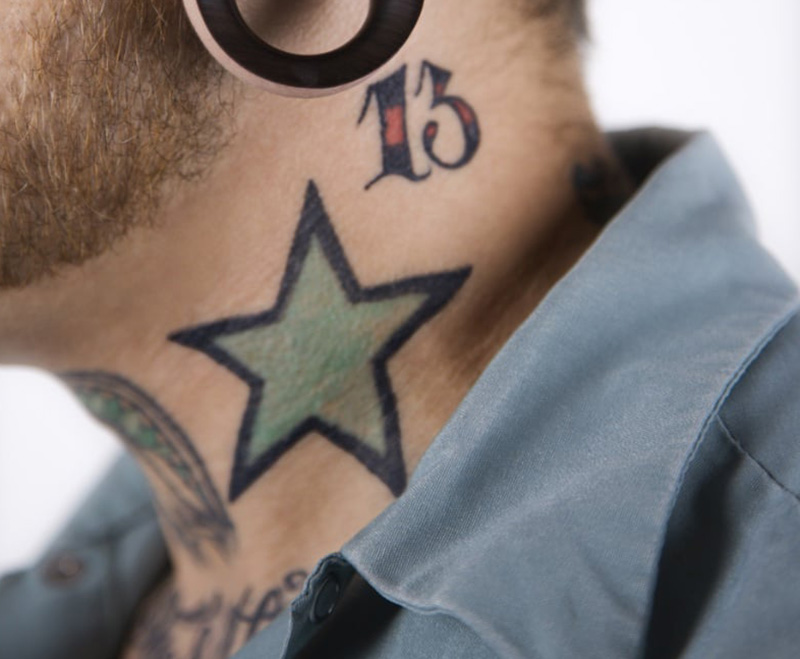
Where you put it shapes how the design works. A wolf that looks fierce on the side of your neck might lose its proportions on the back. A small script that hits perfectly below the ear could disappear on the front of the throat. Placement and design are not separate decisions. They are the same decision.
Side Neck Tattoos
The side of the neck is where most guys start when they are thinking about neck ink, and it is the most forgiving spot for a first neck piece. The surface is relatively flat compared to the throat, and the natural line from jaw to collarbone gives artists a clear direction to work with.
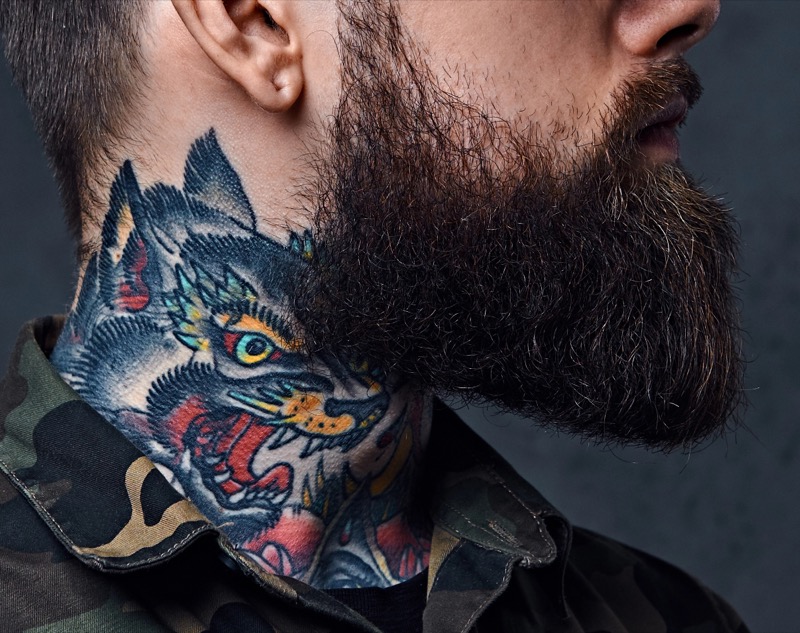
A wolf tattoo on the side of the neck taps into something primal. The image works because the side panel gives enough room for a detailed profile, a howling silhouette, or a snarling close-up with teeth showing. Pair it with forest elements or tribal markings, and the wolf becomes a full narrative piece that fills the space from earlobe to shoulder.
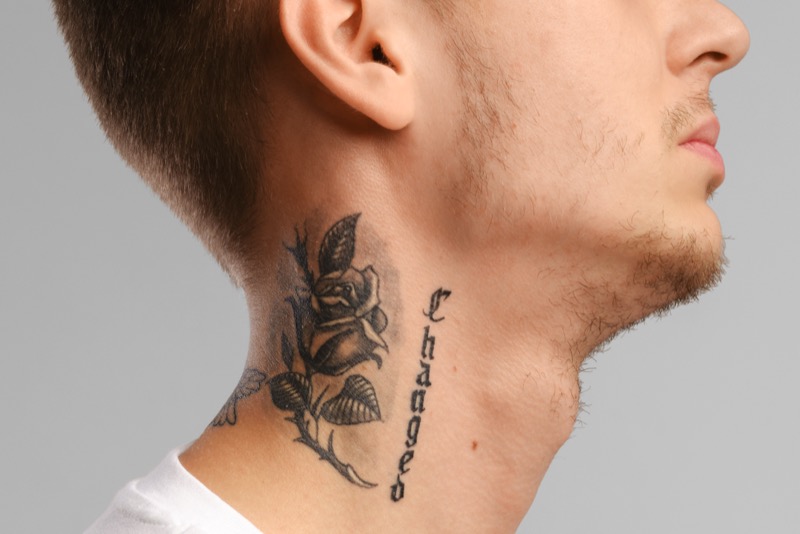
A rose neck tattoo is one of the most popular side neck choices for a reason. A single rose with visible thorn detail and shading reads well on the side because the stem can follow the natural curve of the neck. Color adds another layer. A deep red rose with black shading on the petals holds its contrast over time. An all-black rose with heavy stippling takes on a different mood entirely.
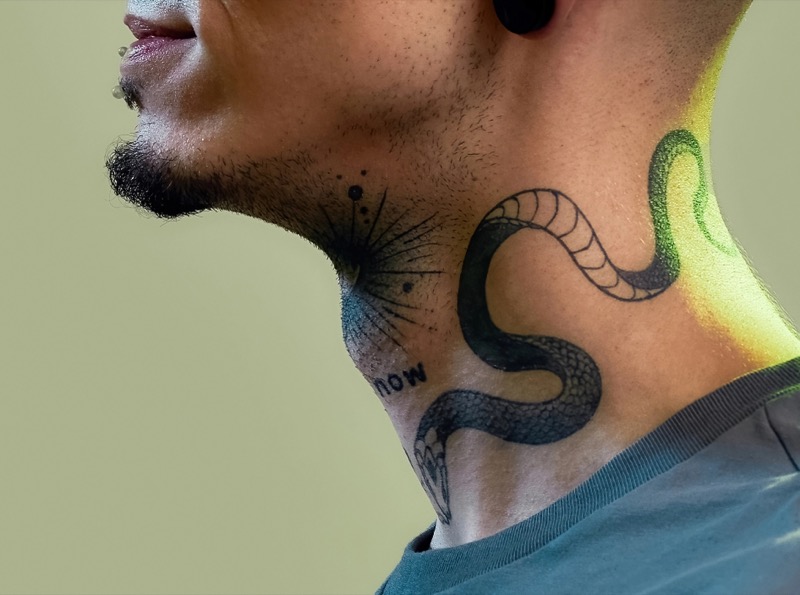
The snake neck tattoo is practically made for this spot. The coiled, curving body of a snake follows the neck’s shape in a way few other designs can. Realistic scales, a darting tongue, and a head positioned near the jaw create a tattoo that looks like it belongs on the body rather than sitting on top of it. A snake wrapped around a dagger or nestled through a bed of flowers adds visual complexity and takes advantage of the full vertical space.
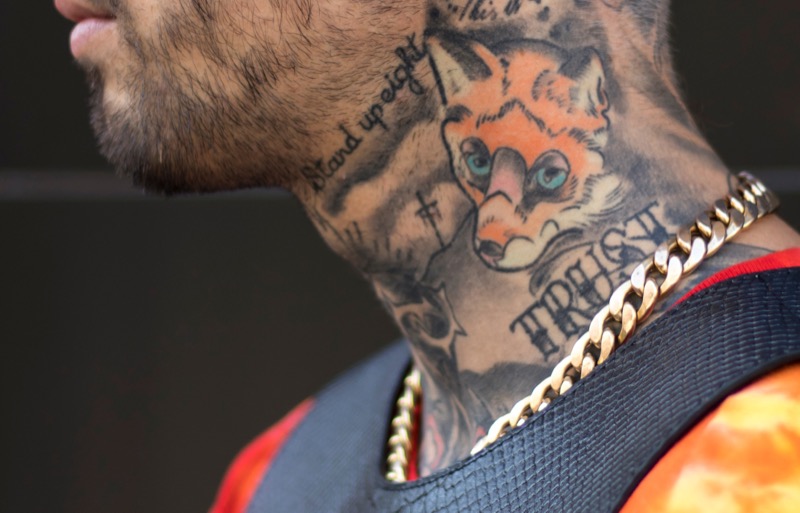
A fox on the side neck captures intelligence and adaptability in a design that can run from playful to dead serious depending on the style. Realistic renderings with piercing eyes work well for guys who want a portrait feel. A stylized, geometric fox head gives you something bolder and more graphic.
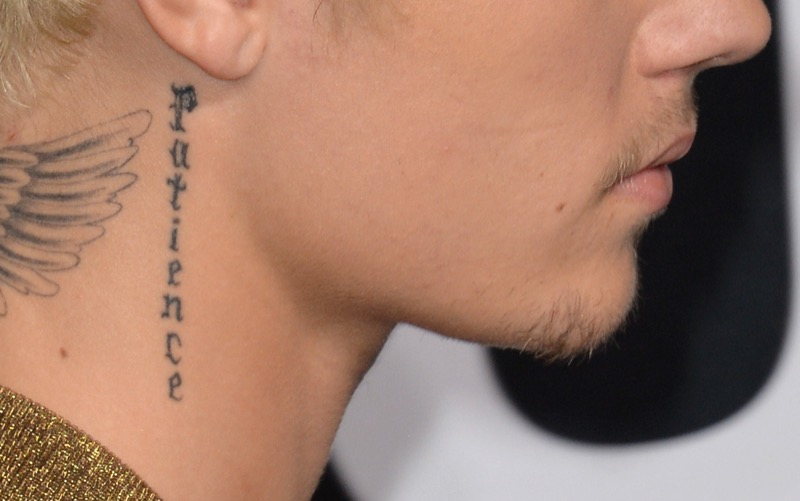
For guys who want something text-based, a neck lettering tattoo on the side creates a clean vertical line that follows the sternocleidomastoid muscle. One word hits hard. A short phrase can wrap the contour. Script choice matters here. Gothic or blackletter fonts hold up at the scale the side neck demands. Fine cursive can blur over time if the lines are too thin.
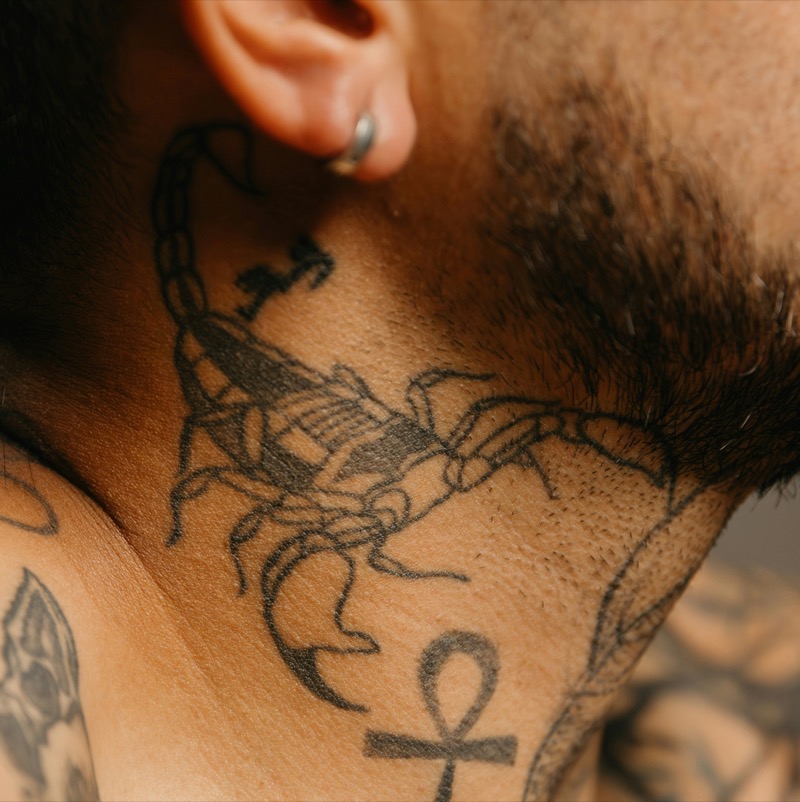
The scorpion neck tattoo is another strong side neck pick. The scorpion’s compact body and curved tail fit the anatomy well, and the symbolism (protection, intensity, danger) lines up with the boldness of the placement itself.
Front Neck Tattoos for Men
The front of the neck is where neck tattoos stop being subtle. A throat piece is fully visible in every interaction, and the skin over the trachea and Adam’s apple is among the thinnest and most sensitive on the body. This is a spot that demands commitment to both the design and the discomfort.
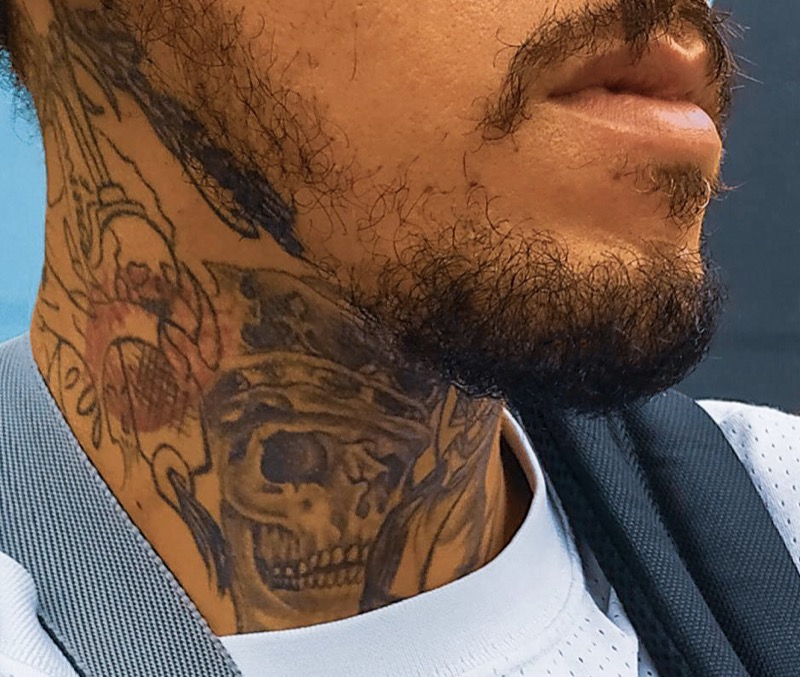
A skull on the front of the neck is a classic choice that has never gone out of rotation. The skull’s symmetry works well centered on the throat, and the style range is massive. Realistic with shading and depth. Stylized with bold outlines. A sugar skull neck tattoo with ornamental detail and floral accents pulls from Día de los Muertos imagery and creates something vibrant even in black and grey.
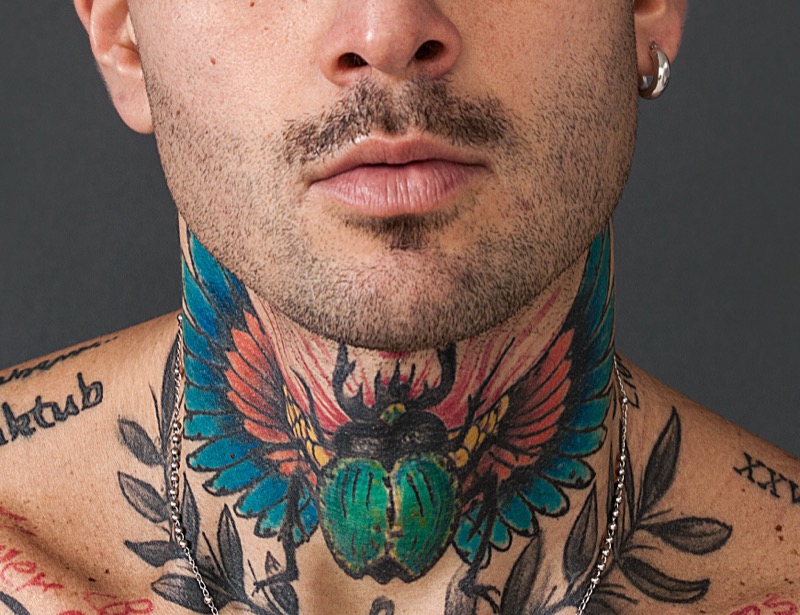
A scarab centered on the throat draws from Egyptian symbolism (regeneration, creation, the cycle of life) and translates well to this placement because of its symmetrical form. The beetle’s wings can spread across the collarbones, and the central body sits naturally on the midline.
The hannya mask neck tattoo is a strong throat piece for anyone drawn to Japanese tattoo traditions. The mask’s wide mouth and horns fill the front neck area, and the expression (a mix of rage and sorrow) creates a tattoo that shifts depending on the angle you see it from. In skilled hands, the hannya’s layered symbolism (jealousy transforming into something fiercer) makes it one of the most compelling front neck designs.
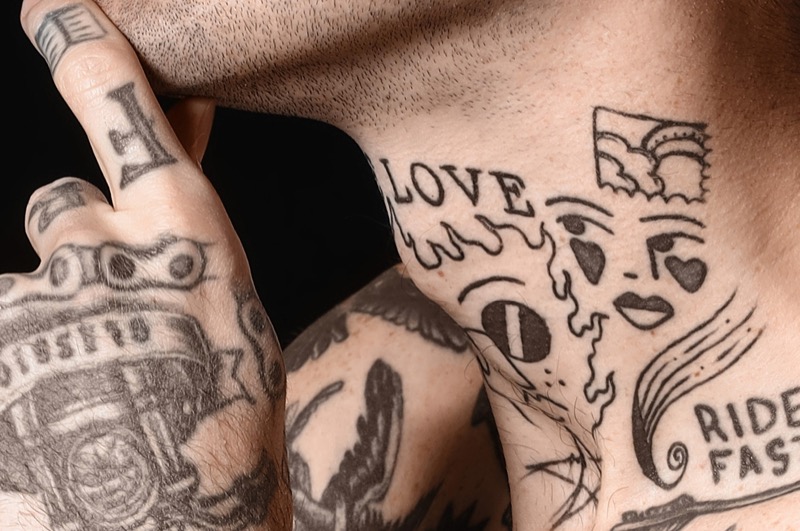
A full collage approach turns the entire front of the neck into a patchwork of images, symbols, and textures. This works when you have an artist who can balance the spacing and scale across an irregular surface. The result is a neck piece that tells a bigger story than any single design could.
Back of Neck Tattoos
The back of the neck is the most discreet neck placement. A collar hides it. Hair covers it. But when it shows, it shows. This spot works best for designs that are self-contained and symmetrical.
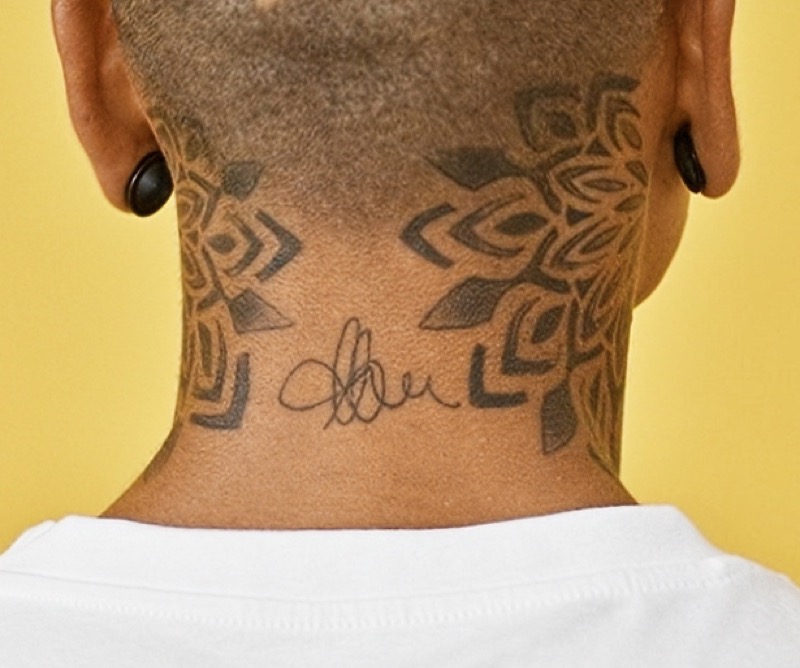
A mandala is the most natural fit for the back of the neck. The circular geometry of a mandala sits centered on the spine and radiates outward in a way that uses the space efficiently. A blackwork mandala neck tattoo with dense fill creates a bold focal point. A geometric mandala neck tattoo with fine lines and open space takes a lighter approach that shows off the symmetry of the pattern.
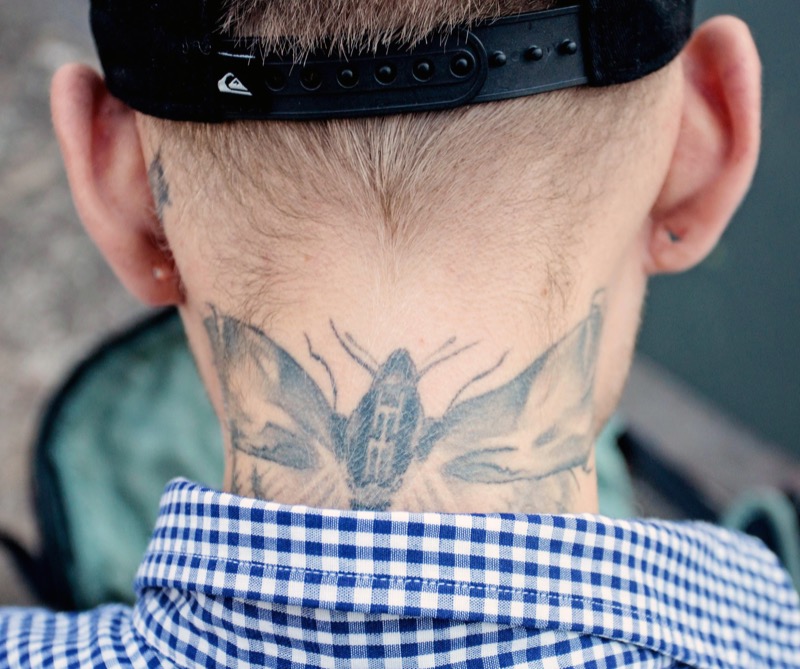
A moth or butterfly centered on the back of the neck represents transformation, and the symmetrical wings sit naturally across the trapezius muscles. The design can go realistic with color and detail, or abstract with geometric elements breaking up the wing structure.
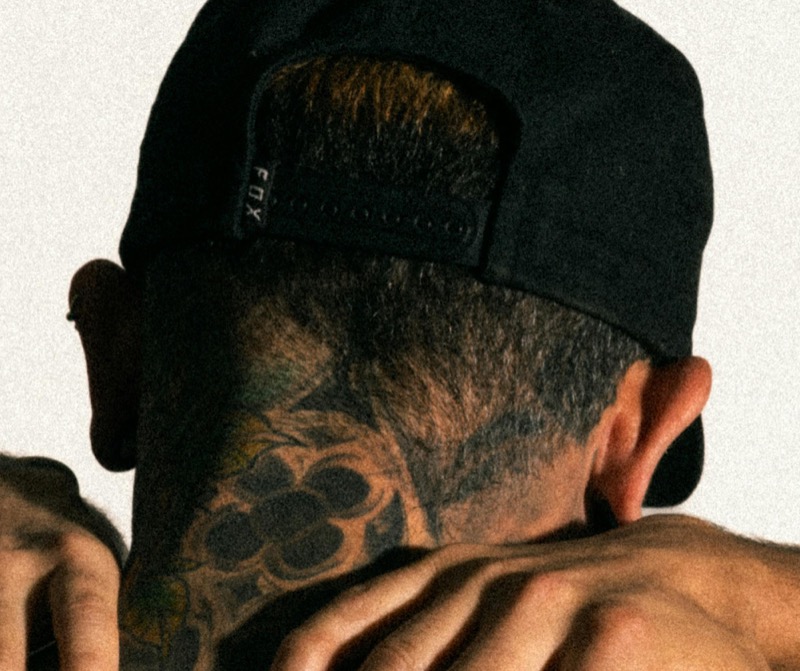
Negative space designs work well here too. By using untouched skin as part of the image, a back of the neck tattoo can create an optical effect that makes people look twice. Silhouettes, inverted imagery, and cutaway designs all take advantage of this technique.
Full Neck Tattoos
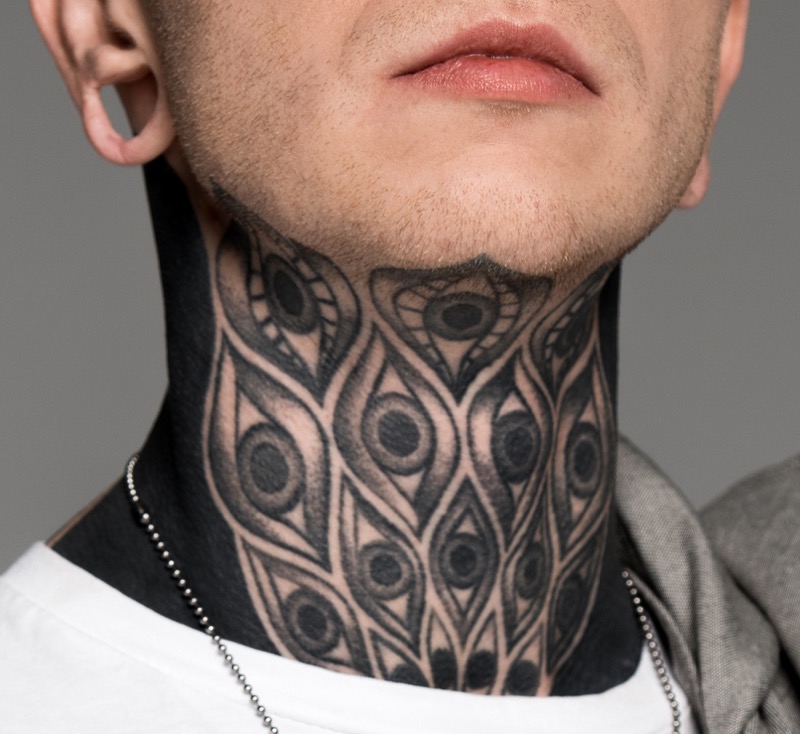
Full neck tattoos for men are not a collection of smaller pieces. They are a single composition that treats the entire neck as one surface, from the collarbone to the jawline.
The best full neck work plans for every angle. The front, the sides, and the back all need to connect in a way that flows with the body’s movement. Roses wrapping into script, blackwork patterns meeting figurative imagery, or a single motif (like a dragon or a phoenix neck tattoo) that coils around the entire circumference.
This level of coverage requires multiple sessions and an artist who specializes in large-scale work. Healing happens in stages, and the neck’s constant movement means aftercare has to be airtight. Expect swelling, limited range of motion for the first few days, and a longer overall healing timeline than most other placements.
Small Neck Tattoos
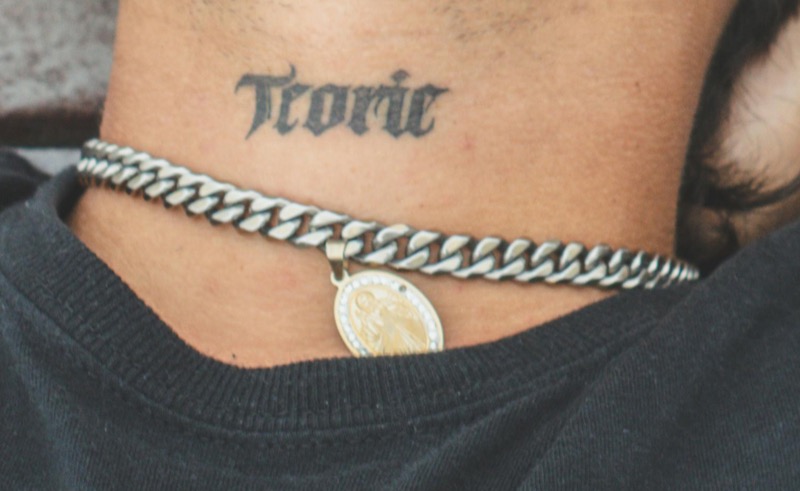
Small neck tattoos for men prove that size and impact are two different things. A single word in a compact font behind the ear or just below the hairline can say everything a full piece does, just in fewer strokes.
Small designs use clean lines and precise placement to work with the neck’s natural curves. A tiny cross, a set of initials, a Roman numeral. These are tattoos that show restraint and still command attention. The key is working with an artist who understands how small lines age on skin that moves and stretches as much as the neck does. Too fine, and the lines blur within a few years.
Throat Tattoos for Men
Throat tattoos sit right over the windpipe and are some of the most painful neck tattoos you can get. The skin is thin, the bone is close, and the area moves every time you swallow or speak.
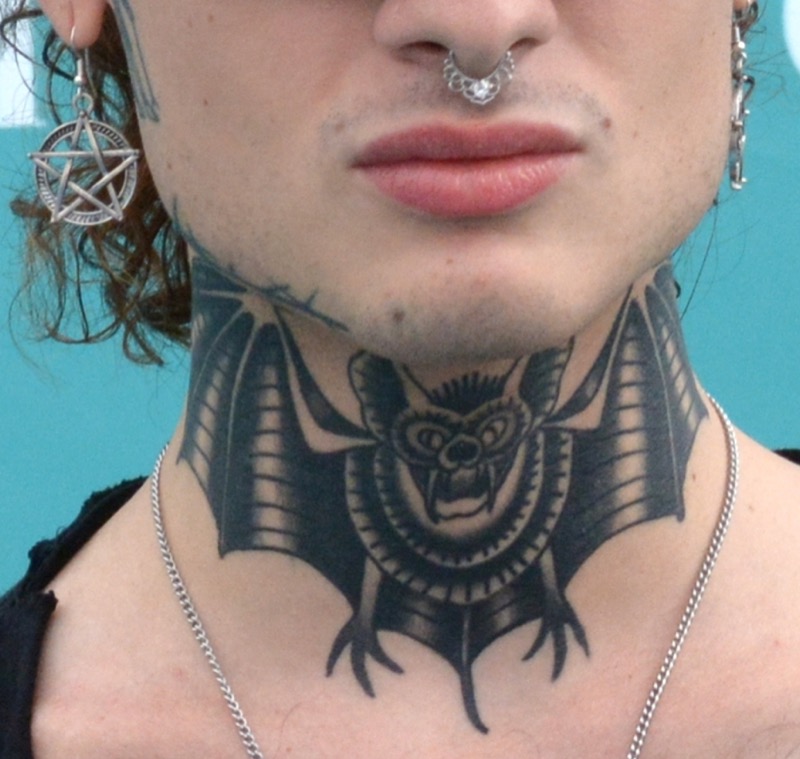
A bat tattoo spread across the throat uses the flat area between the collarbones as a stage, with wings extending outward. The bat’s association with night and transformation gives it a presence that matches the boldness of the placement.
A heart dagger snake neck tattoo (a heart pierced by a dagger with a snake wrapping around both) is a traditional design that has held up across decades of tattoo culture. Centered on the throat, the layered symbolism of passion, danger, and resilience creates a piece that is both classic and personal.
Vertical text running down the center of the throat is another strong option. A single word or a short phrase, arranged along the midline, follows the body’s natural architecture. Font weight matters. Thin scripts can get lost on the throat. Bold, blocky lettering holds.
Neck Tattoos for Black Men
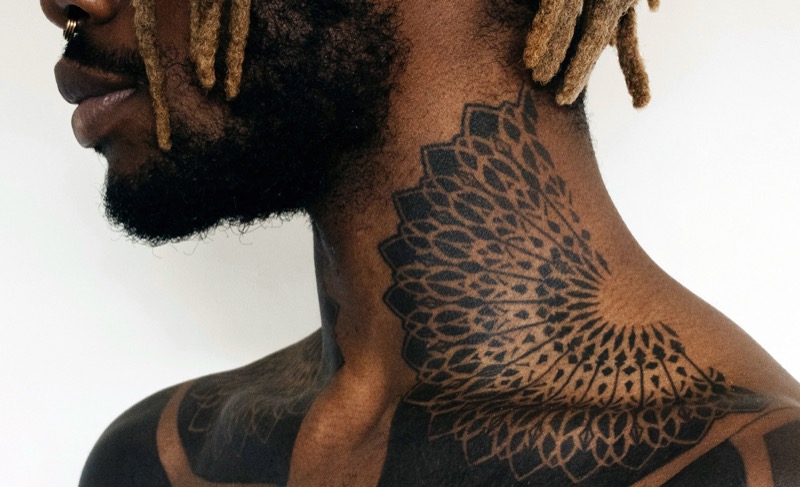
On darker skin, black ink shows up strong and holds its density over time. Dense pigment creates tattoo work that keeps its presence years after the session. This makes blackwork, bold linework, and heavy stippling especially effective on the neck.
Soft lines with low saturation tend to fade into the skin, taking on a washed-out quality. If you want definition and longevity, ask your artist to pack the ink with confidence and keep the linework decisive.
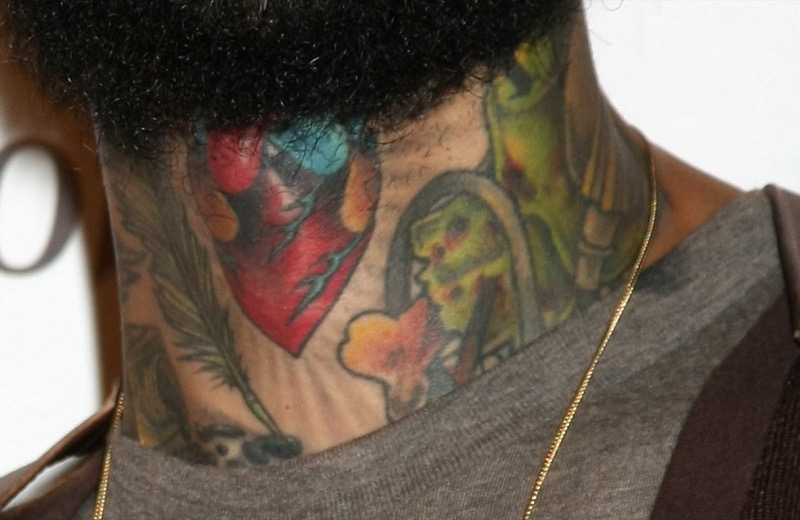
Color adds another dimension. Bright reds and yellows fade faster on all skin tones, but they lose their punch sooner on deeper complexions. Rich jewel tones (emerald, sapphire, deep purple) work with the skin’s natural warmth and hold their vibrancy longer. If you want color in a neck piece, these are the shades worth considering.
A lady head neck tattoo in a traditional American style, with heavy black outlines and jewel-tone fills, is a design that translates well to deeper skin. The bold lines keep the image from losing its shape, and the saturated color palette complements rather than fights the skin underneath.
Is Getting a Neck Tattoo Painful?
Yes. Getting a neck tattoo is painful. The neck is one of the more intense spots on the body. The skin is thin, nerve endings are packed close together, and bone sits right beneath the surface in certain areas. The front of the throat, where the skin stretches over cartilage, is the worst of it. Most guys describe it as a sharp, hot sting that does not let up during the session.
The sides are a step down from the throat but still hit harder than most arm or leg placements. The back of the neck is the tamest of the three zones, though “tame” is relative when you are talking about needles on your neck.
Here is the practical advice: eat before your session, stay hydrated, and skip the caffeine. Tensing up makes everything worse. Controlled breathing helps. And if your artist offers a break, take it. There is no trophy for sitting through two hours of neck work without stopping.
How Neck Tattoos Age
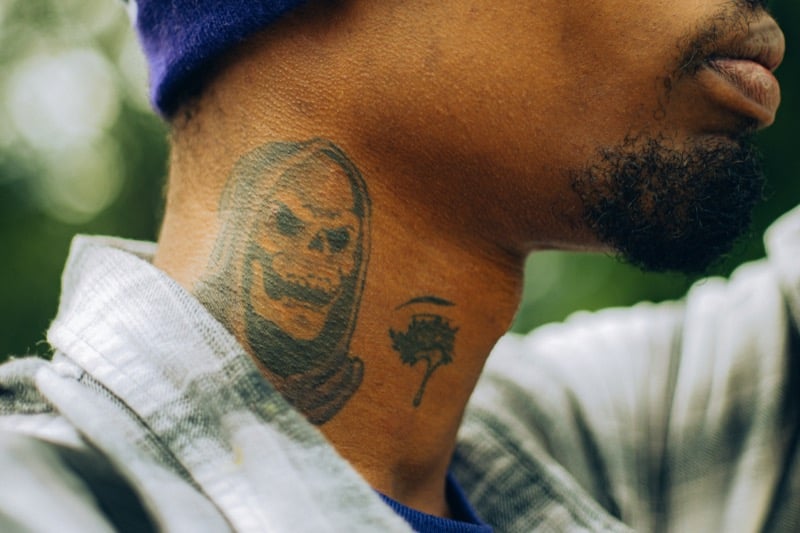
Sun exposure is the biggest threat. The neck catches UV from every angle unless you are wearing a high-collar shirt, and UV breaks down ink pigments faster than almost anything else. Daily sunscreen on a healed neck tattoo is not optional if you want the lines to stay clean.
Fine lines blur first. Bold lines hold longer. Black ink ages better than color across the board. If your design relies on small details or tight spacing between lines, expect those elements to soften within a few years. Touch-ups are normal and should be part of your long-term plan.
The constant motion of the neck (turning, stretching, swallowing) puts stress on the ink that static placements like the upper arm do not deal with. This is another reason bold, clean designs tend to outlast intricate ones in this location.
Healing & Aftercare
Neck tattoos heal in roughly two to four weeks, though full settling can take longer. The first few days involve swelling, redness, and tenderness. Sleeping will be uncomfortable because every pillow position puts pressure on fresh ink. Sleep on your back if you can, and use a clean pillowcase every night.
Keep the tattoo clean with unscented soap and lukewarm water. Apply a thin layer of unscented moisturizer or the aftercare product your artist recommends. Do not over-apply. A wet, suffocated tattoo is a breeding ground for problems.
Avoid direct sun, submerging in water (pools, hot tubs, baths), and high-collar clothing that rubs against the healing area. The neck’s constant exposure to air actually helps it heal, so do not cover it with bandages past the first day unless your artist tells you otherwise.
Bonus Picks
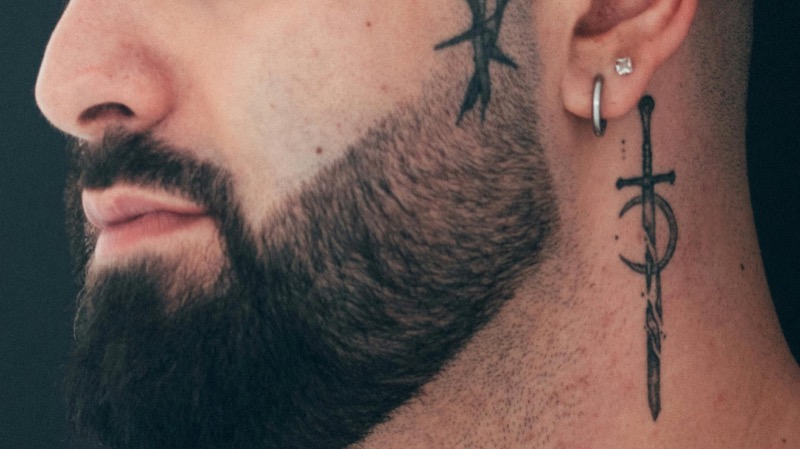
A coffin neck tattoo on the side or behind the ear adds a dark, gothic element in a small footprint. A dagger and crescent moon neck tattoo blends sharp edges with celestial imagery, and the vertical shape of the dagger makes it a natural fit for the side of the neck.
Frequently Asked Questions
What is the best neck tattoo placement for a first timer? The back of the neck is the most forgiving starting point. Pain is lower compared to the throat or sides, and the design sits hidden under a collar for professional settings. It also heals with fewer complications because clothing contact is minimal. For men who want something visible but still manageable, the side of the neck below the ear is another strong option.
How much do neck tattoos cost? Neck tattoos typically run higher than similar-sized pieces on the arm or leg. The placement requires extra precision, and many artists charge a premium for visible, technically demanding areas. Expect to pay anywhere from $150 for a small, simple design to $500 or above for detailed work that covers a significant portion of the neck. Custom designs and multiple sessions push the price further.
How do you choose the right neck tattoo design? Start with placement. The area you want to cover determines the shape, orientation, and level of detail that will work. Side neck designs favor vertical or flowing compositions. Throat pieces need symmetry. Back of the neck work benefits from self-contained shapes. Once you know the zone, narrow your style (blackwork, traditional, realism, geometric) and bring reference images to a consultation so your artist can adapt the idea to your anatomy.
Are neck tattoos acceptable in professional settings? That depends entirely on your industry and workplace. Creative fields, trades, and self-employment tend to be open to visible ink. Corporate environments, client-facing roles, and certain public sector jobs may view neck tattoos differently. The back of the neck and lower side neck are easier to cover with a collared shirt. Throat and front neck tattoos are visible in nearly every setting.
What styles hold up best on the neck? Bold blackwork, traditional American, and heavy linework age best on the neck because the thick lines resist blurring. Fine-line and micro-detail designs look sharp initially but tend to soften faster due to the neck’s movement and sun exposure. If longevity matters to you, lean toward designs with strong outlines and solid fill over delicate, intricate patterns.
How long does a neck tattoo session take? A small, simple neck tattoo (a word, a symbol, a small icon) takes 30 minutes to an hour. Medium pieces with shading and detail run one to three hours. Full neck coverage can require multiple sessions of two to four hours each, spaced several weeks apart for healing between rounds.