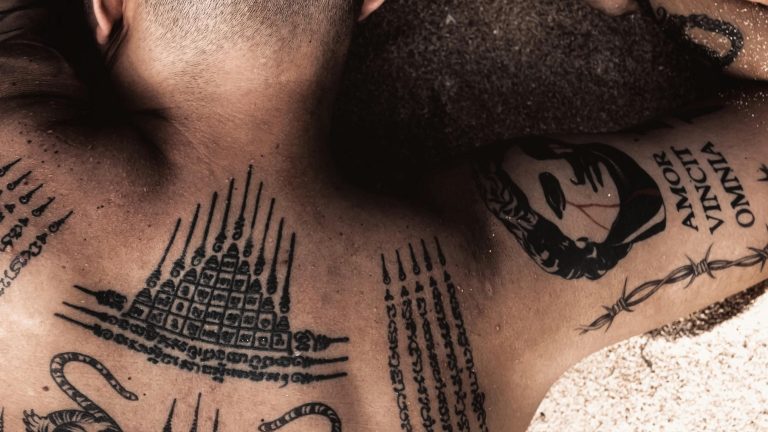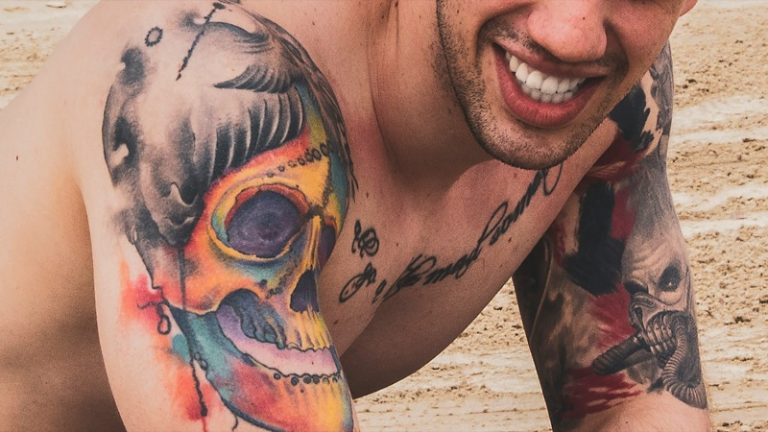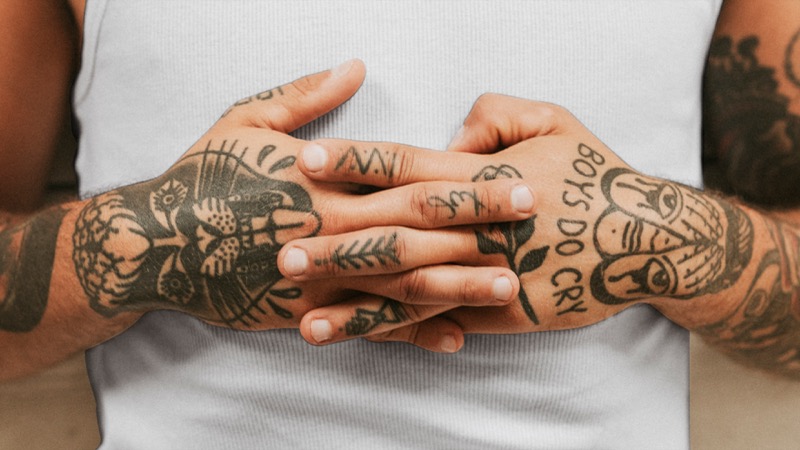
The hand is the one placement that stays visible every hour of every day. Every handshake, every gesture, every time you reach for a coffee in a meeting, it is right there. That visibility is the entire point for most guys who get hand tattoos, and it is also the reason you should know what you are getting into before you sit down.
Hand ink ages differently than a bicep piece or a chest panel. The skin is thinner, the exposure to sun and friction is constant, and touch-ups are part of the deal from day one. All of that is worth knowing upfront. The guys who end up happiest with their hand tattoos are the ones who walked in understanding the trade-offs, chose a design that holds up in that environment, and found an artist who knows how hand skin behaves.
This guide covers the designs that work best on hands, the practical reality of pain and healing, what it costs, and how to keep it looking sharp for years. If you are already committed, this gets you ready. If you are still deciding, it gives you everything you need.
Best Hand Tattoo Ideas for Men
Hand tattoos fall into distinct lanes depending on what you want the piece to do. Some designs use the hand’s natural contours. Others treat it as a flat canvas. The best ones account for how this skin flexes, stretches, and ages, because the hand is one of the most unforgiving placements in tattooing.
Skeleton Hand Tattoos
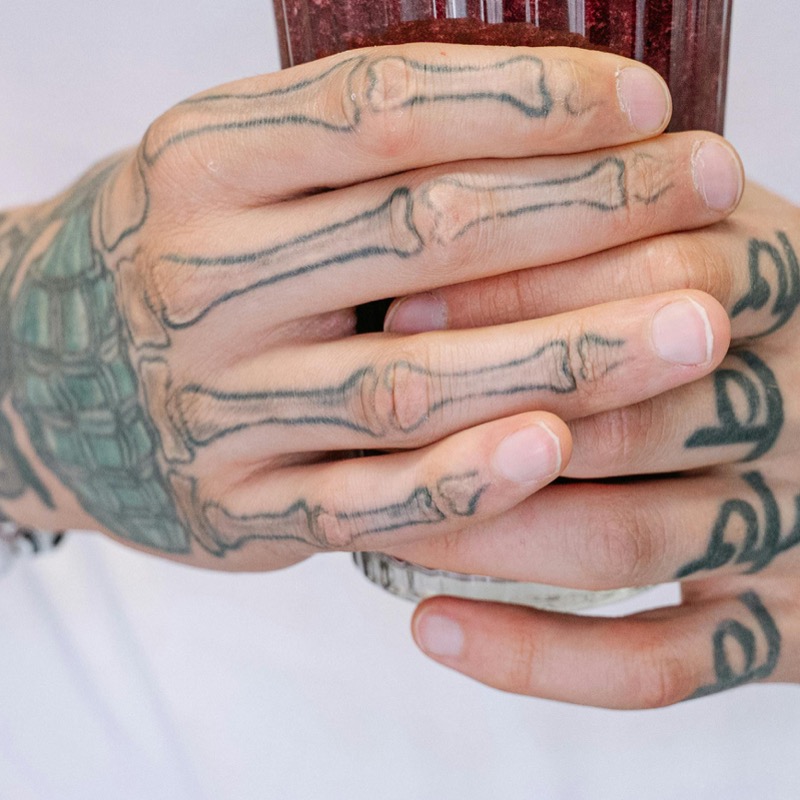
A skeleton hand tattoo, also called a bone hand tattoo, maps bone structure directly onto the surface where those bones actually sit. That anatomical overlap is what makes the design work so well here. Realistic versions trace the metacarpals and phalanges across the back of the hand, creating an X-ray effect that shifts when your hand opens and closes. Illustrative versions push the style further, adding cracks, shading, or Dia de los Muertos sugar skull elements to the bone structure.
The design scales well. A full skeleton hand running from wrist to fingertips is a commitment piece. A partial version covering just the knuckles and metacarpals keeps the impact in a smaller footprint. Black and gray tends to age better here than color because the shading holds its contrast longer on skin that takes a beating daily.
Best for: guys who want a bold, full-coverage hand piece that uses the hand’s anatomy as part of the design
Skull Hand Tattoos
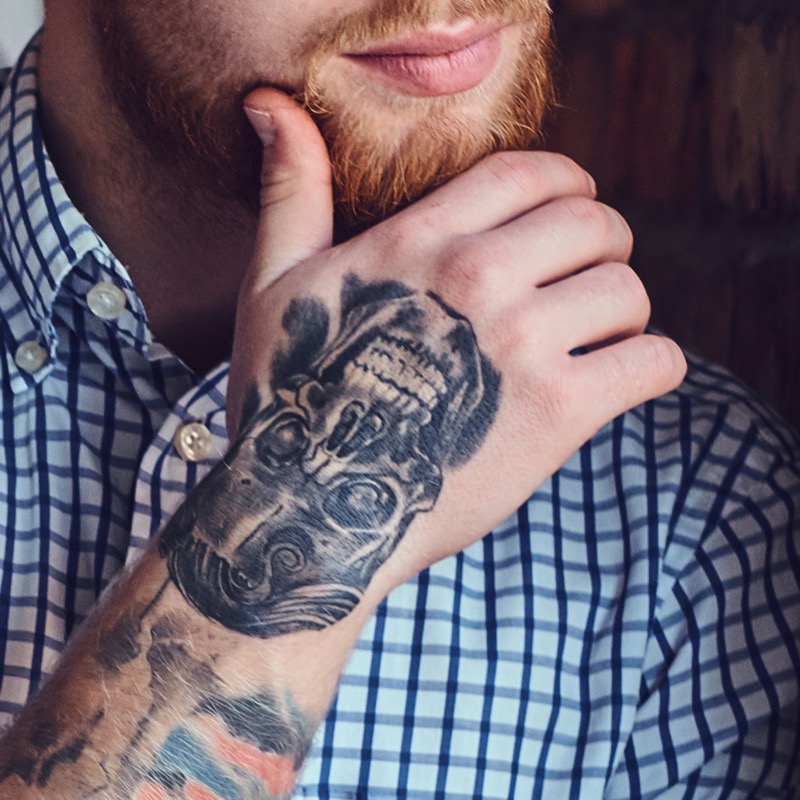
Skulls on hands hit differently than skulls anywhere else on the body. The placement adds weight to a symbol that already has it. A traditional skull with bold outlines sits well on the back of the hand where the flat surface between knuckles and wrist gives the artist room to work. Realistic skulls with deep shading need a skilled hand (your artist’s, not yours) because hand skin absorbs fine gradients differently than a forearm.
The skull-and-rose combination is one of the most requested hand tattoo designs for men, and for good reason. The contrast between the organic curves of the rose and the hard geometry of the skull creates a contrast that holds up well at a distance. A skull-and-snake pairing wraps naturally around the hand’s contours, with the snake body following the spaces between tendons.
Best for: a standalone statement piece on the back of the hand, especially in traditional or neo-traditional style
Rose Hand Tattoos
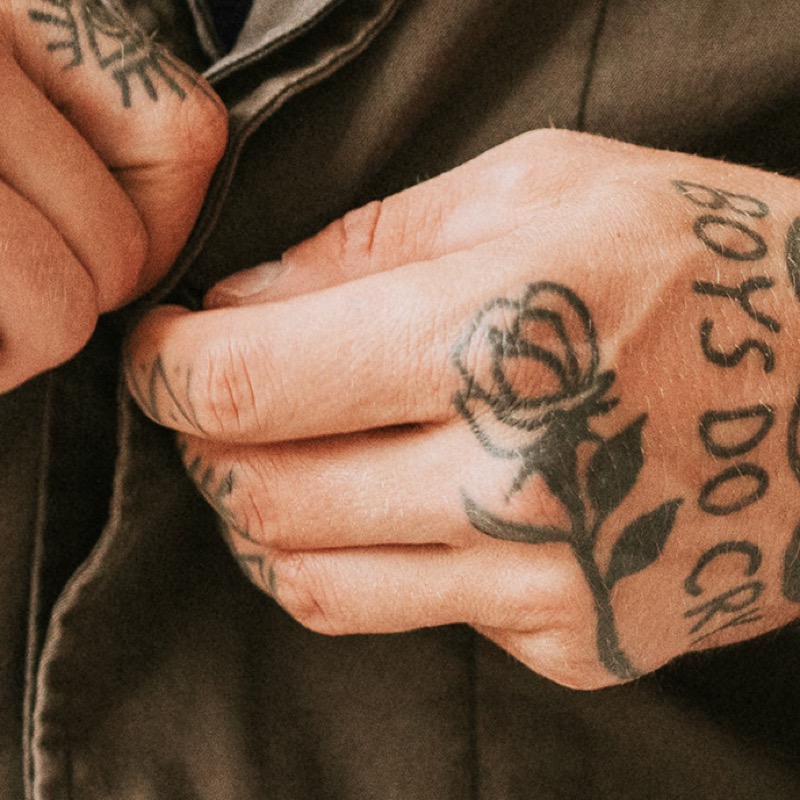
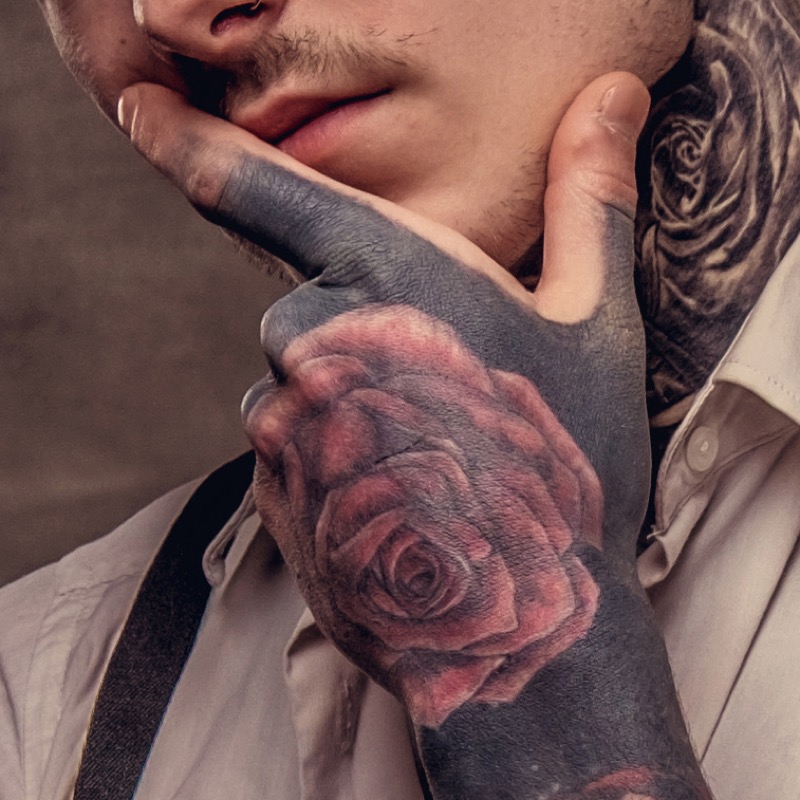
The rose is one of the few designs that looks better on a hand than on most other placements. The reason is proportional. A rose’s circular bloom fits the back of the hand almost perfectly, and the stem and leaves can follow the natural lines running toward the wrist or fingers. That organic fit means the design works with the anatomy instead of against it.
Traditional roses with bold outlines and saturated color hold up the longest here. Fine-line roses look sharp when fresh but will soften and spread faster on hand skin than on a forearm or shoulder. If you want fine line on a hand, plan for touch-ups every year or two. A rose paired with a dagger, a clock, or geometric framing gives the piece more visual structure and fills space in a way that ages more evenly.
Best for: a medium-sized back-of-hand piece, especially if you want something that works with the hand’s natural shape
Snake Hand Tattoos
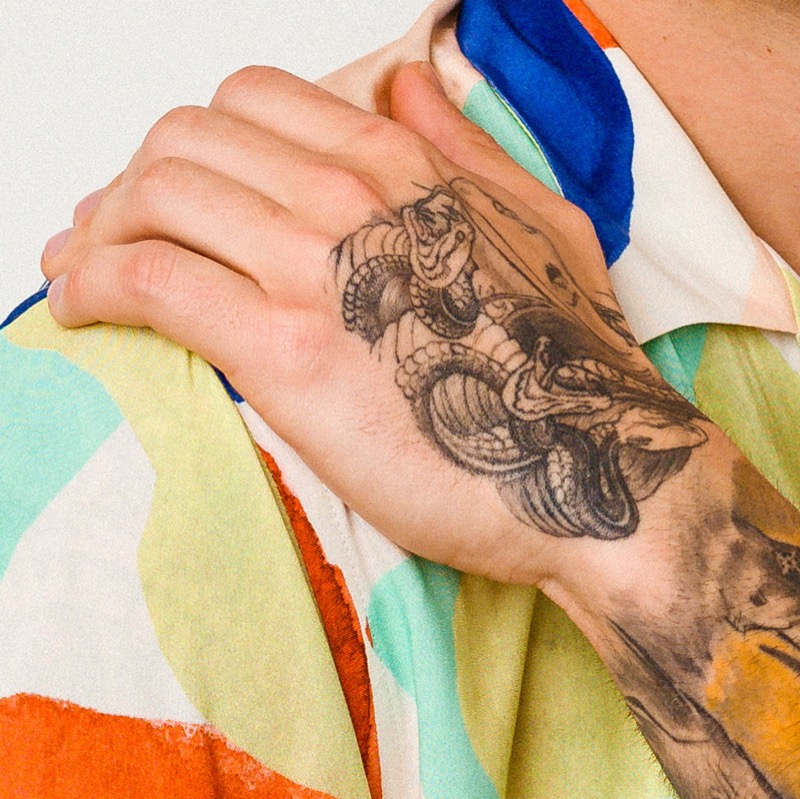
Snakes were made for hands. The long, curving body of a snake follows the tendons, wraps around fingers, and coils across the back of the hand in ways that few other designs manage. A coiled snake centered on the back of the hand creates a compact, punchy piece. A snake wrapping from the wrist up through the fingers turns the whole hand into a single composition.
Japanese-style snakes with scales and dynamic posing work well for larger hand pieces. American traditional snakes with bold outlines and limited color hold up better long-term. The snake-and-dagger combination is a classic for a reason. The vertical line of the dagger gives the snake’s curves something to play against.
Best for: guys who want a design that flows with the hand’s movement and connects multiple zones (wrist, back of hand, fingers)
Small Hand Tattoos for Men
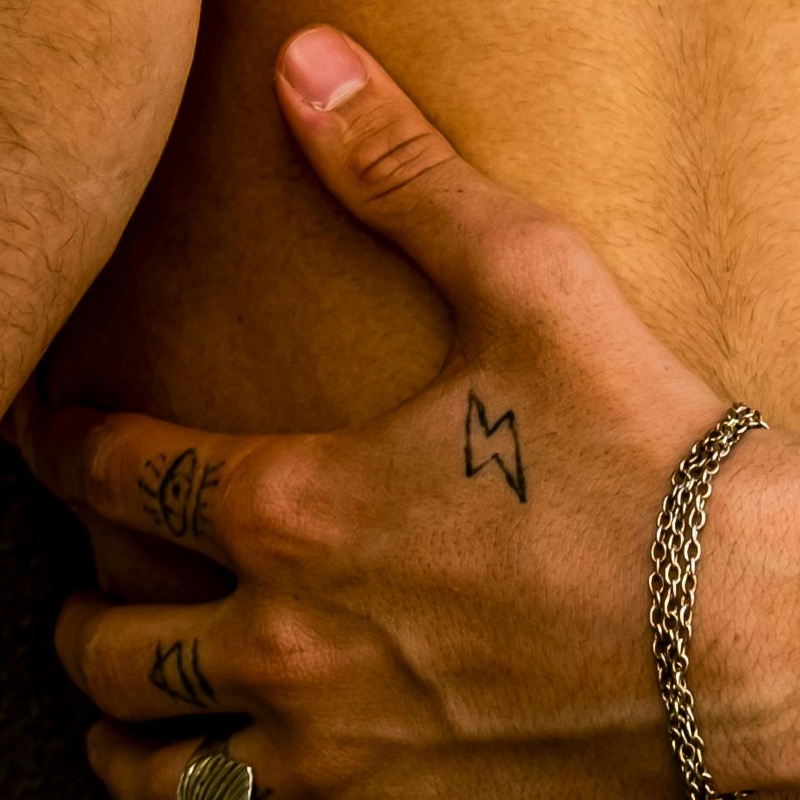
Not every hand tattoo needs to be a full production. Small hand tattoos for men work well in specific zones where the skin holds ink and the design stays readable at a compact size. The webbing between thumb and index finger is a popular spot for small symbols, initials, or minimal geometric shapes. The side of the hand (the knife edge) handles small script or a single clean symbol.
A word of warning on small hand pieces. The smaller the tattoo on a hand, the faster it loses definition. Thin lines blur. Tiny details merge. The best small hand tattoos use bold, simple shapes with enough line weight to survive years of washing, friction, and sun. A solid black triangle, a clean cross, a single bold initial. These hold. A micro-realistic portrait the size of a quarter turns into a smudge within a year.
Best for: a first hand tattoo, a meaningful symbol, or a subtle piece that keeps the commitment low
Traditional Hand Tattoos
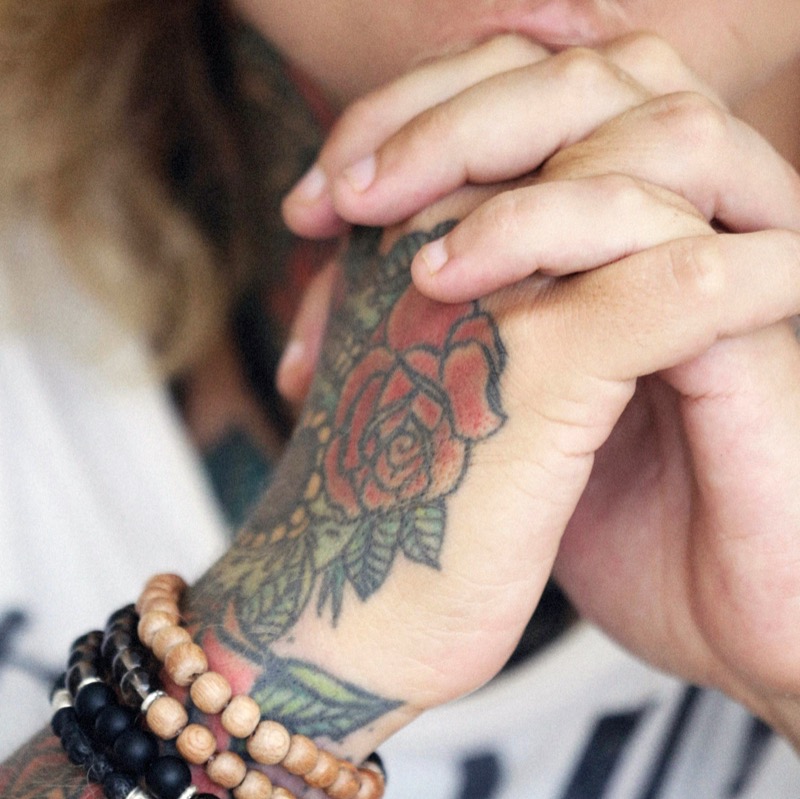
American traditional style and hands go back decades for a reason. The bold outlines, limited palette, and flat color fields that define the style are the same qualities that age best on hand skin. A traditional panther, an eagle, a swallow, a dagger. These designs were drawn to be seen at a distance, and on a hand, that clarity is everything.
Traditional hand tattoos also have the advantage of looking finished as standalone pieces. A bold traditional rose or a classic sailing ship on the back of the hand feels like a complete tattoo, self-contained and fully resolved. That matters on hands, where the canvas is small enough that a piece needs to feel finished on its own.
Best for: guys who value longevity and bold visual impact over fine detail
Other Styles Worth Considering
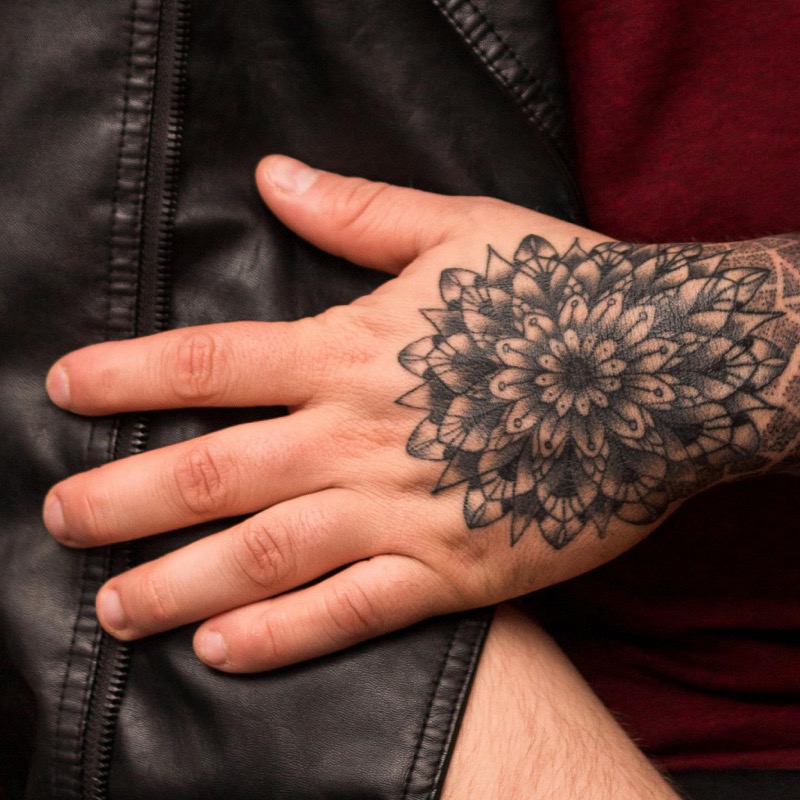
Geometric. Clean lines, dotwork, and symmetrical patterns create striking hand tattoos, but execution has to be flawless. Even slight line wobble shows on the flat back of the hand. Find an artist who specializes in geometric work.
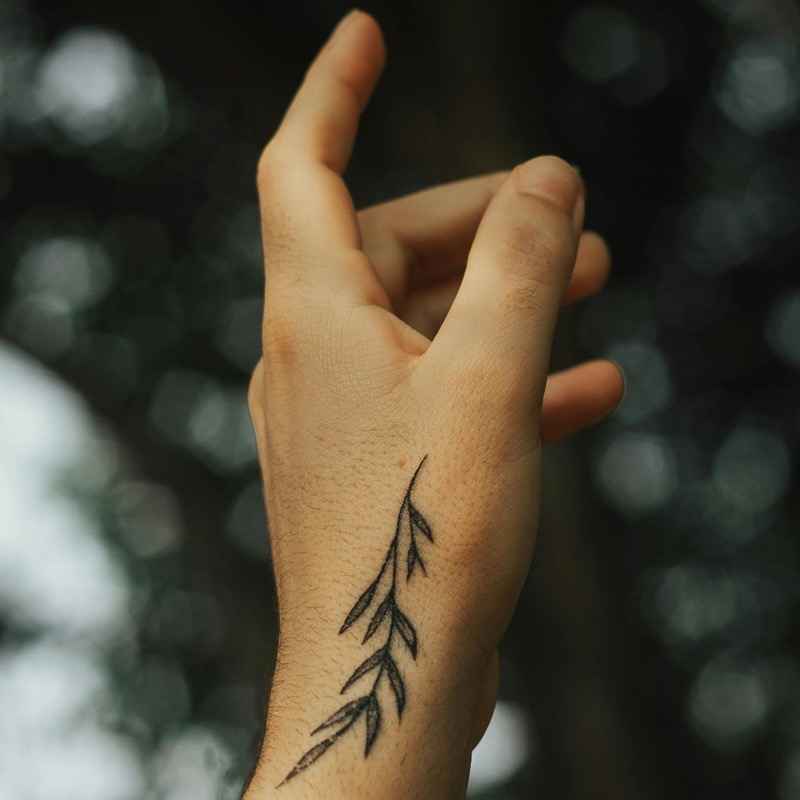
Fine line. Beautiful when fresh, high-maintenance long-term. Fine-line hand tattoos will need touch-ups more frequently than the same design on a forearm or thigh. Go in expecting that and you will be satisfied with the results.
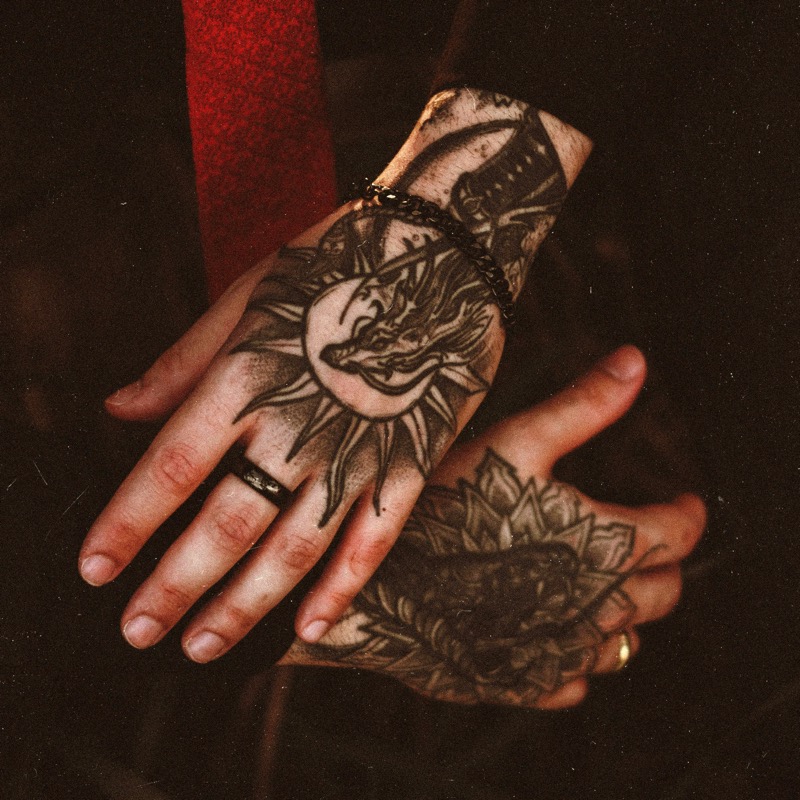
Blackwork. Heavy black saturation, ornamental patterns, and solid fill designs hold up exceptionally well on hands. The density shows at any distance, and the solid black ink retains its depth longer than color or light shading.
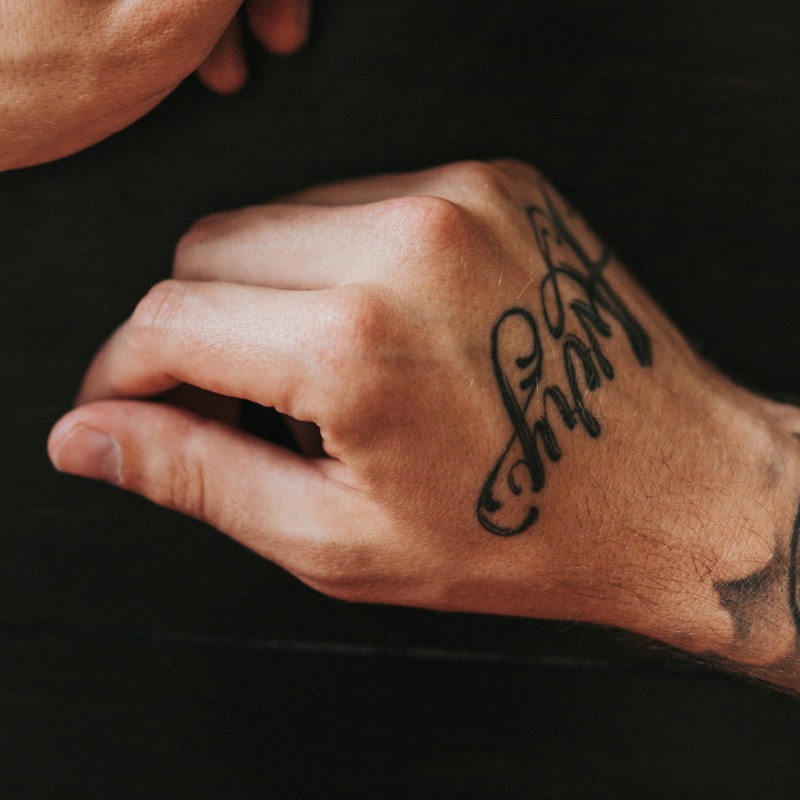
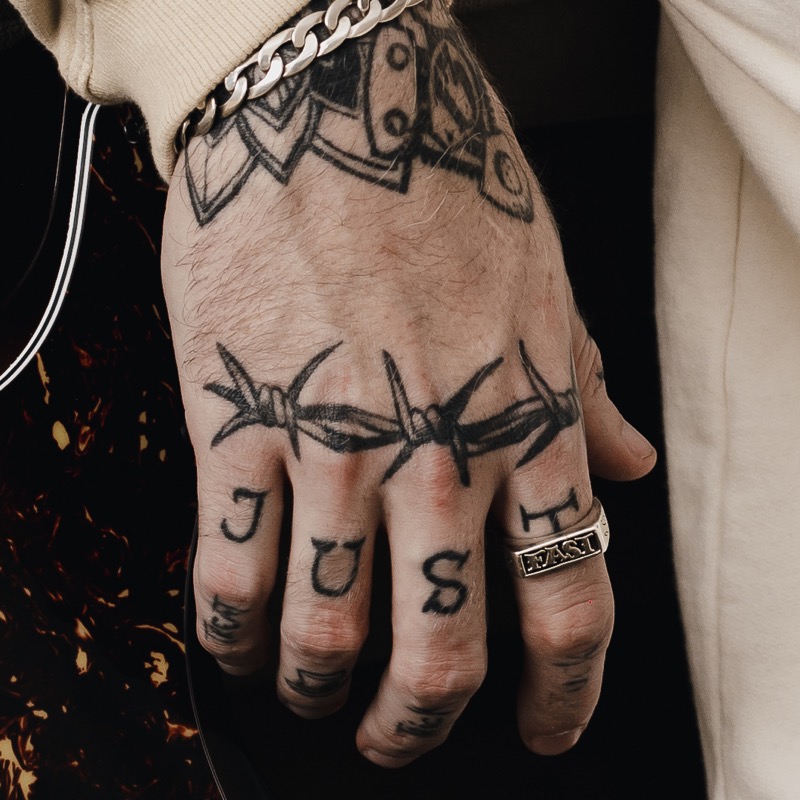
Lettering and script. Knuckle lettering is a classic. Four letters across four knuckles on each hand, or a single word across all eight. Block lettering holds better than script. If you want cursive across your knuckles, make sure the letter height is large enough that the thin strokes survive healing and aging.
Hand Tattoo Placement Guide
The hand has five distinct zones, and each one behaves differently under a needle. Where you place the design affects pain, healing time, longevity, and which styles work.
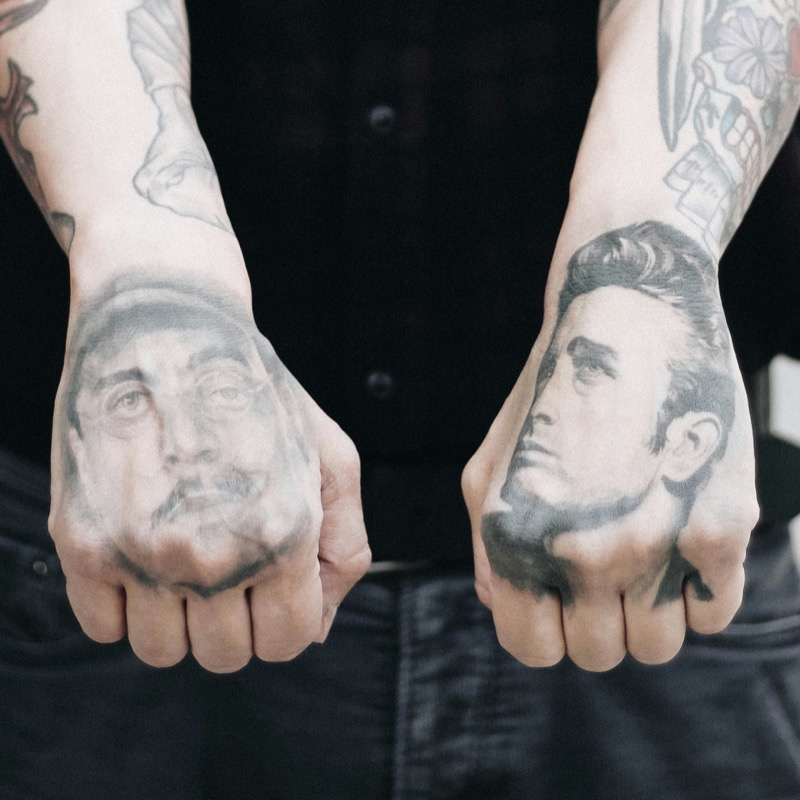
Back of the hand is the most common placement and the largest flat surface. It accommodates detailed work, holds ink reasonably well, and heals more predictably than other hand zones. Most full hand tattoo designs target this area.
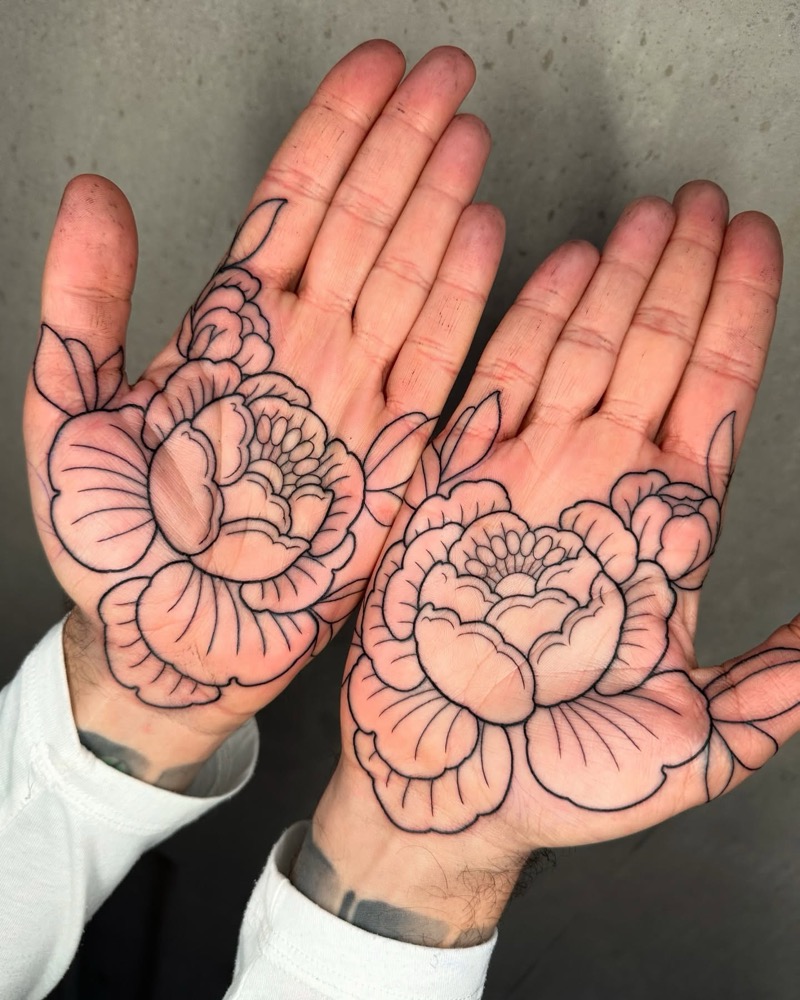
The palm is a different animal entirely. Palm tattoos fade faster than any other placement on the body. The skin regenerates rapidly, and the constant friction of gripping, opening, and closing your hand pushes ink out. Palm pieces need heavier saturation during the session and will almost always need touch-ups within the first year. Many artists pass on palm work entirely. The ones who take it on know it requires a specific technique, including deeper needle depth, heavier ink packing, and realistic expectations from the client.
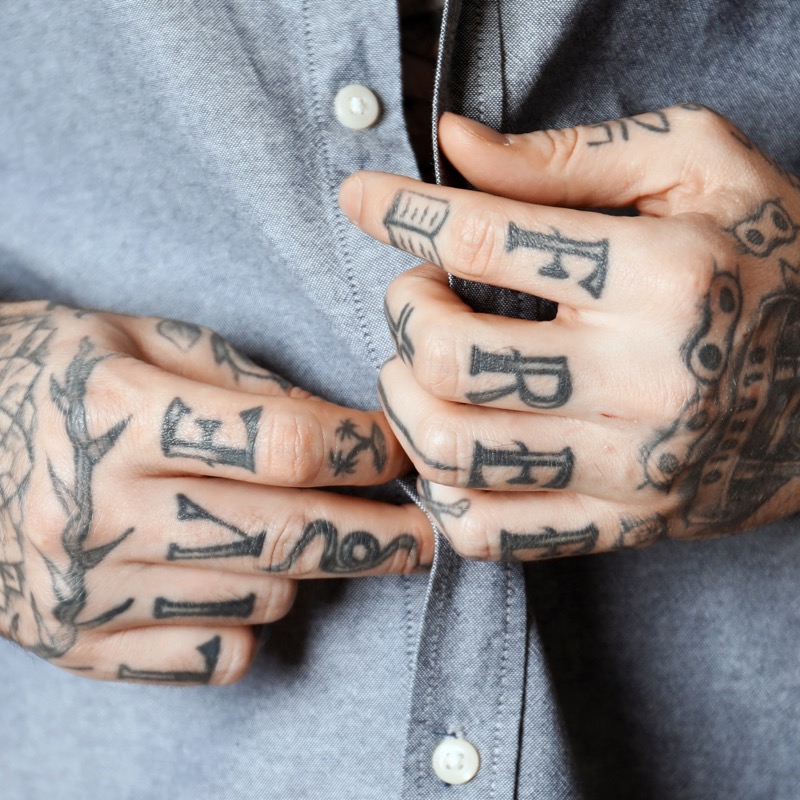
Fingers and knuckles are where most hand tattoo fading complaints come from. The skin is thin, it flexes constantly, and it is washed more than any other part of your body. Knuckle tattoos look great on day one and softer by month six. Plan for at least one touch-up in the first year, and accept that the sharp lines you see in Instagram photos is usually a freshly-done piece, not a healed one.
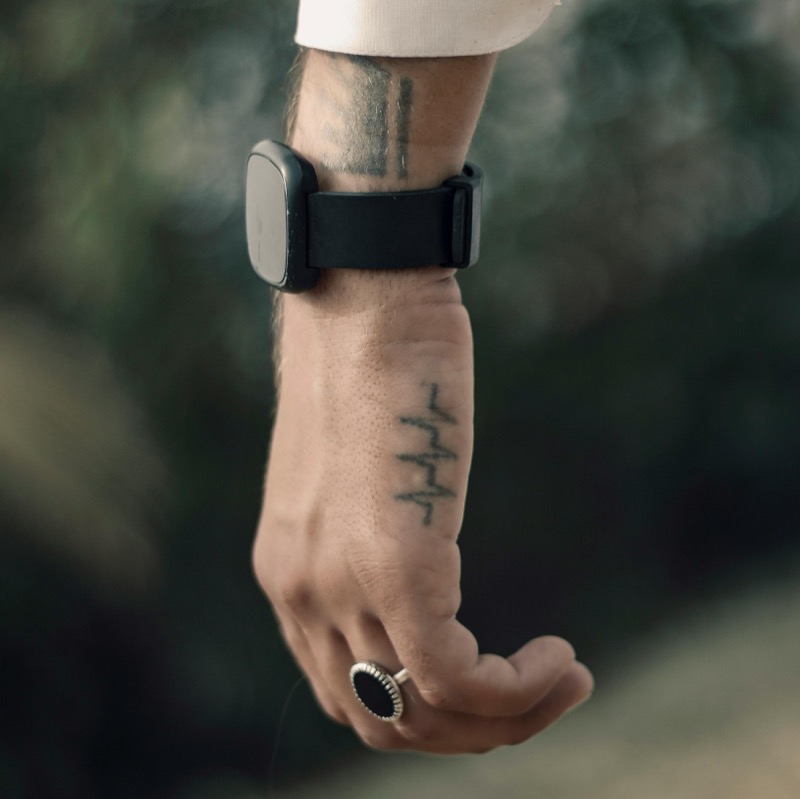
The side of the hand (knife edge) is a subtle spot that shows in profile. It works for small script, a thin line design, or a minimal symbol. Fading is moderate here, less than fingers but more than the back of the hand.
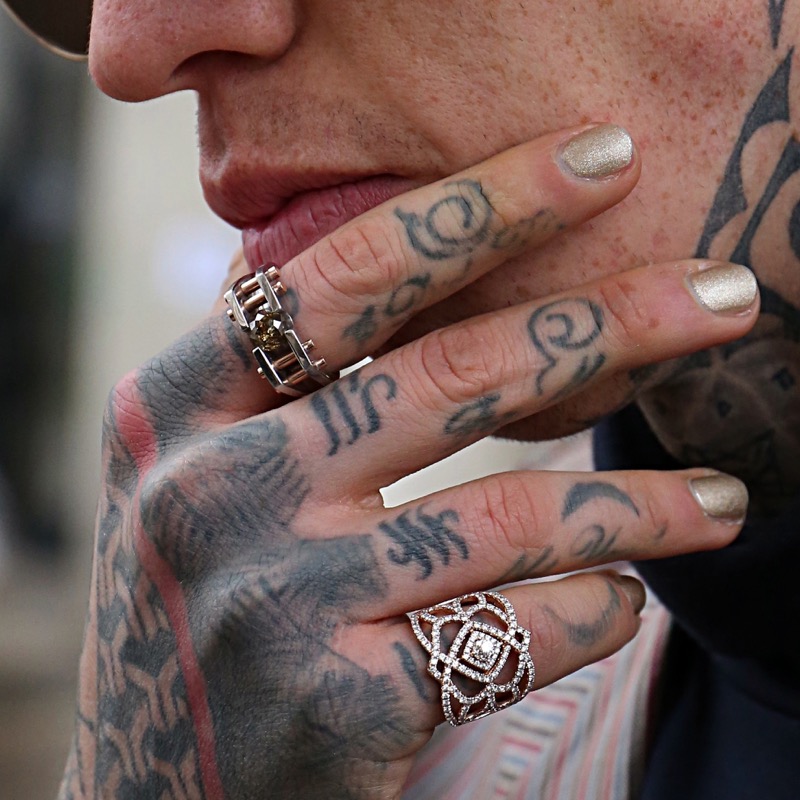
Between the fingers (the webbing) is the most painful hand zone and the most prone to blowout and fading. The skin is soft, stretchy, and holds ink poorly. Designs here should be simple and bold. Only heavy lines and solid fills last.
How Much Do Hand Tattoos Cost?
Hand tattoos cost more per square inch than most other placements, and that premium is justified. The skin is difficult to work with. The surface is small and uneven. The healing is unpredictable. Experienced artists charge accordingly because hand work demands more control and more patience than a forearm or shoulder session.
For a small hand tattoo (a single symbol, initials, or a knuckle set), expect to pay $150 to $500 depending on your city, the shop, and the artist’s experience level. A medium piece covering the back of the hand runs $300 to $800. A full hand design with finger work, knuckle coverage, and wrist integration can hit $1,000 to $2,000 or more, especially from artists who specialize in hand and neck work.
Most shops have a minimum charge regardless of size, typically $80 to $150. A tiny finger tattoo that takes 15 minutes still hits that minimum.
The one piece of cost advice that matters most. Do not bargain-hunt for hand tattoos. This is the most visible real estate on your body. A cheap session on your chest is a regret you can cover with a shirt. A cheap session on your hand follows you into every room.
Do Hand Tattoos Hurt? Pain & What to Expect
Yes. Hands are one of the most painful placements, and anyone who tells you otherwise has not had one. The back of the hand is manageable for most people. The sensation is a persistent, grinding heat over bone with almost no fat or muscle to cushion the needle. (For a full breakdown of how hand tattoo pain compares to other placements, see our tattoo pain chart.) It is uncomfortable but most guys get through a full session in one sitting.
The knuckles are where the session gets rough. The needle is hitting thin skin stretched over bone with concentrated nerve endings. Every pass is sharp and direct. Most guys describe it as a hot, buzzing pressure that radiates through the finger.
Fingers are a similar story. The skin is thin, the bones are close, and the sensation is intense. The saving grace is that finger tattoos are small and fast, so the worst of it is over quickly.
The palm is the hardest spot on the hand. The nerve density is higher than almost anywhere else on the body, and the fleshy texture of the skin gives a different kind of pain. Deep, aching, and relentless. Palm sessions are short by necessity. Most artists work in quick passes with breaks.
A typical hand tattoo session runs one to three hours depending on the design. Numbing creams exist and some artists are fine with them, but they have limits. Most numbing products wear off after 60 to 90 minutes and can change skin texture in ways that affect ink absorption. Ask your artist about their preference before applying anything.
Hand Tattoo Healing & Aftercare
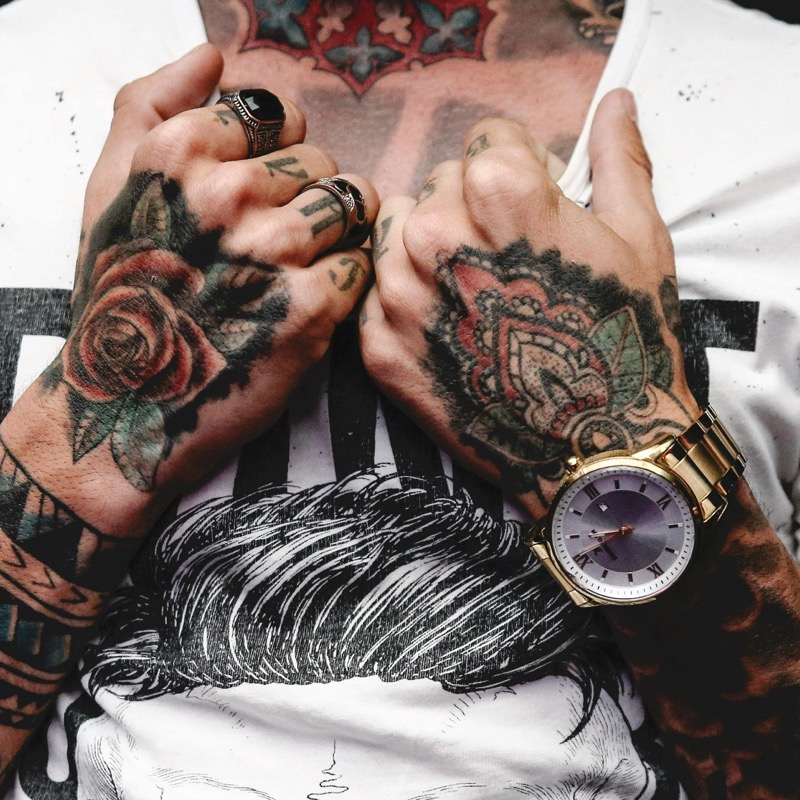
Hand tattoo healing is harder than healing a tattoo anywhere else, and the reason is obvious. You use your hands for everything. They are in constant contact with water, surfaces, and friction from the moment you wake up. Managing the healing means working around the reality of daily life, and it takes more discipline than most other placements.
Days 1 through 3: Expect swelling, tenderness, and warmth. The back of the hand puffs up more than you would expect. Keep it clean with gentle, fragrance-free soap and lukewarm water. Pat dry. Apply a thin layer of unscented healing ointment. Leave it unwrapped unless your artist specifically tells you otherwise.
Week 1 through 2: Peeling starts. The tattooed skin will flake and itch. Leave it alone. Let the flakes fall off on their own. This is where most hand tattoo healing goes sideways because hands are constantly in contact with surfaces, and the temptation to scratch is constant.
Week 3 through 4: The surface looks healed. The skin feels smooth again. The tattoo may look slightly cloudy or dull. That is normal. The deeper layers are still settling.
Month 2 through 3: Full healing. The tattoo shows its true settled appearance. This is when you can accurately assess whether a touch-up is needed.
Hand washing is the biggest aftercare challenge. You wash your hands dozens of times a day, and each wash pulls moisture and freshly deposited ink from healing skin. During the first two weeks, wash gently, avoid hot water, skip hand sanitizer (the alcohol content burns and dries the healing tattoo), and moisturize after every wash.
If you work with your hands, wear disposable nitrile gloves during the healing period for tasks that involve dirt, chemicals, or sustained friction. Your artist will likely recommend the same. For the full step-by-step process, see our tattoo aftercare guide.
How Long Do Hand Tattoos Last? Longevity & Touch-Ups
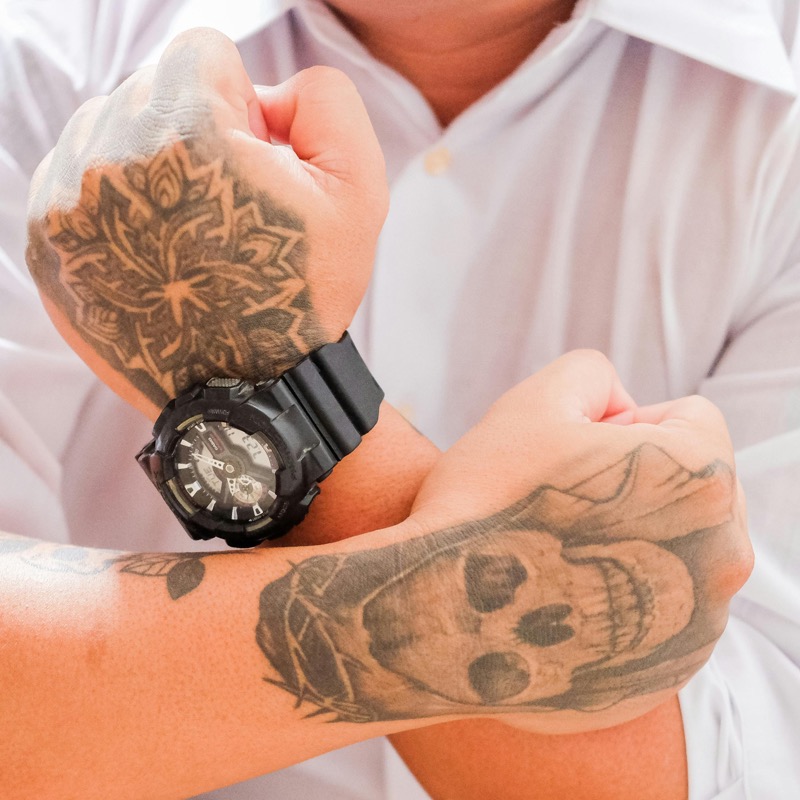
Hand tattoos fade faster than almost any other placement. That fact should shape your expectations, your design choices, and your maintenance plan.
The fade happens because of compounding factors. Hands get more UV exposure than most body parts. You wash them constantly. They rub against surfaces all day. The skin on the back of the hand and especially on the fingers turns over faster than skin on your torso or upper arms. All of that pulls ink out and softens lines over time.
Color tattoos on hands will need touch-ups sooner than black and gray. Plan for a color refresh every one to three years if you want it looking sharp. Black and gray work and solid blackwork hold longer, typically three to five years before the softening becomes noticeable enough to warrant a session.
Bold lines outlast fine lines on hands. Every time. A traditional piece with thick outlines and solid fills will look recognizable at ten years. A fine-line piece with micro-detail will start losing definition by year two or three. That is the physics of thin skin and constant use. Choose your style with that timeline in mind.
To maximize longevity, apply sunscreen to your hands daily (SPF 30 or higher), keep the skin moisturized, and wear work gloves if your job involves manual labor, chemicals, or constant hand washing. These small habits add years to the life of a hand tattoo.
Hand Tattoos & Work
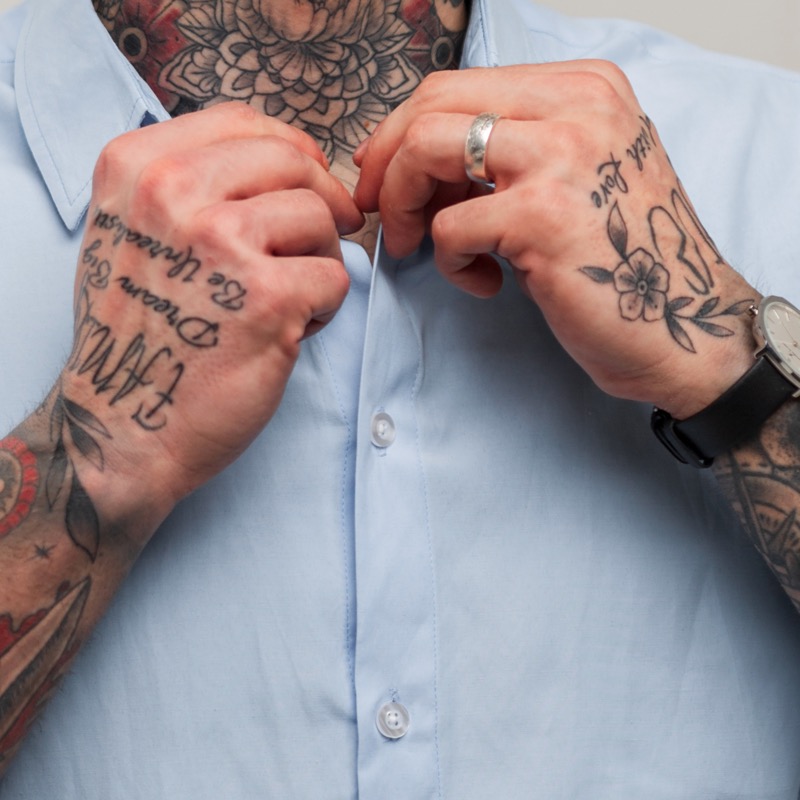
A hand tattoo is visible in every professional setting short of wearing gloves to the office. That is the reality, and it is worth acknowledging before you book.
Industries like creative, tech, hospitality, trades, and fitness have largely moved past caring about visible tattoos. In those worlds, hand ink is a non-issue. Corporate law, banking, client-facing consulting, and some medical fields still hold stigma around visible tattoos, and hands are the most visible placement there is.
The “job-stopper” reputation is softening, but it still exists. The shift is real, and it is generational. More hiring managers have tattoos themselves. More companies have relaxed dress codes. But “more accepting” and “universally accepted” are still far apart, and a hand tattoo is a bet on where your career is heading as much as where it is now.
If your work situation is uncertain, a smaller or lighter hand tattoo gives you more room to navigate. A single knuckle piece or a small back-of-hand design lands differently in a professional context than a full hand sleeve. It is still visible, but the visual weight is lower.
All of this is information, and information makes for better decisions. A hand tattoo you chose with full awareness of the trade-offs is one you will still be glad about five years from now.
Frequently Asked Questions
Which is the best tattoo on hand for men?
The back of the hand is the strongest placement for a first hand tattoo, and skull, rose, and skeleton designs consistently rank among the most popular hand tattoo ideas for men. The best design depends on your personal style and how much coverage you want. A traditional rose or skull works as a standalone piece; a skeleton hand tattoo turns the entire back of the hand into a single composition.
Do hand tattoos hurt a lot?
Hand tattoos rank among the most painful placements because the skin is thin, the bones sit close to the surface, and the nerve density is high. The back of the hand is tolerable for most people, but the knuckles, fingers, and especially the palm deliver intense, sharp sensation that makes the session significantly harder than placements with more muscle and fat padding.
How long do hand tattoos take to heal?
Surface healing for hand tattoos takes about two to four weeks, during which peeling, flaking, and mild itching are normal. Full deep-layer healing takes two to three months. Hand tattoos heal slower and less predictably than most placements because the constant use, washing, and friction make it harder to keep the skin protected during recovery.
How much is a small hand tattoo?
A small hand tattoo typically costs $150 to $500 depending on the artist, the shop’s minimum charge, and the complexity of the design. Most shops have a flat minimum of $80 to $150 regardless of how small or quick the piece is. Hand work commands higher rates than comparable designs on other placements because the technical difficulty is greater.
Can you cover a hand tattoo for work?
Covering a hand tattoo in professional settings is close to impossible. Long sleeves stop at the wrist, and makeup or concealer products designed for tattoos require frequent reapplication on hands because of washing and contact. If workplace visibility is a concern, consider that before committing to hand ink. Smaller, lighter designs on less prominent hand zones (side of hand, inner fingers) are easier to downplay than full back-of-hand coverage.
How do you choose the right artist for a hand tattoo?
Look at healed work, not just fresh photos. Any tattoo looks sharp in the chair. Ask to see hand pieces that are six months to a year old. An artist experienced with hand tattoos will know how to adjust needle depth, line weight, and ink saturation for skin that heals and ages differently than a forearm or back panel. Specialization matters more here than on forgiving placements.