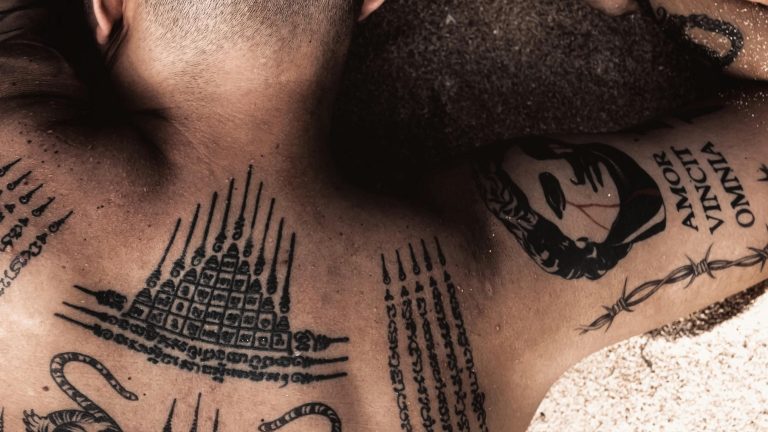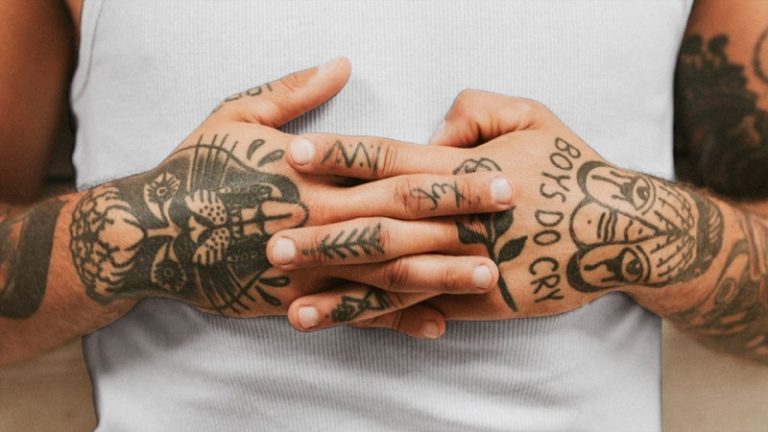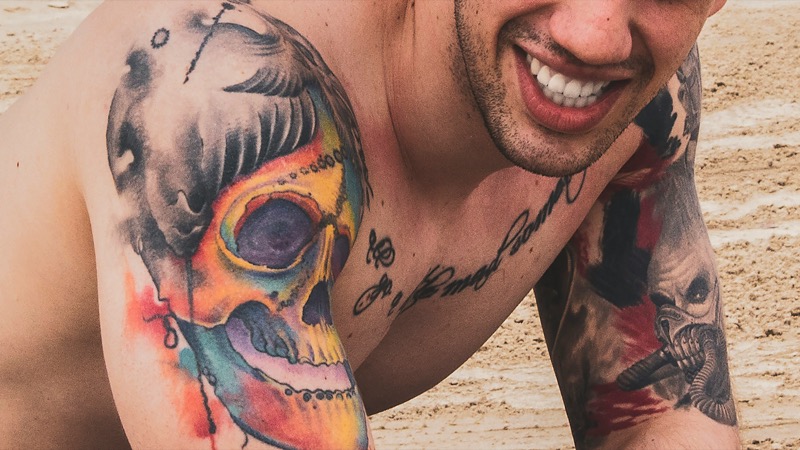
Shoulder tattoos for men occupy the most strategic placement on the male body. It shows in a t-shirt, disappears under a button-down, and sits at the exact point where a single piece becomes the start of something bigger. Most guys with full sleeves started with a shoulder tattoo. That is not a coincidence.
What makes the shoulder different from a forearm or a chest piece is the decision layer underneath it. You are picking a zone, a style, and a direction. The deltoid is a different canvas than the shoulder blade, which is a different canvas than the front shoulder near the collarbone. Each one ages differently, hurts differently, and favors different kinds of work. A guy who treats the shoulder like a forearm, picking a design and pointing at a spot, ends up with a piece that sits wrong or boxes him out of the sleeve he wants three years later.
This is the placement that rewards guys who think one session ahead. The design matters, but the plan matters more.
Why the Shoulder
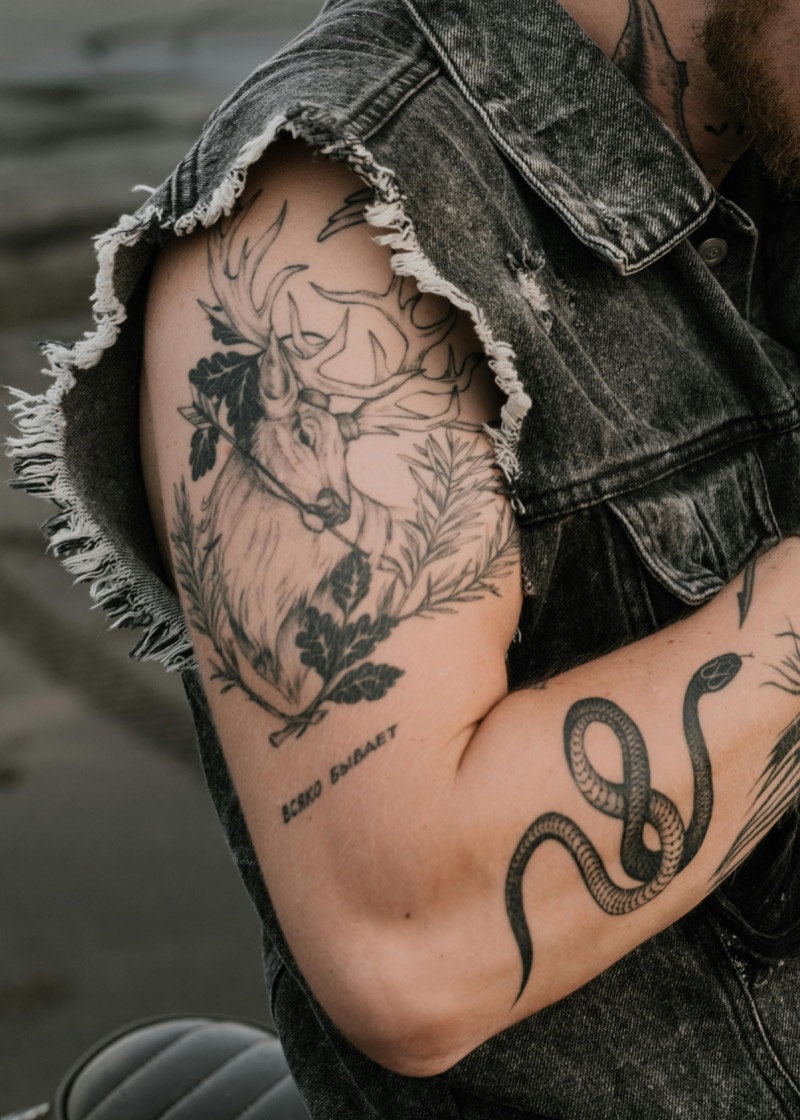
The shoulder gives you something no other major placement offers. Total control over visibility. Roll up a sleeve and it is there. Button a shirt and it is gone. That flexibility is why the shoulder is the most common first tattoo placement for men and the most common launch point for sleeve work.
Pain is manageable. The deltoid is thick skin over heavy muscle, which makes it one of the most comfortable spots on the body for a tattoo session. The canvas is large enough for real detail but contained enough that a single session covers most designs. And the shoulder ages well. Less skin movement than the chest or stomach means bold work holds its shape for years.
The practical math is simple. Good visibility, low pain, strong aging, and a natural path to more ink if you want it. Few placements check all four.
Shoulder Tattoo Placement Zones
The shoulder is four distinct zones, plus a fifth consideration that determines whether your piece ends or extends. Each zone has its own pain profile, visibility, and style requirements. Knowing the difference before your consultation saves you from a design that fights the surface it sits on.
Deltoid / Shoulder Cap
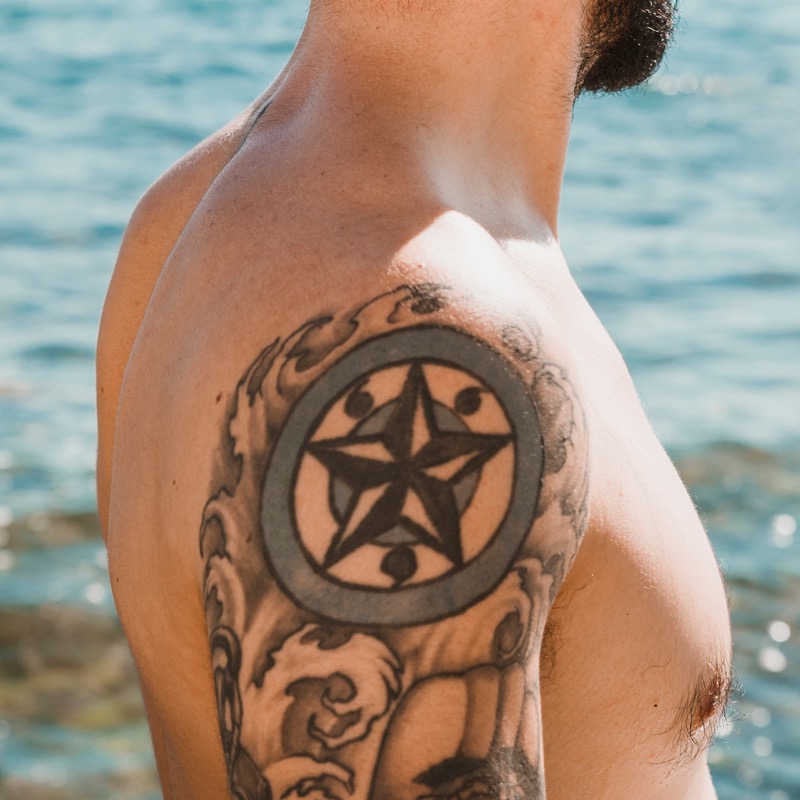
The round of the shoulder muscle is the most common starting point for mens shoulder tattoos. The skin is thick, the muscle underneath provides a forgiving surface, and the natural curve of the deltoid gives the design a three-dimensional quality that flat skin never delivers. A compass rose or a lion portrait that looks static on paper wraps and contours on the deltoid. That curve is the reason this zone handles bold, graphic work so well.
Pain sits around the low end of the spectrum. Thick skin and heavy muscle absorb most of the sensation, and the consistency of it helps. There are no sudden spikes the way the collarbone or inner arm delivers. Most guys describe it as a warm, steady scratch that stays predictable for the full session.
Best for medium to large single pieces. Animal portraits, tribal and Polynesian patterns, traditional American, geometric work, and single symbols all fit the deltoid’s shape and scale.
One thing to watch. If you train shoulders heavily, the design will shift slightly with bulk and cut cycles. Bold outlines handle this well. Fine line work shows the movement more. Get the tattoo after you have settled into your training routine, or choose a style with enough weight in the lines to absorb small changes.
A single deltoid piece typically runs $400 to $1,200 depending on complexity and artist rate.
Shoulder Blade / Back Shoulder
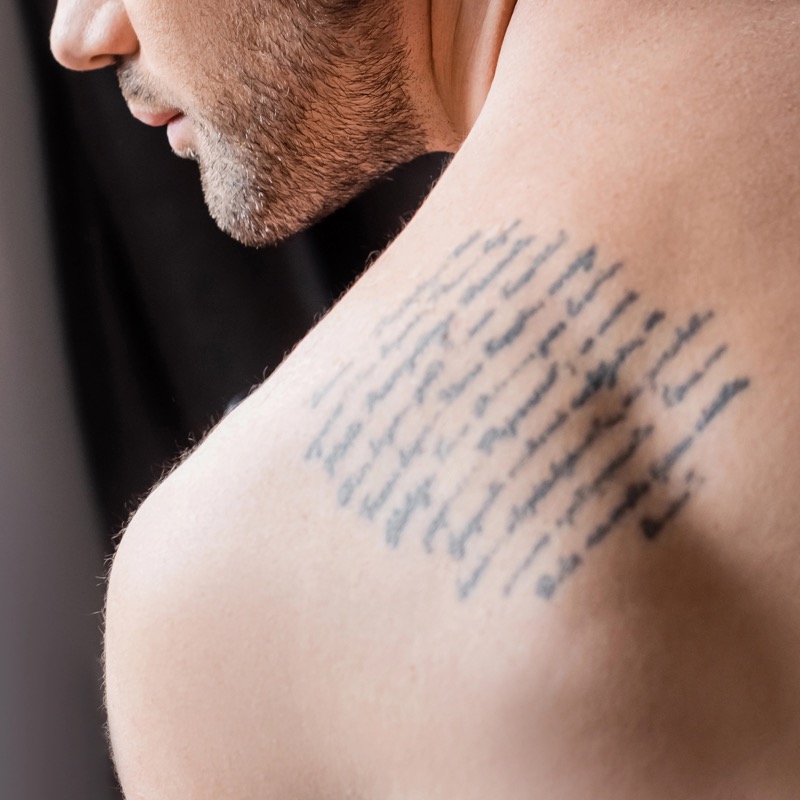
The flat expanse of the shoulder blade is a different canvas entirely. It is hidden more often than the deltoid (visible only with your shirt off or in a tank), and the flat surface favors work that benefits from a stable, even plane.
Back shoulder tattoos for men tend to sit in the medium range for pain. The blade itself is manageable, but the edges near the spine and the inner ridge can get sharp. The sensation shifts from a dull scratch over muscle to a higher-pitched sting as the needle approaches bone. It is tolerable, but it catches guys off guard if they expected the whole area to feel like the center of the blade.
Best for symmetric or single-side medium pieces. Wings, mandalas, portraits, script, nature scenes, and any design that benefits from a flat rendering surface.
The flat surface holds detail better than the curved deltoid. An artist can execute fine shading and precise line work here because the skin does not wrap or stretch during the session. The tradeoff is healing logistics. You will need to sleep on your stomach or opposite side for at least a week. Sun exposure is higher here in summer if you go shirtless, which accelerates fading on color work.
A shoulder blade piece runs $300 to $1,000.
Front Shoulder
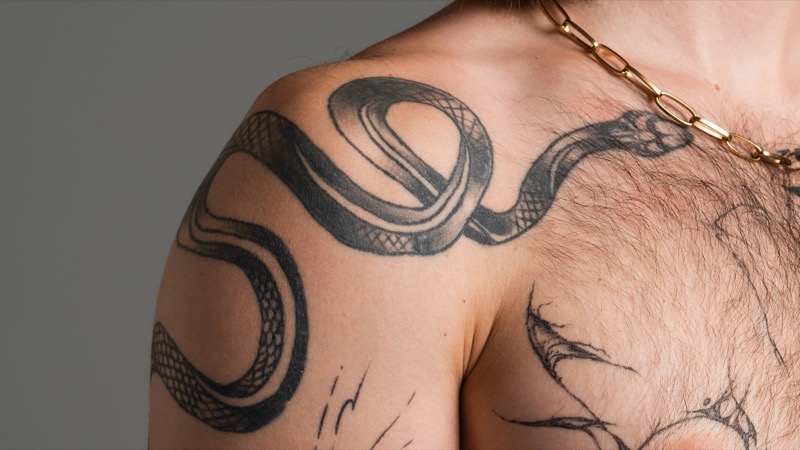
The front of the shoulder, the area between the deltoid and the collarbone, is the most visible shoulder zone. It is what people see when you are facing them in a tank top or an open shirt. The shape is triangular, narrowing toward the collarbone, which means designs need to follow the natural angle of the body. Isolated squares or circles fight the shape.
Pain increases closer to the collarbone. The deltoid side is comfortable. The collarbone side is sharper, with thin skin over bone creating a sting that most guys rate in the moderate-to-high range. The transition is gradual, so you feel it building as you go.
Best for script, Roman numerals, small to medium symbols, floral or ornamental work that follows the shoulder line’s natural angle.
This zone fades faster than the deltoid. Shirt-collar friction rubs this area constantly, and sun exposure during summer is direct. Black and grey holds up better than color in this zone. If you go with color, plan for a touch-up within the first decade.
A front shoulder piece runs $250 to $800.
Shoulder-to-Chest / Collarbone
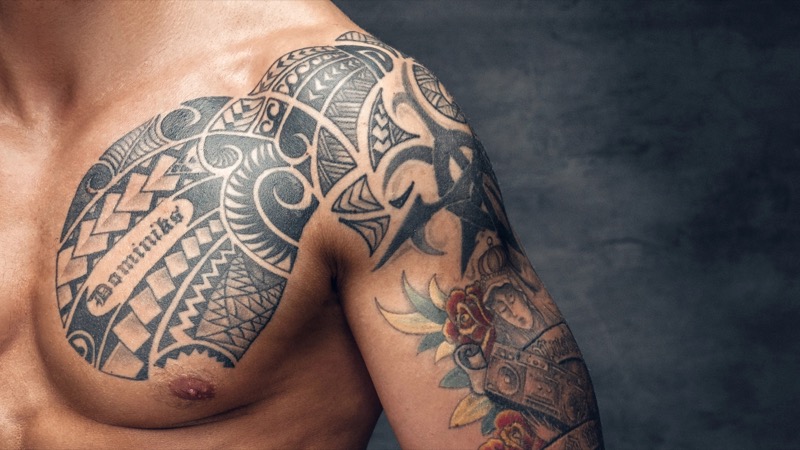
The transition from the shoulder down toward the pec is where a shoulder tattoo becomes a chest tattoo. Crossing the collarbone is a commitment. A piece above it stays in shoulder territory. A piece that flows across it becomes a chest composition. The two communicate differently, and the collarbone is the line between them.
Pain is real here. The collarbone itself is thin skin stretched over bone with minimal muscle buffer. It is among the sharper sensations on the upper body, though the area between the shoulder and pec softens considerably. Most guys handle it, but nobody calls it comfortable.
Best for Japanese-style flow work, traditional compositions, ornamental filigree, and pieces that connect the shoulder and chest as a unified design.
The key consideration is commitment. Once you cross the collarbone, you have committed to the chest. Plan the whole composition before the first session, not after. A shoulder piece and a chest piece that were designed separately and happen to sit near each other will always look like two tattoos. A composition that was planned as one piece across both zones looks complete.
Shoulder-to-chest work typically runs $800 to $2,500 or more and requires multiple sessions.
Shoulder-to-Sleeve Connection
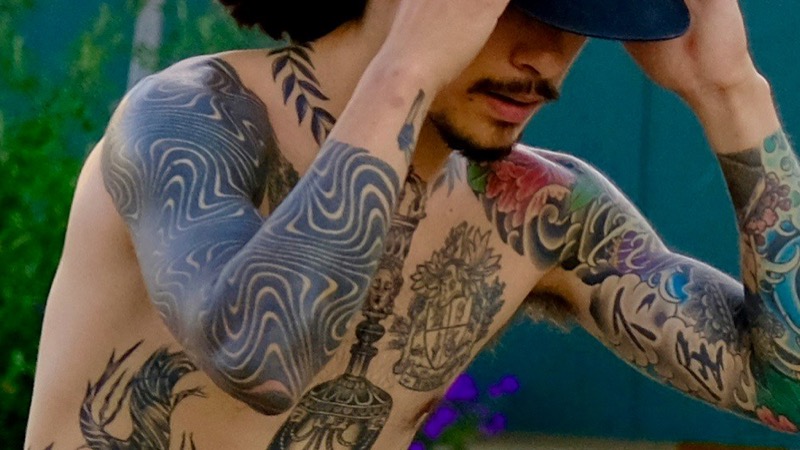
This is a planning decision, not a placement. If there is any chance you want a sleeve down the road, tell your artist at the shoulder consultation. The position, border style, and composition of your shoulder piece either opens the door to a half sleeve shoulder tattoo or closes it.
Flowing organic edges, Japanese background elements like cloud bars and wind bars, and traditional compositions with natural stopping points all extend well. A shoulder piece with these characteristics gives an artist room to continue the work down the arm later and the transitions stay clean.
Hard geometric borders, self-contained circular designs with closed edges, and realism pieces with backgrounds that fade to skin are harder to extend. They work as standalone shoulder tattoos, but they force a future sleeve to work around them instead of flowing from them.
If you are even 30 percent sure you might want a sleeve someday, design for it now. The cost of planning ahead is zero. The cost of working around a closed composition later is a cover-up or a compromise.
Best Shoulder Tattoo Styles for Men
The shoulder handles almost every style, but some match the canvas better than others. The curve of the deltoid, the flat plane of the blade, and the narrowing front shoulder each favor different kinds of work.
Traditional & Neo-Traditional
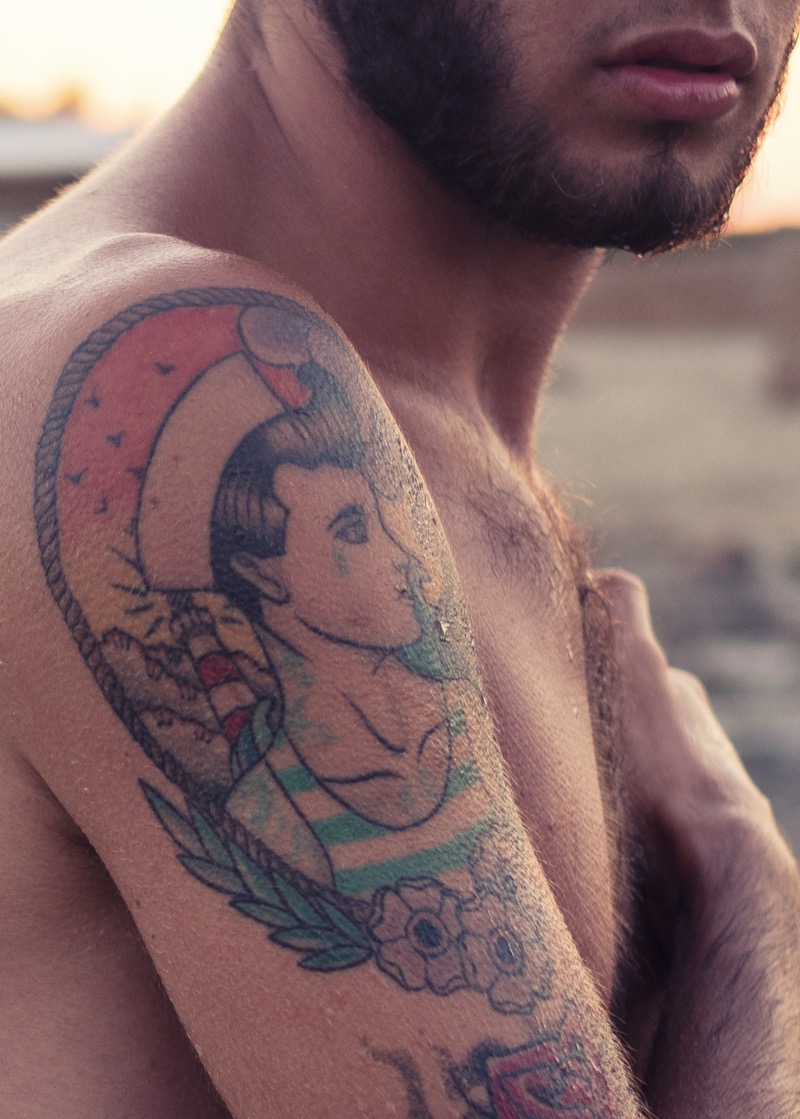
Bold outlines, saturated color, iconic imagery. Traditional American was practically designed for the shoulder cap. Eagles, ships, roses, daggers, and hearts all frame naturally on the deltoid’s round shape. Neo-traditional adds more color range and detail complexity while keeping the heavy outlines that make traditional work age so well. If you want a shoulder tattoo that looks as strong in 20 years as it does on day one, this is the safest long-term bet.
Best for guys who want a bold, graphic piece that holds up over time on its own.
Japanese & Irezumi
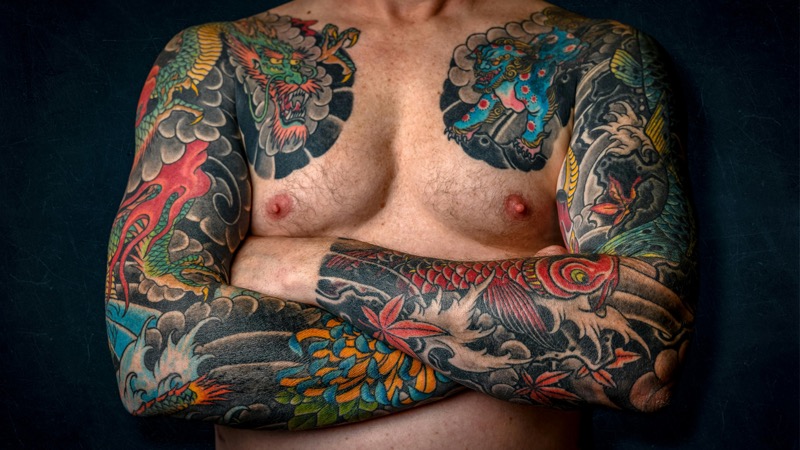
Japanese work flows from shoulder to chest to sleeve like it was designed for the path, because it was. Tigers, dragons, koi, phoenix, and floral compositions with background fill all use the shoulder as a hinge point. The tradition treats the deltoid and upper arm as a unified canvas, not separate zones. If you are considering a full sleeve eventually, Japanese is the most seamless route from shoulder to wrist.
Best for guys planning a sleeve or a larger bodywork composition.
Blackwork & Tribal / Polynesian
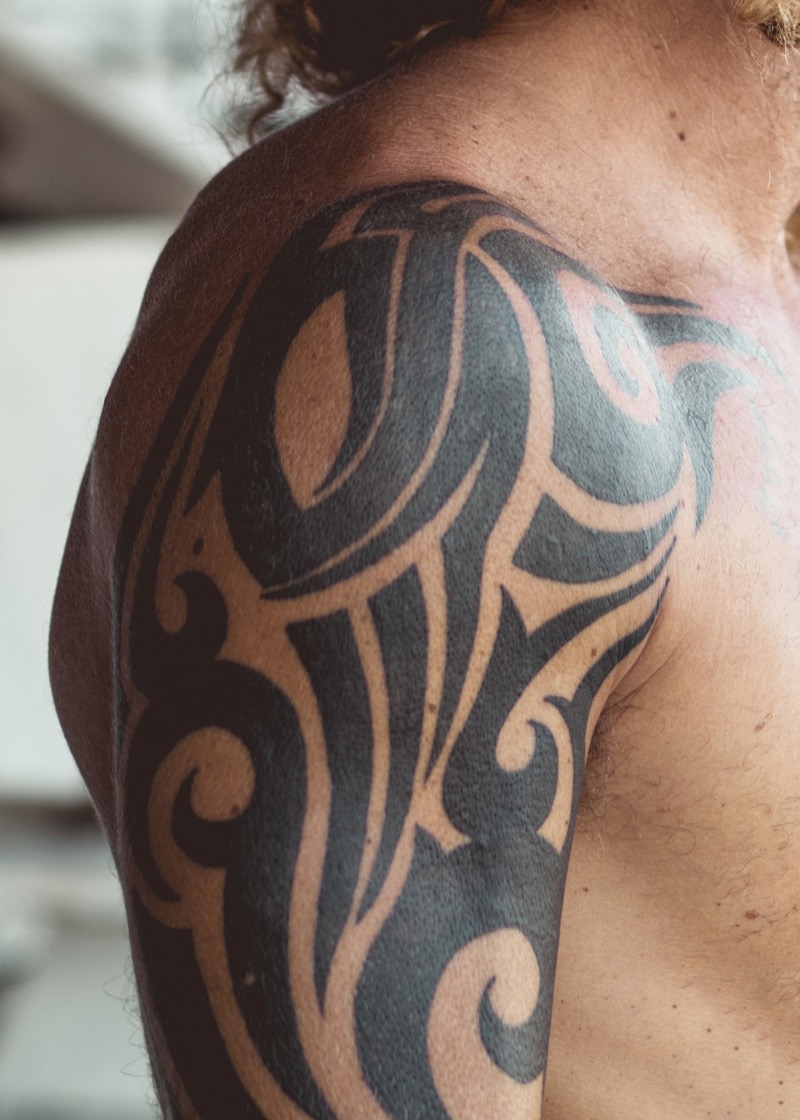
Heavy black saturation, geometric patterns, Polynesian bands, ornamental mandalas. No color means nothing shifts or fades unevenly over time. Blackwork on the shoulder hits hard from across a room, and Polynesian work in particular was designed for shoulder-to-chest scale. The tradition assumes the deltoid and pec as one canvas. The tradeoff is time in the chair. Packing solid black takes longer than most guys expect, and the later passes over already-worked skin are the roughest part of the session.
Best for guys who want high contrast and clean aging with no color maintenance.
Realism
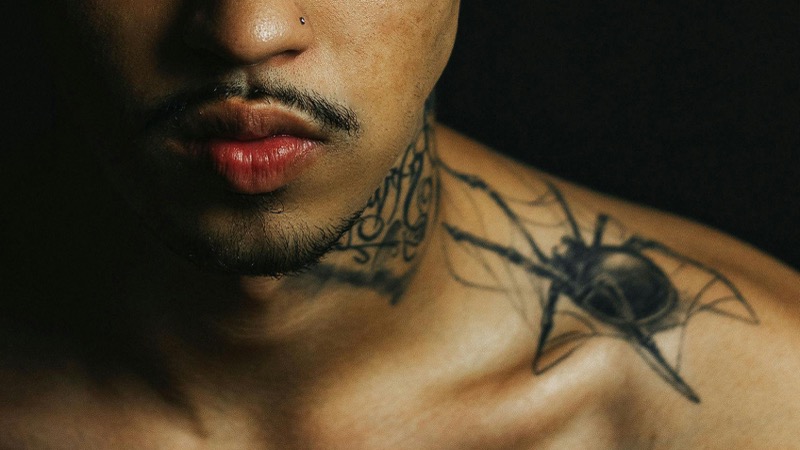
Tiger heads, lion portraits, wolf faces, eagle wings, family portraits. The deltoid and shoulder blade both provide enough surface for an artist to execute fine detail. Realism costs more ($250 to $500 per hour for a specialist), takes two to four sessions minimum, and requires the right artist. A bad realism tattoo is worse than a bad traditional tattoo because every flaw is exposed. Every proportion, every shade, every transition is visible. Check portfolios carefully and ask to see healed work, not just fresh photos.
Best for guys who want a single high-impact piece and are willing to invest in the right artist.
Geometric & Ornamental
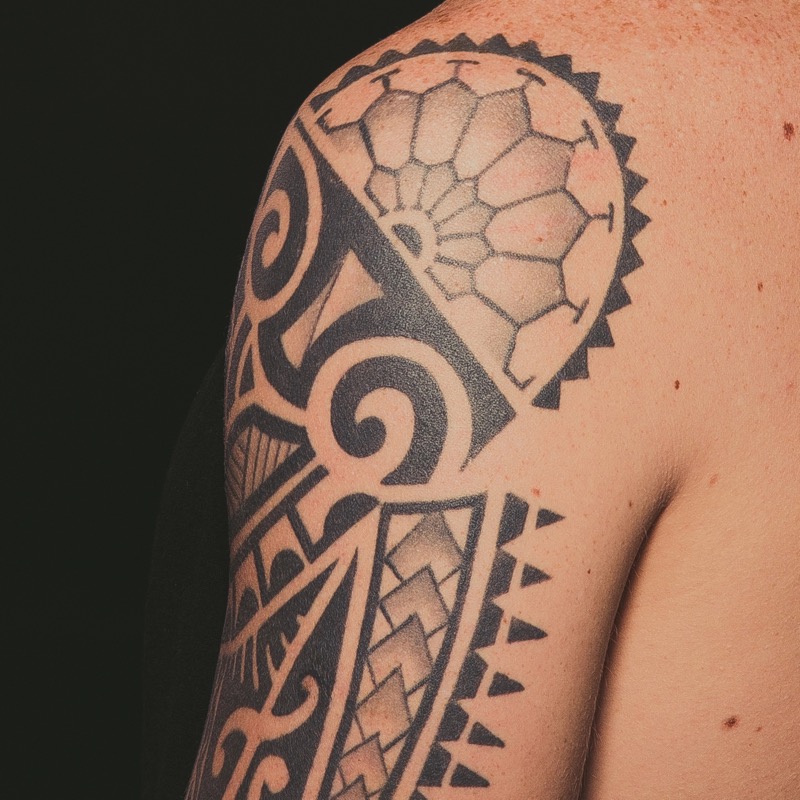
Sacred geometry, dotwork, mandalas, ornamental filigree. The shoulder’s curves enhance geometric work. Circles and symmetrical patterns look dynamic on the rounded deltoid, and the flat shoulder blade is especially suited to mandala compositions. This style ages well because it is structured around lines and patterns instead of subtle shading that can blur. Dotwork in particular holds its definition longer than most people expect.
Best for guys who want a clean, structured aesthetic that ages on architecture, not nuance.
Script & Lettering
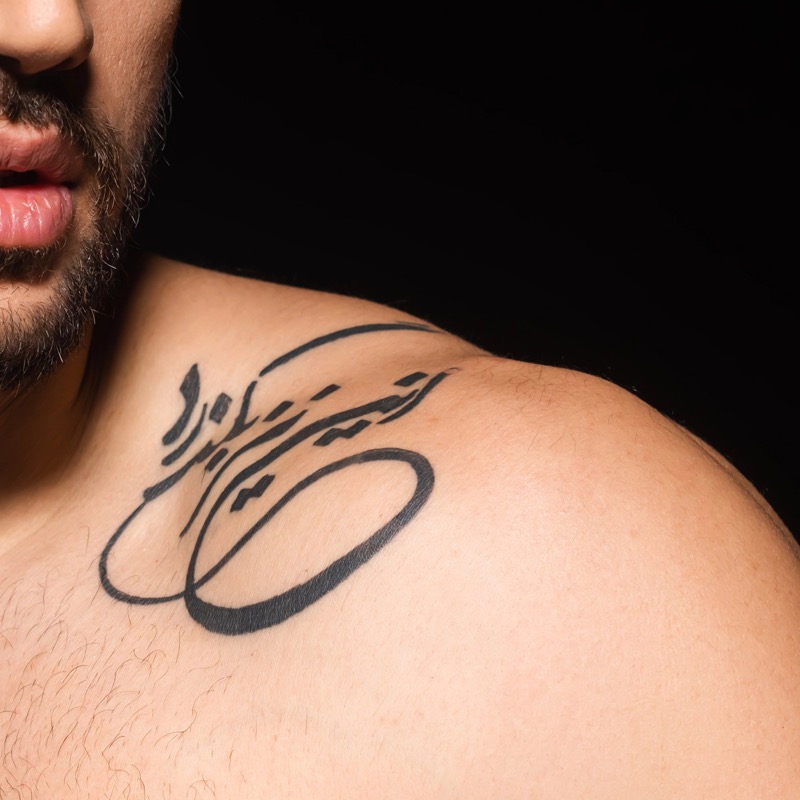
Script on the front shoulder or along the deltoid line shows clean. Short quotes, single words, names, Roman numerals. The key rule is font weight, and most guys underestimate it. Thin script blurs faster on the shoulder than on the forearm because of the muscle movement underneath. Ask your artist to print the text at size and hold it against your shoulder before committing. If you cannot read it clearly from arm’s length on paper, it will be illegible on skin within a decade.
Best for personal statements, memorial dates, and names where the meaning outweighs the visual impact.
Fine Line & Minimalist
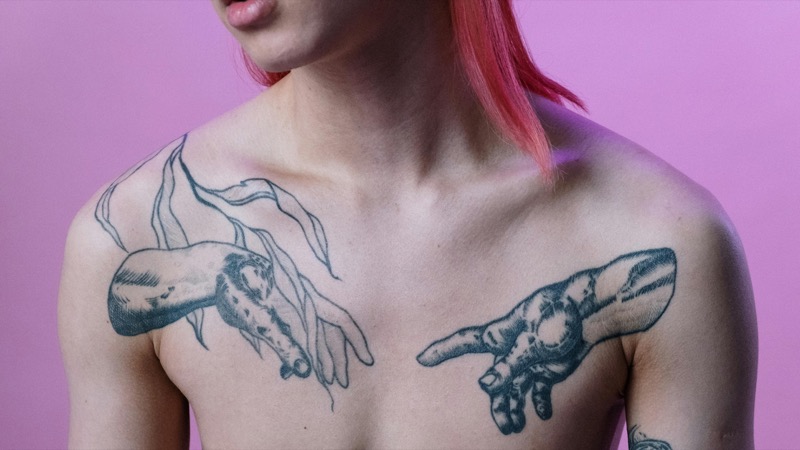
Fine line works on the shoulder better than on the chest but worse than on the forearm. The deltoid’s movement over years causes thin ink to spread slightly. That is not a dealbreaker, but it is worth knowing before you commit. Place fine line work on the shoulder blade or the outer deltoid where skin movement is minimal. Plan for a touch-up around year 10 to 12. For small shoulder tattoos for men, this style delivers the most precision in the least space.
Best for guys who want a subtle, low-profile piece and are comfortable with a future touch-up.
Religious & Memorial
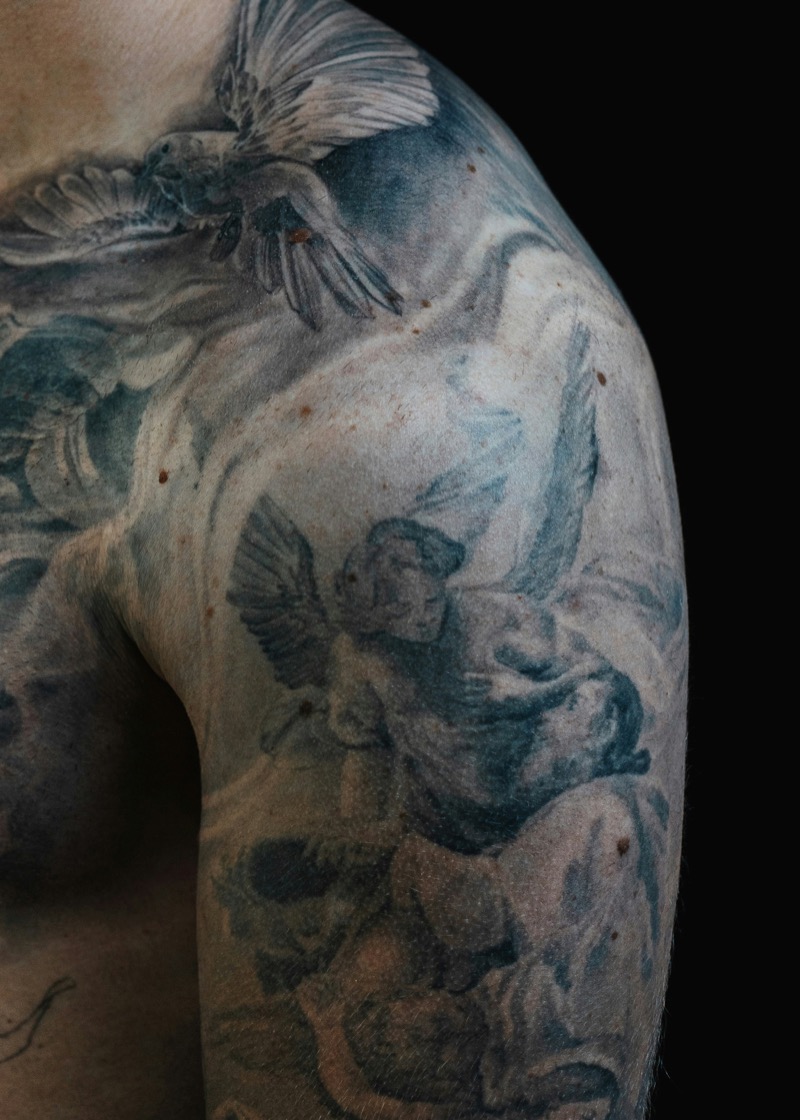
Crosses, praying hands, angels, doves, rosaries, portrait memorials. The shoulder is a close second to the chest for religious and memorial work. A cross on the shoulder blade or a portrait on the deltoid has weight with less exposure than a chest piece. The shoulder keeps these pieces semi-private, visible to people close to you but covered in most shirts. Roman numerals for dates fit naturally on the front shoulder or collarbone line.
Best for personal and tribute work where placement proximity to the heart matters.
Shoulder Tattoo Ideas for Men
Small Shoulder Tattoos
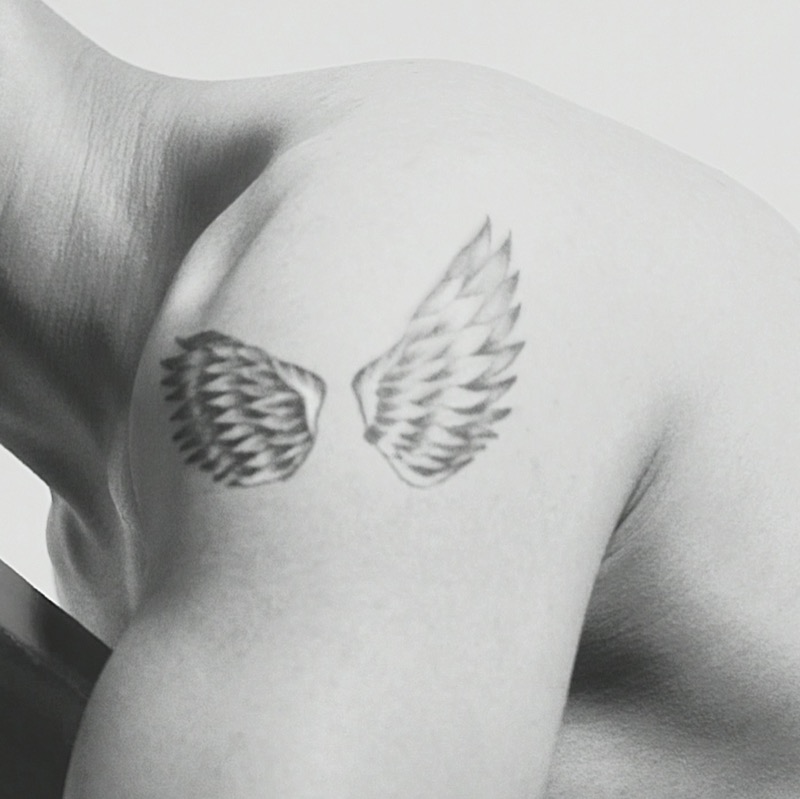
A small piece on the shoulder works, but only with the right placement. Near the collarbone, on the inside edge of the deltoid, or centered on the shoulder blade are the three spots where small designs look intentional, not undersized. Anywhere else, a small tattoo on the shoulder looks like it is floating in too much open skin. Shop minimum pricing applies here, so a quarter-sized symbol often costs nearly as much as a palm-sized piece. If budget is a factor, sizing up slightly gives you more design for roughly the same cost. For guys researching simple shoulder tattoos for men, a single symbol on the inner deltoid or near the collarbone shows clean and holds its shape for decades.
Meaningful & Memorial Designs
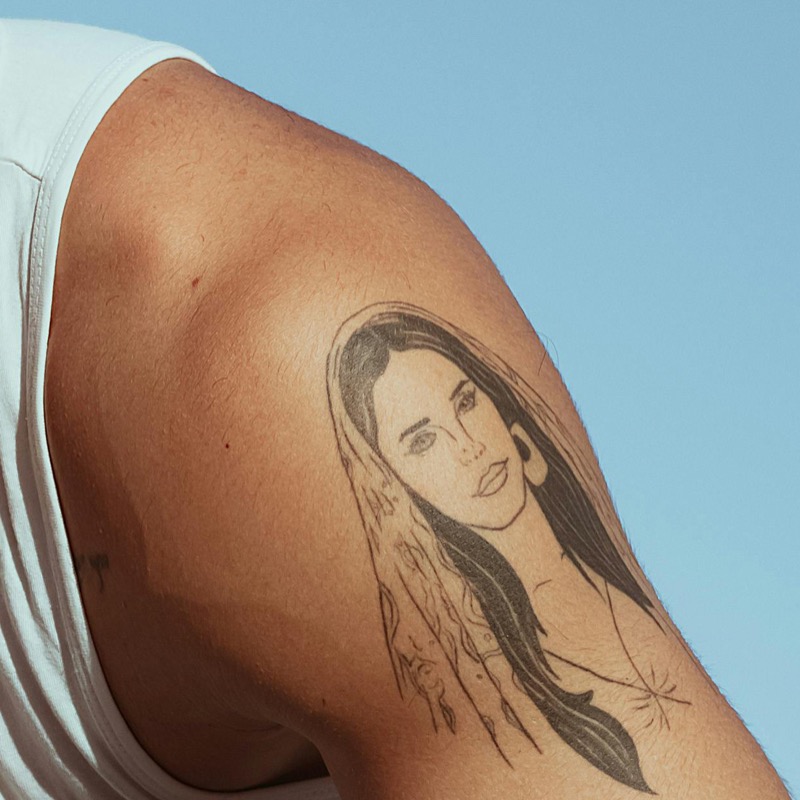
The shoulder holds personal weight differently than a forearm. A memorial piece here is semi-private, seen by people close to you, not everyone you shake hands with. Names, dates, coordinates, religious symbols, and tribute portraits all sit well on the deltoid or shoulder blade. Roman numerals for significant dates are the most common format. Coordinates for a meaningful location are gaining ground. Both age cleanly if the line weight is sufficient.
Animal & Nature Designs
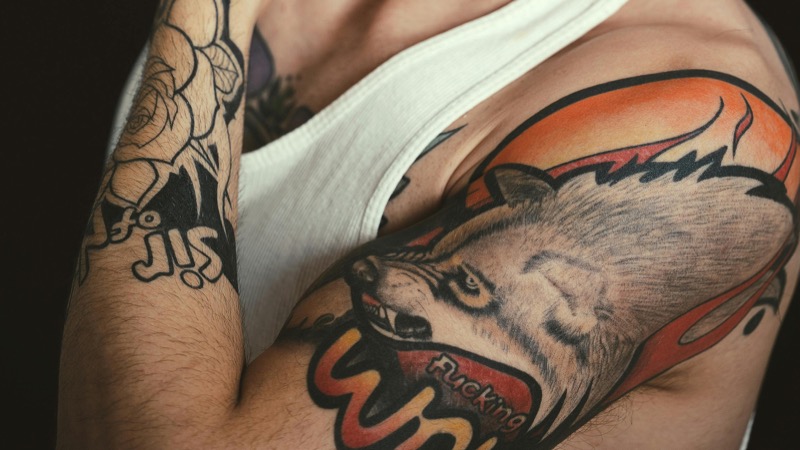
Lions, wolves, eagles, bears, tigers, snakes. Animal portraits on the deltoid are the most-requested shoulder tattoo ideas for men outside of memorial work. The round shape of the muscle frames a head portrait naturally. Eagle wings spread across the shoulder blade. Snakes and dragons wrap around the deltoid toward the arm, which makes them strong candidates for eventual sleeve extensions. If you want a shoulder piece that doubles as a sleeve starter, an animal that wraps is a practical choice.
Shoulder-to-Chest Combinations
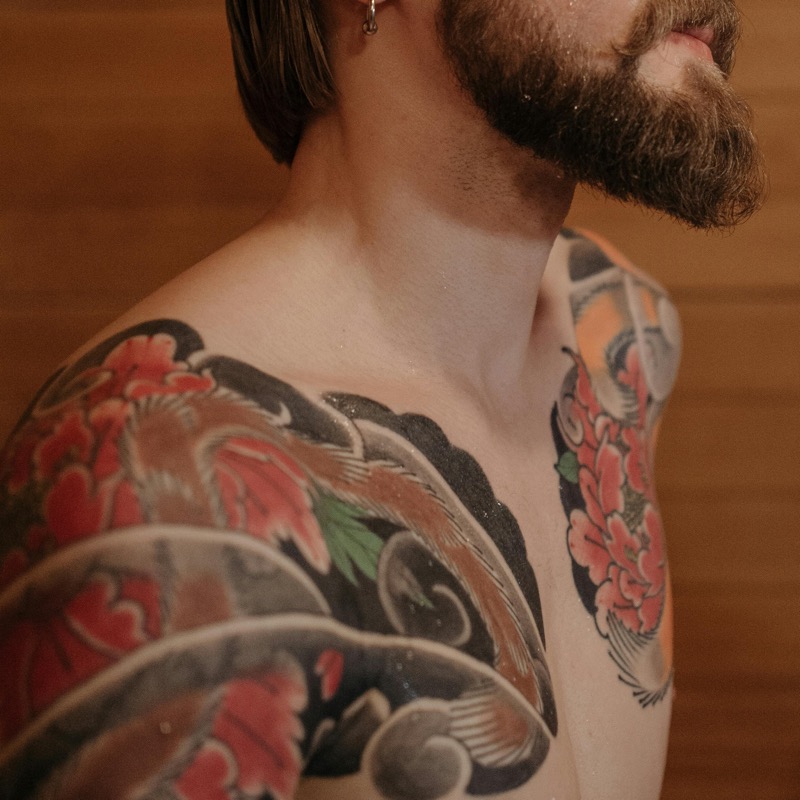
Extending from the shoulder across the collarbone and onto the pec creates a half-chest composition. This is the most dramatic shoulder tattoo decision because it commits you to chest coverage. Japanese and traditional styles handle this transition naturally because they were designed for large-scale body composition. Realism requires more planning to maintain visual coherence across two different skin surfaces. If you go this route, commit to a single artist for the whole composition. Switching artists mid-piece across a chest and shoulder tattoo almost always shows.
Shoulder-to-Sleeve Transitions
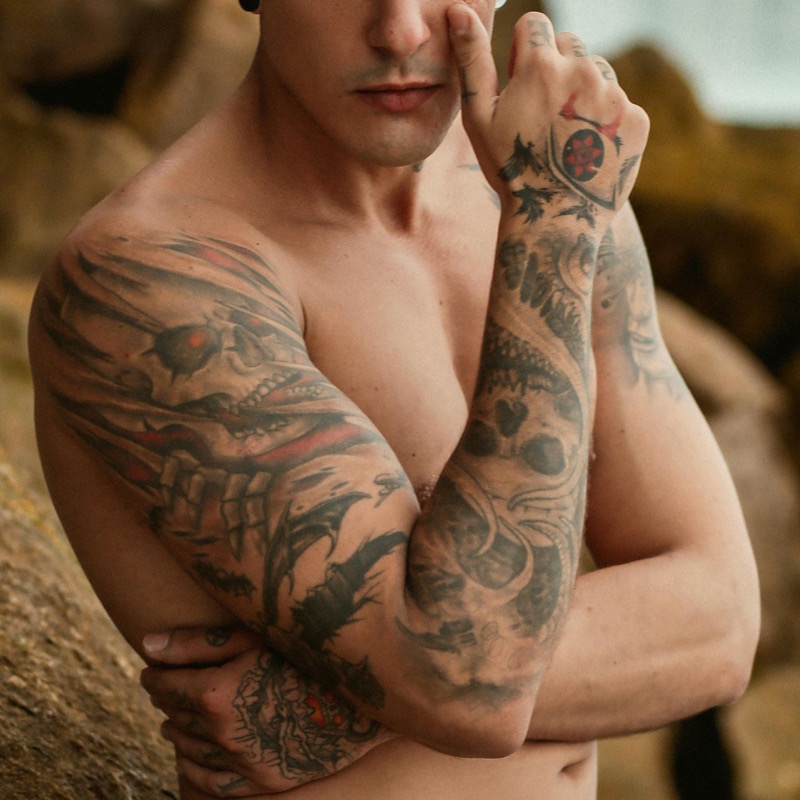
A shoulder piece that extends into a half sleeve is one of the most common tattoo progressions for men. The key is planning from the first session. A shoulder piece with a hard edge at the mid-bicep line makes extending to a full sleeve awkward later. Organic edges, background elements, and compositions that fade into skin make the transition natural when you are ready to continue.
A Note on Skin Tone
Bold black ink and high-contrast designs show best on darker skin tones. Fine line and pale color washes lose definition. Tribal, blackwork, and traditional American with heavy outlines are the strongest options. Realism and color work require an artist experienced with darker skin. Ask to see their portfolio for clients with your skin tone specifically. A good artist will show you healed examples on the spot.
How Shoulder Tattoos Age
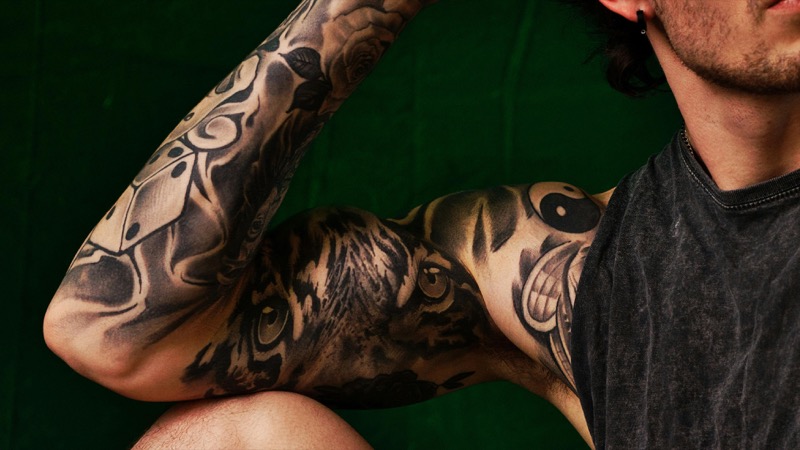
The shoulder ages better than the chest but not as well as the forearm. The main variable is the deltoid muscle, which changes shape with training cycles. Bulk adds stretch, cutting pulls back. That movement affects thin ink more than bold outlines.
Traditional American holds up the best over time. Bold lines and saturated color resist the spreading that comes with years of skin movement. Blackwork and tribal age cleanly because the density of the ink is the aesthetic. Japanese work with heavy saturation and background fill maintains its composition for decades. Geometric holds because it is structured around architecture, not nuance.
Fine line spreads. Not dramatically, but enough that a delicate piece at 25 will look softer at 40. Pale watercolor fades unevenly on the shoulder because of sun exposure. Tiny text blurs faster than larger lettering because each letter has less ink density to hold its shape.
Sun exposure matters more here than most guys realize. The shoulder catches direct UV in every tank top, every shirtless afternoon, every day at the beach. UV degrades color pigment faster than anything else. Black and grey ages significantly better on the shoulder than full color. If you go with color, expect touch-ups every 10 to 15 years. Black and grey can go 15 to 20 before needing any real attention.
Weight fluctuation affects the shoulder less than the chest or stomach. Muscle changes matter more. A guy who cycles between lean and heavy training will see more tattoo movement than a guy who stays at a steady size.
Pain & Healing
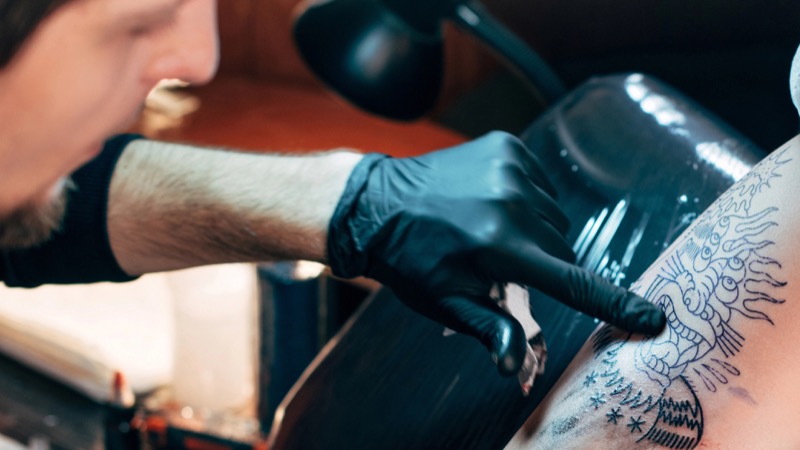
Pain by Zone
The deltoid and shoulder cap sit at the comfortable end. Thick skin and heavy muscle keep the sensation to a warm, consistent scratch. Most guys handle a full session here and skip the break entirely.
The shoulder blade is moderate. The center of the blade feels like a steady, manageable scratch, but the edges near the spine and the inner ridge get sharper. The shift catches you, but it is brief each time the needle crosses a bone line.
The front shoulder starts comfortable near the deltoid and sharpens as it approaches the collarbone. The closer to bone, the higher the sting.
The collarbone line is the sharpest zone in the shoulder region. Thin skin over bone with limited muscle. It is not unbearable, but it is a noticeable jump from the surrounding areas.
The inner shoulder near the armpit is sensitive. More nerve endings and thinner skin make it consistently sharper than the outer deltoid.
Overall, the shoulder ranks in the lower half of major placement pain. It is significantly easier than ribs, sternum, stomach, or spine. More intense than the outer forearm or calf. For a full breakdown, see the tattoo pain chart.
Healing Timeline
Surface healing takes two to three weeks. The skin closes, peeling finishes, and the tattoo looks settled. Deep healing takes four to six weeks before the ink is fully locked in the dermis.
Sleep on your opposite side or your back for the first week minimum. For shoulder blade work, stomach or opposite side only. Pressing a fresh tattoo into a pillow for eight hours introduces friction, heat, and bacteria.
Clothing matters. Loose t-shirts only. Nothing that rubs the collarbone or sits tight on the shoulder seam line. Compression shirts and fitted gym wear are off limits until surface healing is complete.
Gym restrictions are real. No overhead pressing, shoulder work, or anything that stretches the deltoid for a minimum of two weeks. Sweat introduces bacteria to healing skin. Do not rush back.
No pools, oceans, saunas, or hot tubs for three to four weeks minimum. Submerging a healing tattoo in water risks infection and pulls ink from the skin before it has set.
For a complete aftercare walkthrough, see the tattoo aftercare guide.
Frequently Asked Questions
Are shoulder tattoos painful?
The shoulder is one of the more comfortable major placements for men. The deltoid has thick skin and heavy muscle, which keeps the sensation to a steady, warm scratch for most of the session. The collarbone area is sharper because of thin skin over bone, but the deltoid and shoulder blade are manageable for most first-timers. Overall, shoulder tattoos are significantly easier than ribs, sternum, or spine work.
How much does a shoulder tattoo cost?
A single shoulder cap piece runs $400 to $1,200 depending on complexity and artist rate. A shoulder blade design runs $300 to $1,000. Front shoulder pieces range from $250 to $800. Shoulder-to-chest combinations start at $800 and can exceed $2,500 because they require multiple sessions. Realism and Japanese work sit at the higher end due to time and specialization. For a full pricing breakdown, see the tattoo cost guide.
What shoulder tattoo style lasts the longest?
Traditional American lasts the longest because bold outlines and saturated color resist the ink spread that comes with years of skin movement. Blackwork and tribal are close behind since density is the aesthetic and there is no color to fade unevenly. Japanese with heavy saturation and background fill holds for decades. Geometric ages on structure. Realism and fine line show wear the earliest, especially on the deltoid where muscle movement accelerates spreading.
Is the shoulder a good spot for a first tattoo?
The shoulder is one of the strongest first-tattoo placements for men. The deltoid’s pain profile is forgiving, the canvas is large enough for a meaningful design, and the placement is visible in a t-shirt but hidden in a button-down. It is a better first-tattoo choice than ribs, sternum, or stomach because the pain is lower and the healing is more straightforward.
Do shoulder tattoos stretch with muscle gain?
The deltoid changes shape with significant bulk and cut cycles, which can shift the design slightly over time. Bold outlines and dense ink handle this well. Fine line and thin ink show the movement more. If you are planning serious bodybuilding, get the tattoo after you have settled into your target physique or choose a style with heavy outlines that absorb small shifts in the skin surface.
Can I extend a shoulder tattoo into a sleeve later?
Yes, if you plan for it from the start. Tell your artist at the shoulder consultation that you might want a sleeve eventually. The border treatment, composition flow, and style choice all determine whether a sleeve extension works later or forces a compromise. Japanese and traditional styles extend most naturally because they were designed for multi-zone compositions. Hard geometric borders and self-contained circular designs are harder to extend.
How long does a shoulder tattoo take to heal?
Surface healing takes two to three weeks, during which the skin closes and peeling finishes. Full deep healing takes four to six weeks before the ink is completely set in the dermis. During healing, avoid overhead pressing, swimming, and tight clothing on the shoulder. Sleep on the opposite side and keep the area clean and moisturized per your artist’s aftercare instructions.