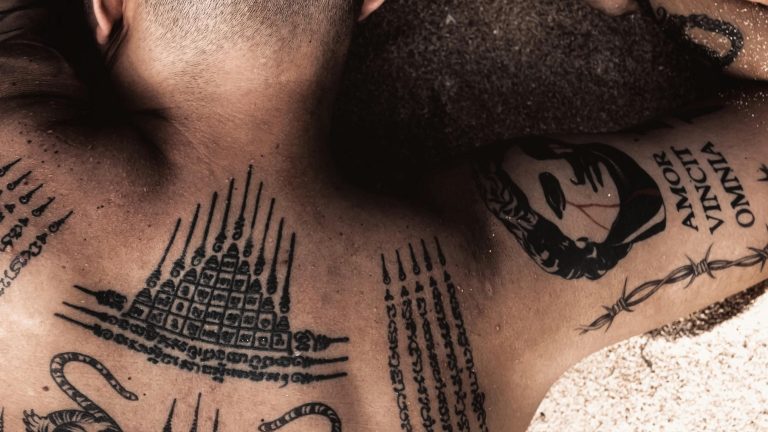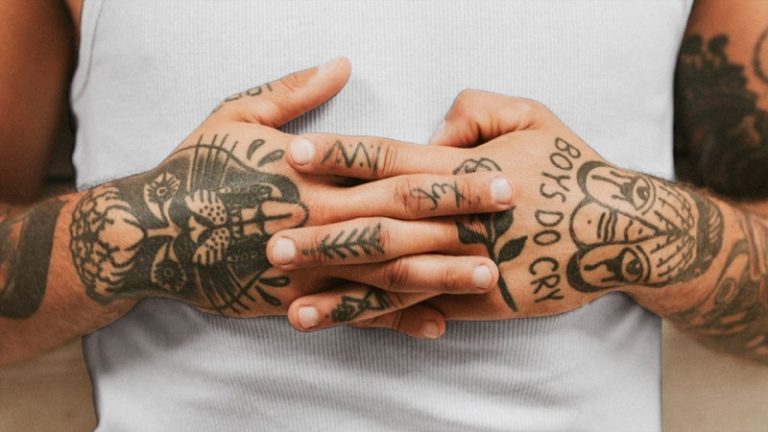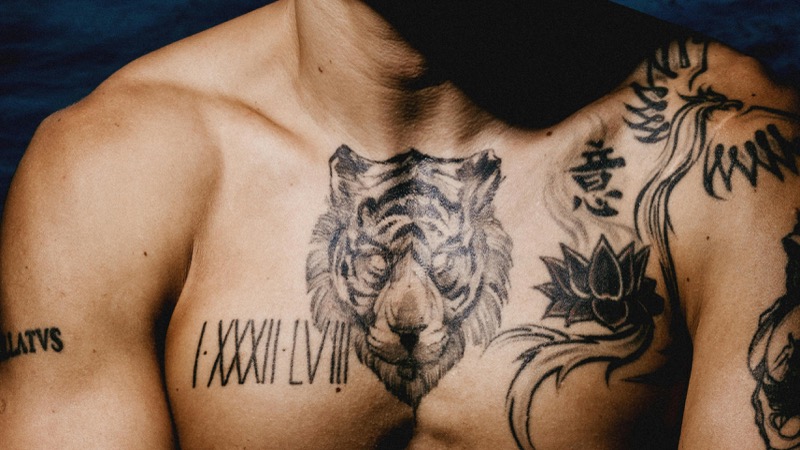
A chest tattoo is not a starter move. The forearm is where you figure out how you feel about having ink. The chest is where you decide how much of it you want, because this is the placement you commit to for real. Your forearm is visible every day in a t-shirt. Your chest lives under your shirt almost all the time, seen mostly by you in the mirror and by the people close enough to see you without one.
That flips the calculus. You are not picking a chest tattoo to show off during client meetings. You are picking one to live with privately for the rest of your life, which means the decision carries different weight than any other placement. Zone, style, scale, and flow all matter more here. This is the guide for guys who are actually thinking about committing.
Chest Tattoo Placement Zones
Before you pick a style, you pick a zone. The chest is not a single canvas. It is five distinct areas that each carry different pain, different visibility, and different style requirements. Most guys skip this step and regret it later.
Single Pec Tattoos
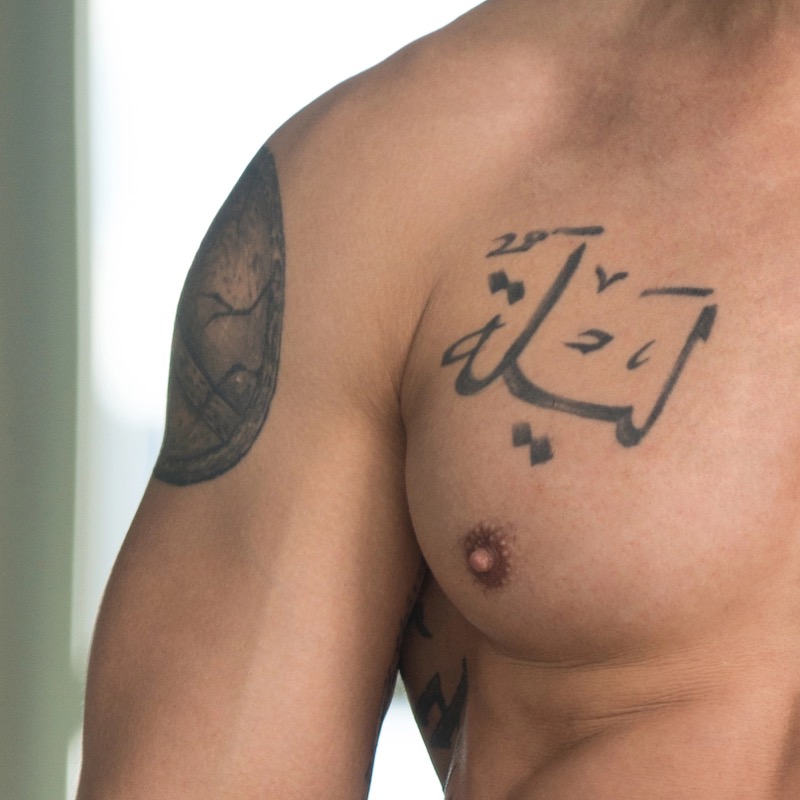
The most common chest placement for men is a single piece on one pec. It commits to one side and leaves the other open, which gives you room to add to it later or leave it as a standalone. The outer pec (closer to the shoulder) is the easiest spot on the chest to tattoo because the muscle sits close to the skin and the surface is relatively flat.
Single pec tattoos work for medium-sized pieces like animal portraits, single symbols, short script, and fine line illustrations. The scale fits naturally within the boundary of the pec muscle, which your artist can use to frame the design. If you are getting your first chest tattoo, this is the standard starting point.
Center Chest & Sternum Tattoos
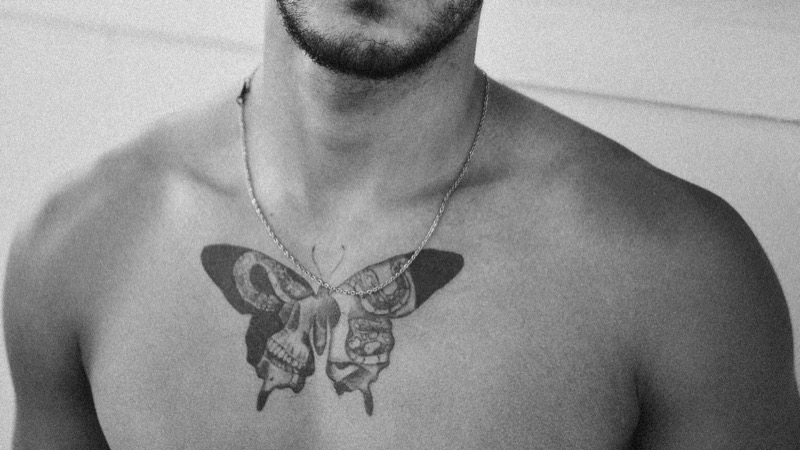
The center of the chest is the most dramatic chest placement. A design here is symmetric, anchored, and visible the moment your shirt comes off. It also hurts the most. The sternum is bone under thin skin, and the nerve density in the center of the chest is higher than either pec. Most guys rank sternum pain at the top of the chest spectrum, with some placing it in their top three most painful spots overall.
Center chest works best for designs that are built to be symmetric. Religious imagery, ornamental pieces, geometric work, single-piece script, or portraits meant to read as the focal point of the whole chest all land here. If you want your tattoo to be the first thing someone sees when you take your shirt off, this is the zone. If you want to avoid serious pain, it is not.
Full Chest Pieces
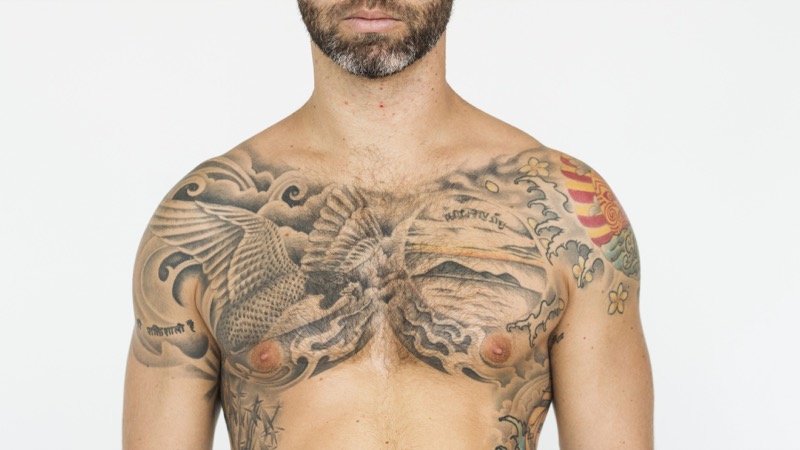
A full chest piece covers both pecs and usually the sternum, spanning the entire upper torso. This is the highest-commitment chest tattoo, and it is almost always a project built across multiple sessions. Traditional American, Japanese, and ornamental blackwork are the three styles that dominate full chest work because each is designed to read at full scale and fill space with intent.
Full chest pieces run $1,500 to $4,000 or more depending on style and the artist’s rate, typically spread across 3 to 6 sessions. See our tattoo cost guide for a full breakdown by size and style. The payoff is a cohesive piece that carries real visual impact. The tradeoff is the commitment level. A full chest piece is not something you reconsider a year later. You are in for life.
Collarbone & Upper Chest Tattoos
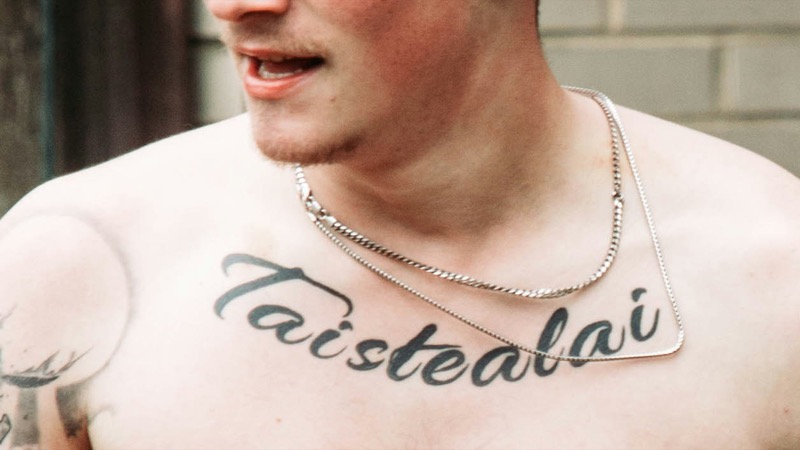
The area running along the collarbones and the top of the chest is a distinct zone. The skin is thinner, it sits directly over bone, and the natural linear shape of the collarbones favors horizontal designs. Script, Roman numerals, small meaningful pieces, and band-style designs all sit naturally here.
Pain is higher on the collarbone than on the outer pec because of the bone proximity and thinner skin. Expect the sensation to feel sharper, especially at the inner edge near the sternum. The upper chest also tends to pick up sun exposure when you are in open-collar shirts, which is worth keeping in mind for color work.
Under-Chest & Lower Pec Tattoos
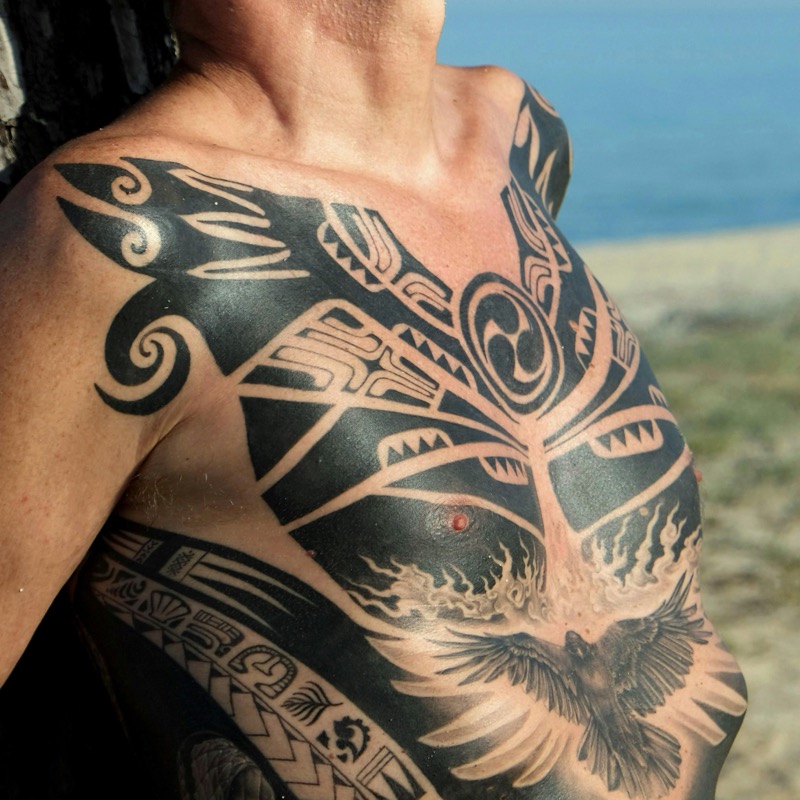
The under-chest zone sits below the pecs and often connects to rib or stomach work. It is hidden when your arms are down and visible when they are raised, which gives it a different visibility profile than any other chest zone. Most under-chest tattoos are part of a larger composition that extends to the ribs, the stomach, or around the sides of the torso.
Pain here is significant. The lower pec and ribcage are among the most painful areas on the body to tattoo, sitting at or near the top of the tattoo pain chart. The skin is thin, the ribs are right underneath, and the breathing motion makes the needle less predictable. Under-chest work tends to be a second or third chest tattoo, not a first, because it is both painful and better suited to extending an existing composition than standing alone.
Best Tattoo Styles for the Chest
The chest scale is forgiving enough to handle almost every style. Some styles match the canvas better than others, and a few have specific reasons to live on the chest more than anywhere else.
Traditional & Neo-Traditional
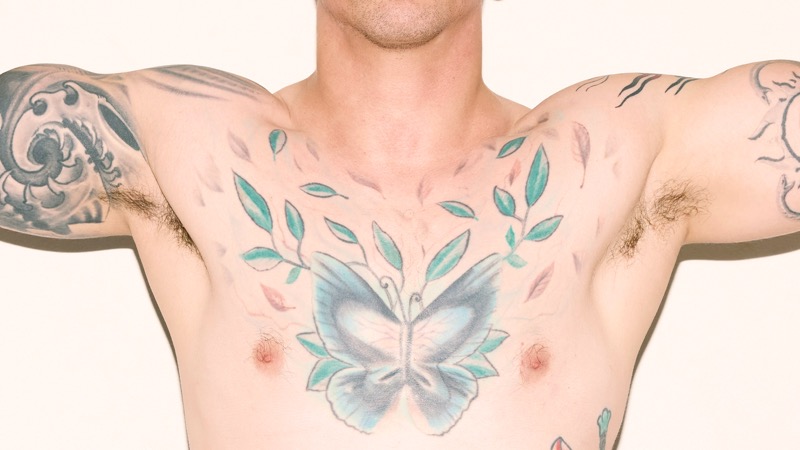
Bold outlines, solid color fills, and iconic imagery make traditional American the strongest aging style on the chest. The style was built to read from a distance, which matches how chest tattoos get seen: across a room, at the pool, in the mirror from several feet away. Classic traditional chest pieces include eagles spanning both pecs, heart-and-banner compositions, swallows, and ships.
Neo-traditional adds more shading complexity, a broader color palette, and finer detail while keeping the heavy outlines that make traditional work hold up long-term. If you want a tattoo that looks as strong in 20 years as it does the day it heals, traditional or neo-traditional on the chest is the safest bet.
Japanese & Irezumi
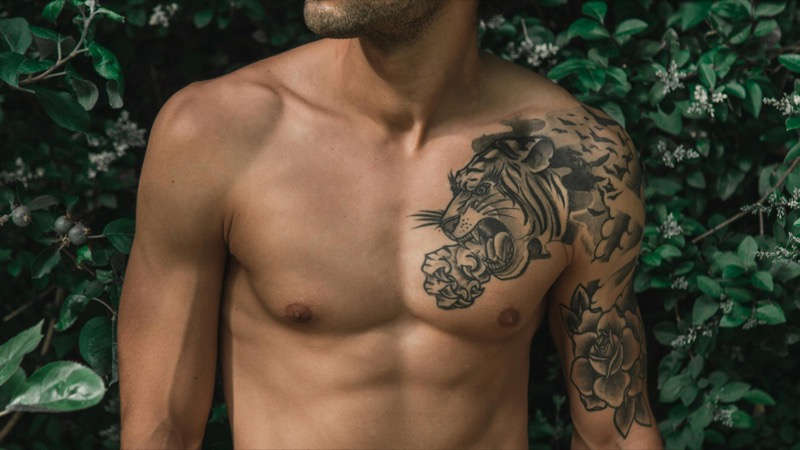
Japanese tattoos are designed for body-scale composition. Tigers, dragons, koi, phoenix, and floral work with cloud, wind bar, or water backgrounds all scale naturally onto the chest. The tradition assumes the design will eventually extend into a sleeve, a back piece, or a full bodysuit, which means chest work in this style is usually the first chapter of a longer project.
If you are considering Japanese chest work, talk to your artist about flow from the start even if you are only getting a single piece for now. Placement on the pec or shoulder affects how the composition extends later. Japanese work on the chest runs $2,000 to $5,000+ for a substantial piece because of the scale and the background fill required.
Realism
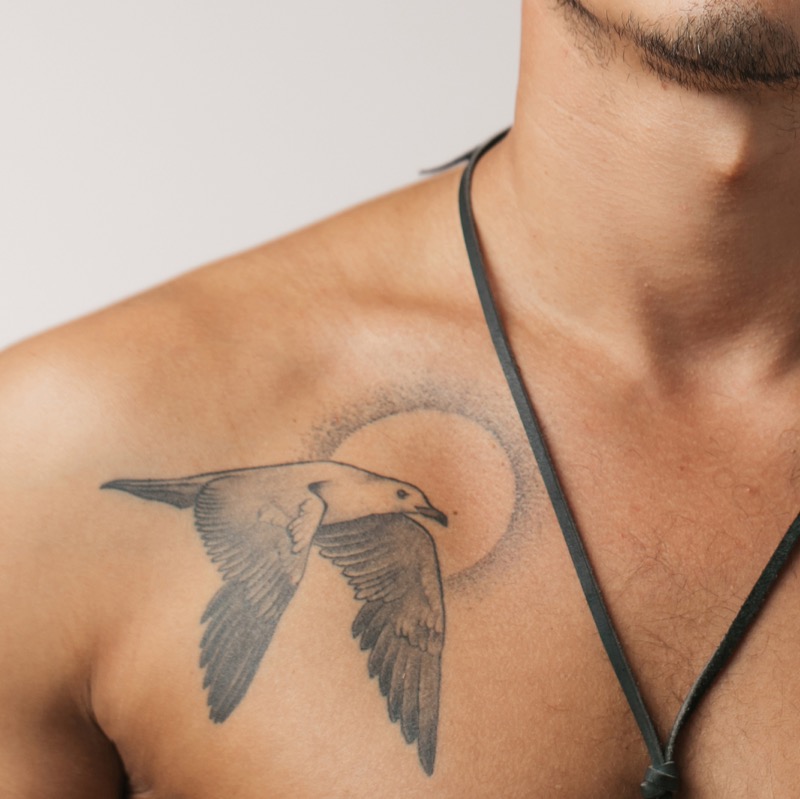
Realistic portraits, animals, and nature scenes require a flat stretch of skin with enough room for detail, and the chest is one of the few placements that delivers both. Tiger portraits, lion heads, wolves, eagles, and family portraits all land on the chest because the pec or the center of the chest gives the artist the scale needed to hold fine gradations of shading.
Realism costs more per session than any other style, usually $250 to $500 an hour for a specialist, and it takes longer because the detail work is slow. A realistic portrait on the chest usually requires 2 to 4 sessions minimum. The result, when done by the right artist, is unmatched, but the cost and session commitment are real.
Blackwork & Tribal
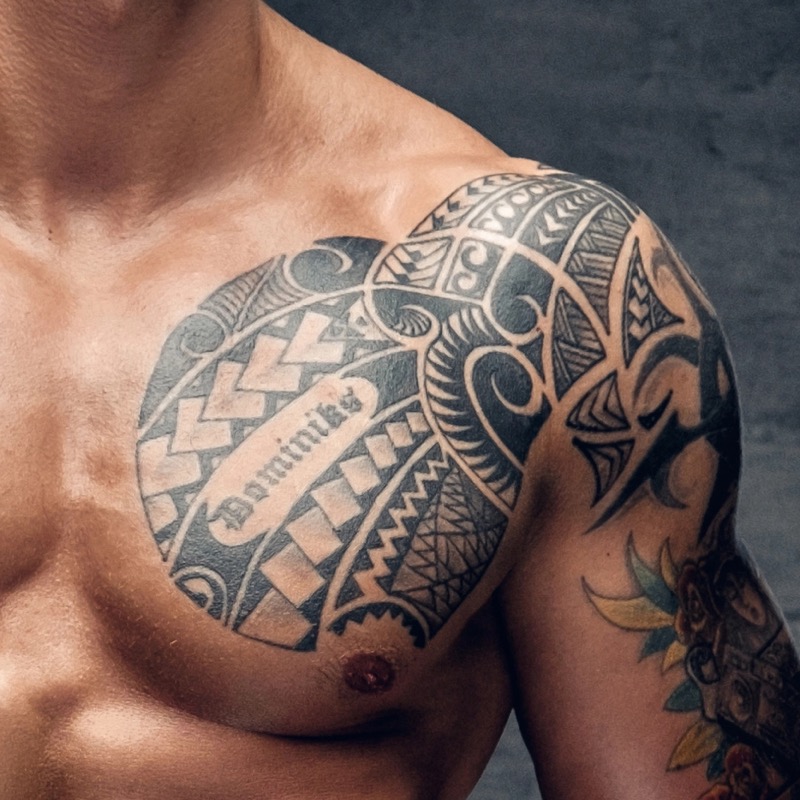
Heavy black saturation, geometric patterns, Polynesian work, and ornamental blackwork all age cleanly on the chest because there is no color to shift or fade. Blackwork is one of the most impactful styles for full chest coverage, and the Polynesian tradition in particular was designed for chest-and-torso scale.
The tradeoff is saturation time. Filling solid black across a full chest takes multiple sessions and can feel repetitive, but the finished piece reads stronger from a distance than any other style. Blackwork on the chest is also one of the best options if you are concerned about how your tattoo will age, because the aesthetic is built around density rather than fine detail.
Script & Lettering
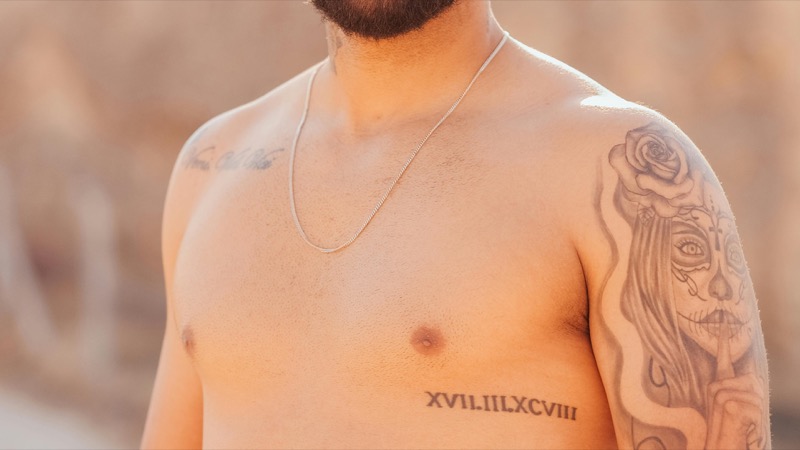
Script and lettering work best on the chest when they are placed along the collarbone, across the sternum, or as a single horizontal line running across the pec. Roman numerals for dates are one of the most common chest tattoos for men, and the format is especially suited to the flat planes of the chest.
Font choice matters here more than the design itself. Thin, delicate fonts blur faster on the chest than on the forearm because of the natural movement of the pec muscle. A font with some weight to it will age significantly better. Ask your artist to print the text at size before you commit so you can see how the letterforms sit on your skin.
Fine Line & Minimalist
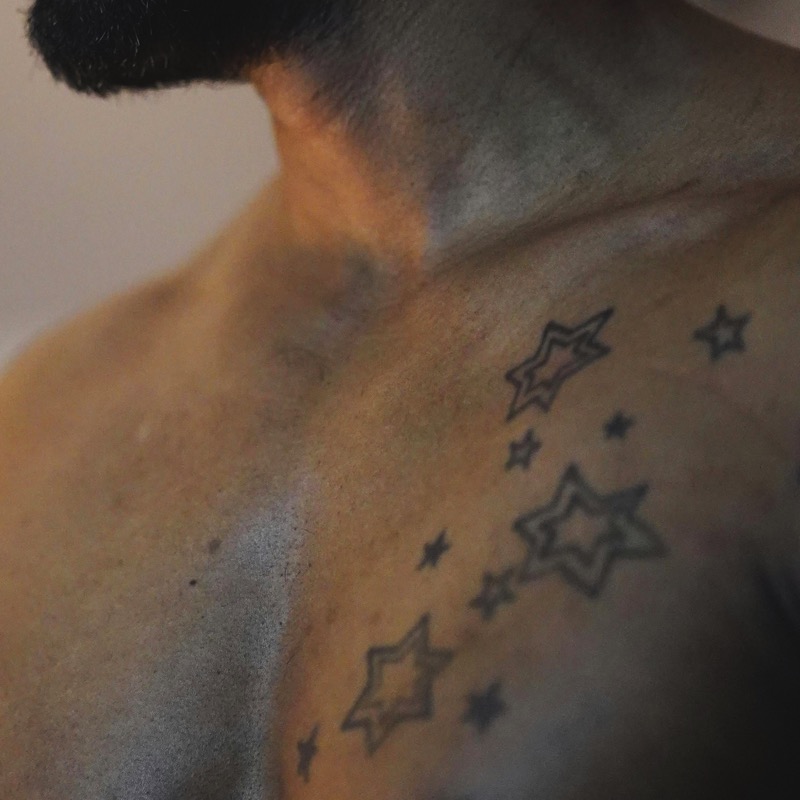
Fine line and minimalist work uses thin outlines, small-scale imagery, and negative space to create understated pieces. On the chest, fine line works best on a single pec or near the collarbone where the skin is smoother and the design has room to breathe.
One caveat: fine line is the weakest style on the chest long-term. The pec muscle moves more than the forearm, and the skin stretches more as your body composition changes over the years. Thin ink shows spread sooner on the chest than on almost any other placement. If you are committed to fine line chest work, plan for a touch-up at year 10 or 15 as part of the cost.
Religious & Memorial Tattoos
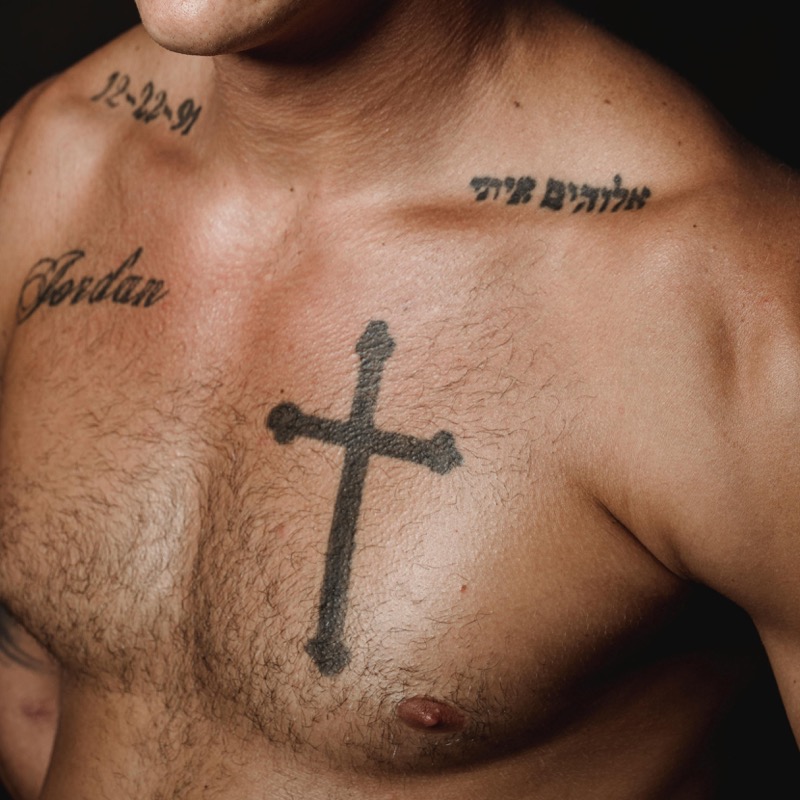
Crosses, rosaries, praying hands, portraits of family members, and religious imagery all land on the chest more often than any other placement. The center of the chest is the default position for religious work because the symbolism lines up with the symmetry of the placement. Memorial pieces tied to specific people or dates also tend to live here.
Religious and memorial chest tattoos often combine multiple elements (a central image with script, a date, a name, or multiple symbols) and build out over time. The chest handles this layered approach well because the available space supports composition across the pecs and collarbones.
Chest Tattoo Ideas for Men
Small Chest Tattoos
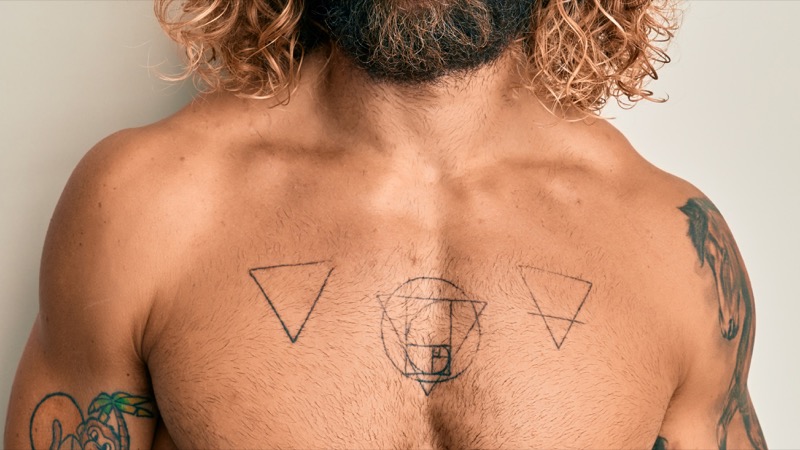
Small chest tattoos are one of the most searched types of chest work, but there is tension in the concept. The chest is a large canvas, and a truly small piece tends to look lost on it unless the placement anchors it correctly. Near the collarbone, on the inside of one pec, or just below the sternum line are the three placements where a small design reads well.
Shop minimum pricing applies here. A two-inch symbol on your chest will often cost the same as something twice the size because you are paying for setup time and the artist’s floor rate. Small chest tattoos work best when the design carries real meaning. A tiny decorative piece tends to feel underscaled on a chest that could easily hold something more substantial.
Meaningful & Memorial Designs
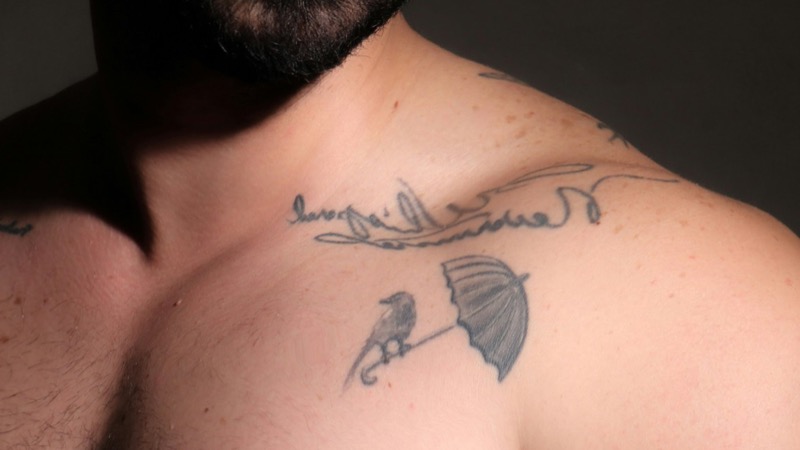
The chest is where most guys put tattoos that carry serious personal weight. Names of children, dates of losses, coordinates of meaningful places, religious symbols, and tribute portraits all live here because the chest placement reinforces the weight of what the tattoo represents. This is not a coincidence. Ink over the heart carries meaning that ink on a forearm does not.
Roman numerals for dates are the most common format because they work within the clean lines of the chest. Names and script across the collarbones are a close second. Portrait work is the highest commitment, both financially and emotionally, but when done well, nothing else matches the impact.
Animal & Nature Designs
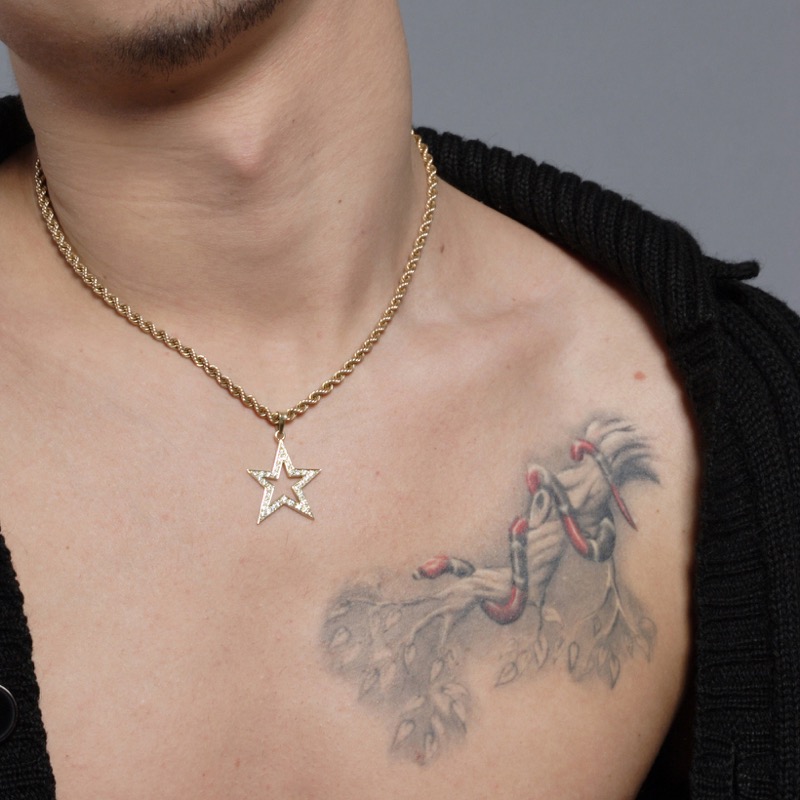
Animal portraits are the most requested non-memorial chest design for men. Tigers, lions, wolves, eagles, bears, and snakes all translate well to the chest because the natural scale of the placement matches the proportions of an animal portrait. A lion head on a single pec, an eagle spanning both pecs, or a tiger across the center chest are all classic compositions.
Nature scenes with mountains, trees, and water also work at chest scale, especially in realism or Japanese styles. Mythical and fantasy imagery like dragons, phoenixes, and ornate snakes has a long tradition on the chest, particularly in Japanese and neo-traditional work.
Chest & Shoulder Combinations
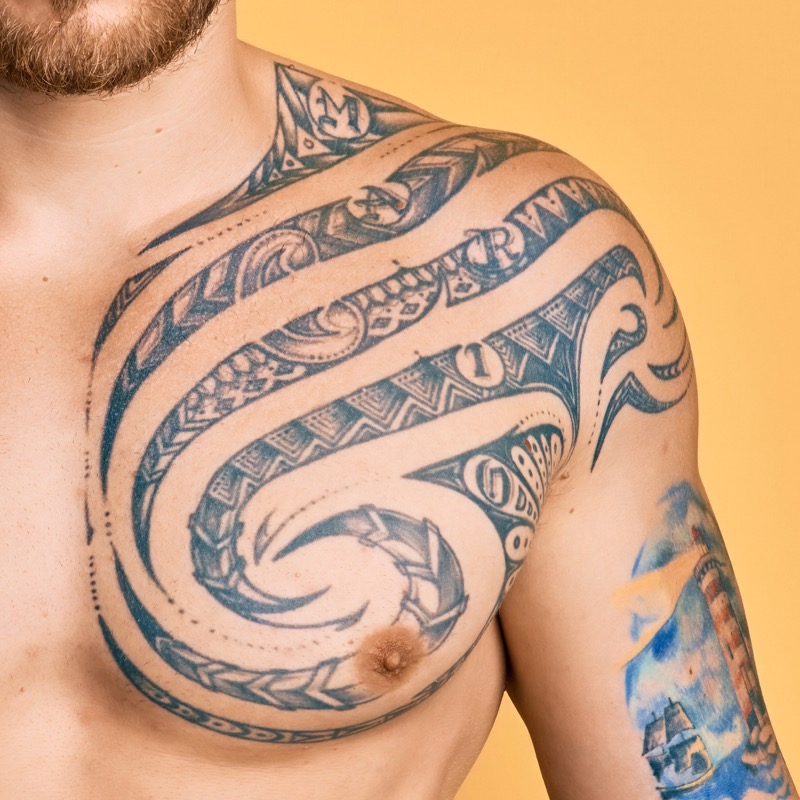
Extending a chest piece into the shoulder creates a natural bridge toward a sleeve. This is one of the most common ways guys start building out larger coverage, and it is one of the few places where the chest tattoo decision affects future work on other placements.
If you are thinking about a sleeve down the road, tell your artist at the chest tattoo consultation. The position, direction, and style of your chest piece can either support or undermine a future sleeve, and a good artist will plan the chest piece with that extension in mind. Japanese work flows most naturally into a sleeve. Traditional American compositions can be extended but require more thought. Realism rarely connects cleanly to sleeve work.
Multi-Piece & Patchwork Chest
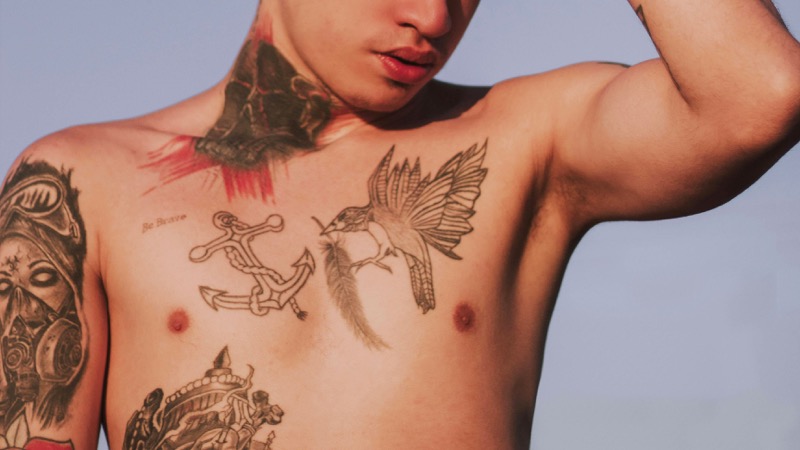
A patchwork chest is a collection of smaller pieces built across the chest and collarbones over multiple sessions. This approach is common for guys who already have sleeves and want the chest to match the energy of their arms rather than sit as a single dedicated composition. Each piece can stand alone, but the overall density reads as intentional coverage.
The risk with patchwork is cohesion. Without a consistent style, spacing, or size, a patchwork chest can end up looking scattered rather than curated. If you are going this route, either commit to a single artist who can maintain visual consistency, or plan the layout in advance even if individual pieces get filled in over years.
How Chest Tattoos Age
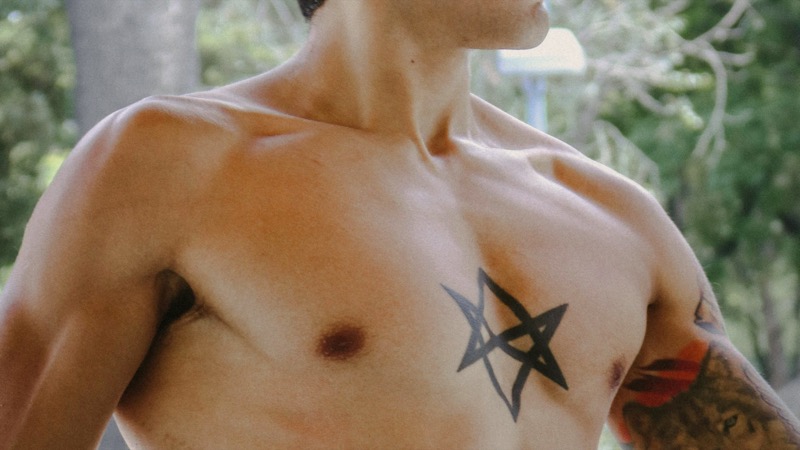
Chest tattoos age differently than every other placement on the body, and most guys do not realize it until they are five or ten years in.
The chest stretches more than any other commonly tattooed area because the pec muscle changes shape with weight gain, weight loss, and training. A guy who bulks for three years and then cuts will see his chest tattoo move in ways his forearm tattoo never would. Bulking pushes the skin outward and stretches thin ink. Cutting pulls it back but rarely all the way to original shape. The same is true in reverse for guys who gain or lose significant body weight.
Fine line and single-needle work are the weakest on the chest because of this movement. Thin ink shows spread faster here than on any other placement. Bold outlines, solid black, and heavily saturated color hold the best because the pigment density resists the natural spreading that comes with skin movement.
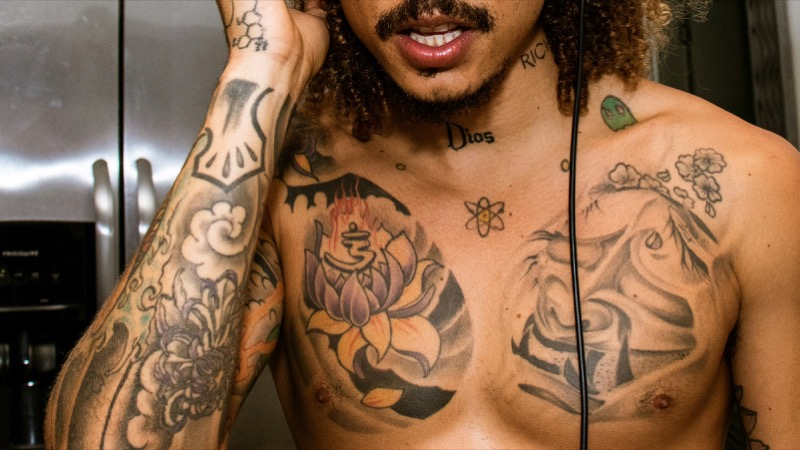
Sun exposure is the other major factor. The chest is out at the pool, the beach, and during any shirtless activity, which means UV hits color pigments harder than on arm placements you can cover with sleeves. Traditional color work on the chest will usually need touch-ups every 10 to 15 years, while black and grey ages significantly better.
A well-done chest piece from a skilled artist, with proper aftercare and sun protection, should hold up for 15 to 20 years before requiring any serious touch-up work. Color pieces will need maintenance sooner. Fine line work will need it earliest.
Pain & Healing
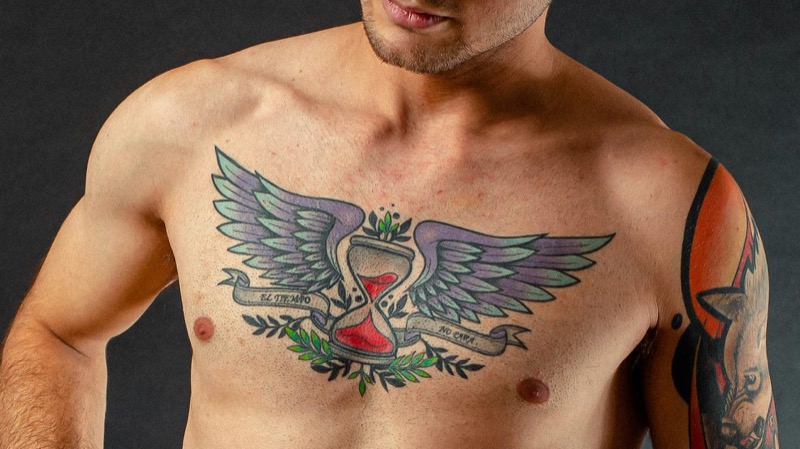
The chest sits in the upper half of the pain spectrum for most guys. It is not the worst placement on the body, but it is significantly more painful than the forearm or upper arm.
The outer pec is the most manageable area on the chest. The muscle provides a buffer under the skin, the skin itself is thicker than other chest zones, and the sensation tends to settle into a consistent scratching within the first few minutes. Most guys handle the outer pec without serious trouble.
The sternum and center chest are the hardest parts. Thin skin, bone directly underneath, and dense nerve endings combine to make the sensation sharp and specific. The closer your artist works to the sternum, the more intense it gets. Many guys describe sternum work as bordering on the pain of ribs and spine, which are typically ranked as the worst spots on the body.
The collarbone sits between the two. The sensation is sharper than the outer pec because the skin is thin and the bone is close, but it is shorter-duration because collarbone designs tend to be smaller. Under-chest and lower pec work is in its own category, ranking alongside ribs as one of the more painful areas on the body.
Healing on the chest takes 2 to 3 weeks for the surface and up to 6 weeks for the deeper layers of skin. The chest sweats more than most placements, which means the healing process requires more attention. Keep it clean, keep it moisturized with a fragrance-free lotion, and stay out of pools, saunas, and gyms for at least 2 to 3 weeks. Sleep position becomes the unexpected problem. Most guys sleep partly on their chest or side, and both positions put pressure on a healing tattoo. Plan to sleep on your back for the first week minimum.
Our full tattoo aftercare guide covers the healing routine step by step. The chest is harder to care for than the forearm because of the sweat, the shirt contact, and the sleep position issue, so following the routine closely is worth the effort.
Frequently Asked Questions
Do chest tattoos hurt?
Chest tattoos sit in the upper half of the pain spectrum for most guys. The outer pec is manageable, the collarbone is sharper, and the sternum and center chest are among the more painful spots on the body because of the thin skin and bone proximity. Under-chest and lower pec work rank alongside ribs as some of the most painful areas overall. If your design covers the whole chest, expect the sternum portion to feel significantly more intense than the pec portions.
How much does a chest tattoo cost?
A small to medium chest tattoo on a single pec runs $200 to $600 depending on size, style, and the artist’s rate. A full chest piece costs $1,500 to $4,000 or more, usually spread across 3 to 6 sessions. Realism and Japanese work sit at the higher end because of the time and skill required. Our tattoo cost breakdown covers pricing by size and style in more detail.
What tattoo style looks best on the chest?
Traditional American, neo-traditional, Japanese, and blackwork all match the chest scale and age well. Traditional and neo-traditional hold up best long-term because of the bold outlines. Japanese work flows naturally into sleeves and back pieces if you plan to extend later. Blackwork ages cleanly without color shifts. Realism is the highest-impact option for single pec or center chest portraits but costs the most. Fine line and minimalist styles age the worst on the chest because of the skin movement.
Can you get a chest tattoo as your first tattoo?
You can, but most artists will recommend starting somewhere easier. The chest sits at the upper end of the pain spectrum, and a first tattoo on the sternum or under-pec can be a difficult introduction. A forearm tattoo is the standard starting point for a reason. If you are set on the chest as a first tattoo, the outer pec is the most manageable zone and a medium-sized traditional or blackwork piece is the easiest style to sit through.
Do chest tattoos stretch with weight changes?
Yes, more than almost any other placement. The pec muscle changes shape with gains, cuts, and significant weight shifts, and the skin stretches accordingly. Thin ink is the most affected. Bold outlines and solid saturation hold up better. If you are planning major body composition changes in the next year or two, either wait until you stabilize or get work in a style that handles stretch like traditional, blackwork, or neo-traditional rather than fine line.
How long do chest tattoos take to heal?
Surface healing takes 2 to 3 weeks. Full healing of the deeper skin layers takes 4 to 6 weeks. The chest heals slower than the forearm because of the sweat, the shirt contact, and the sleep position issue. Plan to avoid pools, saunas, and intense workouts for the first 2 to 3 weeks, sleep on your back for the first week minimum, and keep the tattoo moisturized and out of direct sunlight during healing.
What is the most painful spot on the chest for a tattoo?
The sternum and the area directly under the pec are the two most painful spots on the chest. The sternum sits over bone with thin skin and high nerve density, which makes the sensation sharp and specific. Under-pec work borders on rib pain and ranks among the most painful areas on the body overall. The outer pec, by comparison, is one of the more manageable spots on the chest because the muscle provides a buffer under thicker skin.