The back is the biggest canvas on the male body and the last one most guys fill. That order is not random. A back tattoo is the placement you work toward, not the one you start with. You get your arms done, maybe your chest, and then you look at the back and realize you have been saving the biggest surface for the thing that deserves the most space.
A back piece is invisible in daily life and undeniable when it is seen. It lives under your shirt 95 percent of the time and stops a room the other 5. That dynamic changes how you think about design, style, and session commitment. Scale works differently here. A design that would dominate a forearm becomes a single element in a larger composition. And the question is never just “what design” but “how much of my back am I willing to give it.” Answer that first. Everything else follows.
Why the Back Works Differently
The back is not just another placement with more surface area. It operates on different rules than anything else on your body.
Scale. The largest uninterrupted canvas you have. A back piece can be monumental in a way no arm, chest, or leg tattoo can match. Full scenes, full characters, full environments. Nothing else gives you that.
Privacy. Hidden under a shirt, visible at the beach, the pool, or in private. You control when this tattoo exists in the world. That makes it the most intimate major placement on the body.
Pain spectrum. Wider range than any other placement. The shoulder blades are manageable. The spine is among the most painful spots on the body. The love handles are their own category of discomfort. One project, full spectrum.
Session commitment. A full back piece is never one session. Three to six sessions minimum for major work, sometimes spread across a year or more. This is not a walk-in decision.
Aging. The back sees almost no sun exposure compared to arms or chest. Color holds better here than anywhere else on the body. A well-done back piece at 20 years often looks better than a forearm piece at 10.
Back Tattoo Placement Zones
The back is not one canvas. It is four distinct zones plus a fifth consideration. Each has its own pain profile, visibility, and style logic. Where you place the tattoo matters as much as what you put there.
Upper Back & Shoulder Blades
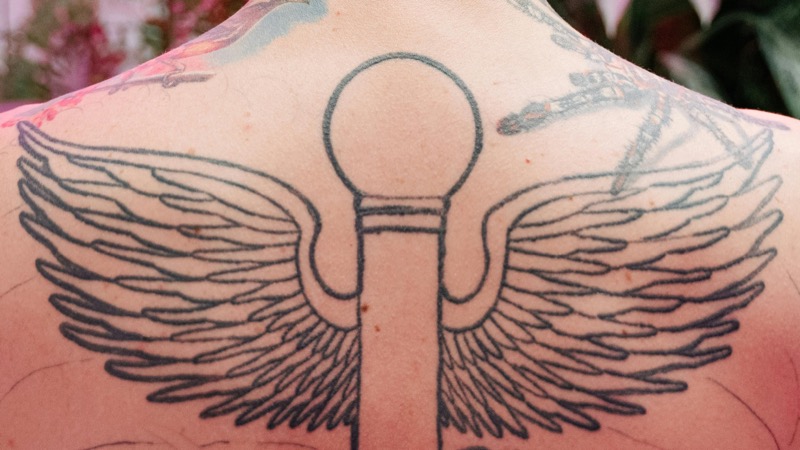
The upper back, spanning across and between the shoulder blades, is the most common starting point for men’s back tattoos. It is the zone guys fill first, often with a single piece between the blades or a symmetric composition spanning both sides.
Pain: 4 to 5 out of 10. The blades themselves have thick skin and solid muscle underneath. The center of the upper back is one of the more comfortable spots on the body to get tattooed. A warm, consistent scratch that stays tolerable. The edges near the spine and the ridge of the blade sharpen slightly but nothing dramatic.
Works best for: Wings, eagles, angel or demon imagery, symmetric religious pieces, mandalas, script across the shoulders, single large symbols, and any design that relies on center-line symmetry. The natural frame of the shoulder blades gives these designs a structure they would not have on a flatter surface.
Why it works here: The upper back is the only zone where a single piece looks complete on its own. A design between the shoulder blades works as a standalone. A design on the lower back with nothing above it looks unfinished. This is also the lowest-commitment entry point for back tattoos for guys. One session, one piece, no obligation to continue.
Watch for: Symmetry is harder than it looks. The human back is not perfectly symmetric, and a design that relies on perfect alignment will expose every millimeter of natural variation. A good artist compensates for body shape. A bad one tattoos the stencil as if the body is a flat sheet of paper. Also, sleep logistics. You are on your stomach or side for at least a week.
Cost: $400 to $1,500 single session.
Full Back Piece
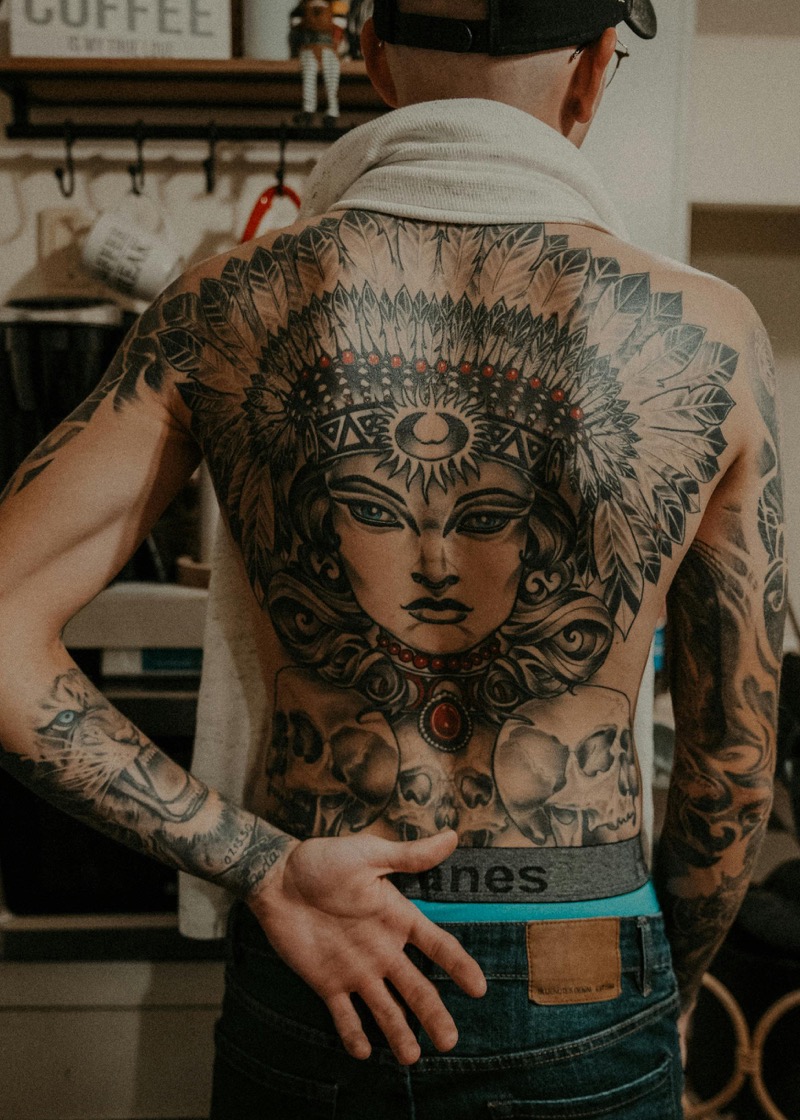
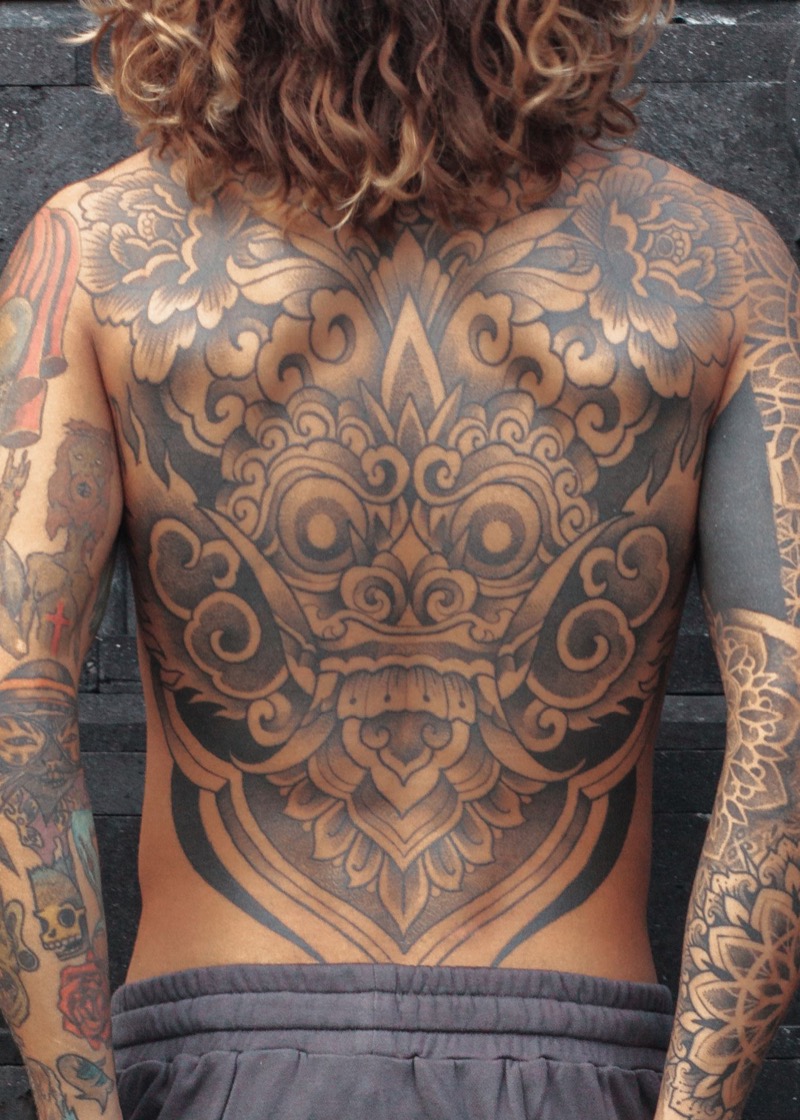
A full back tattoo covers the entire back as one unified composition. Upper, middle, and lower zones working together as a single image. This is the highest-commitment tattoo on the male body. It is always a project, never a single session.
Japanese bodysuit work, traditional American large-scale compositions, and black-and-gray realism are the three styles that dominate full back work because each was designed for body-scale storytelling. They assume the entire back as a starting canvas. Smaller styles scaled up tend to look thin and under-saturated at this size.
Pain: Variable by zone. The upper back and outer edges are manageable. The spine is sharp and focused. The lower back and love handles are among the most painful areas on the body. A full back piece means you experience the full spectrum in one project, and the sessions get harder as you go because later passes hit already-healed skin.
Works best for: Japanese dragons, tigers, koi, phoenix, and floral with full backgrounds. Traditional American battle scenes, ships, eagles spanning the full back. Black-and-gray realism with full religious scenes, nature landscapes, or portrait compositions.
Why it works here: Nothing else on the body delivers this scale of visual impact. A full back piece is the tattoo equivalent of a mural. You compose across the entire surface, and the result is something no other placement can match. There is a reason the most celebrated work in tattooing happens on backs.
Watch for: Time, money, and pain. Full back work typically runs $2,500 to $8,000+ and takes three to six sessions across six to twelve months. You will be healing large sections of your back for much of a year. You need an artist you trust completely because you will be working with them for a long time.
Cost: $2,500 to $8,000+ across three to six sessions.
Spine Tattoos
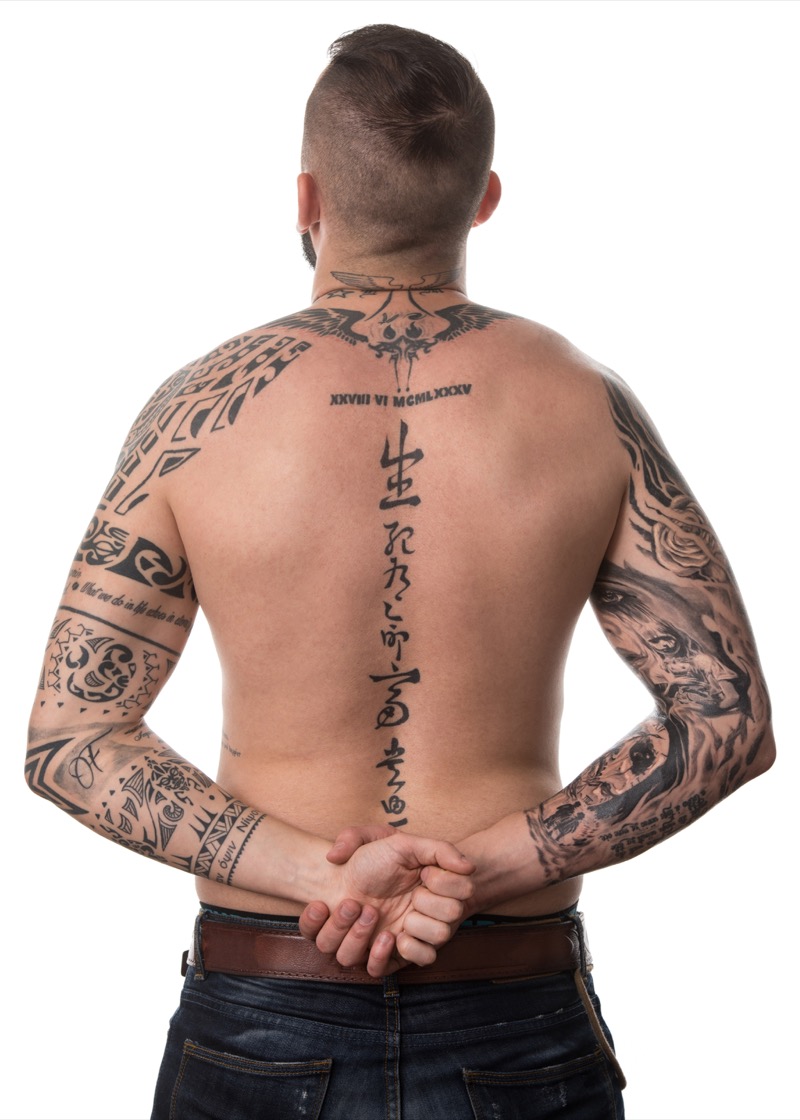
The spine is the narrowest and most painful back zone. A design running vertically down the center of the back follows the body’s natural line, which makes it one of the few placements where a long, thin composition looks right. Spine tattoos for men are among the most painful but most striking single-line placements available.
Pain: 7 to 8 out of 10. The spine is bone under thin skin with dense nerve concentration. This is not the warm scratch of muscle work. It is a focused sting that tracks directly along the vertebrae. Sharp, specific, and sustained for the entire session. Guys who have done both consistently rank spine work near ribs and sternum in terms of difficulty.
Works best for: Vertical script (names, quotes, Roman numerals), ornamental chains and filigree, floral vines, geometric line work, and single-needle fine-line pieces. The vertical axis of the spine gives these designs natural structure.
Why it works here: The spine line is the body’s natural center. A design here grounds the entire back. Even a single line of script down the spine looks complete because the anatomy frames it. No other single-line placement has this much inherent structure.
Watch for: Pain and healing. You cannot lean back against anything for at least a week. Chairs, car seats, and bed headboards all become problems. The spine also heals slower than the surrounding back because of constant micro-movement from breathing and posture shifts.
Cost: $300 to $1,200 depending on length and complexity.
Lower Back
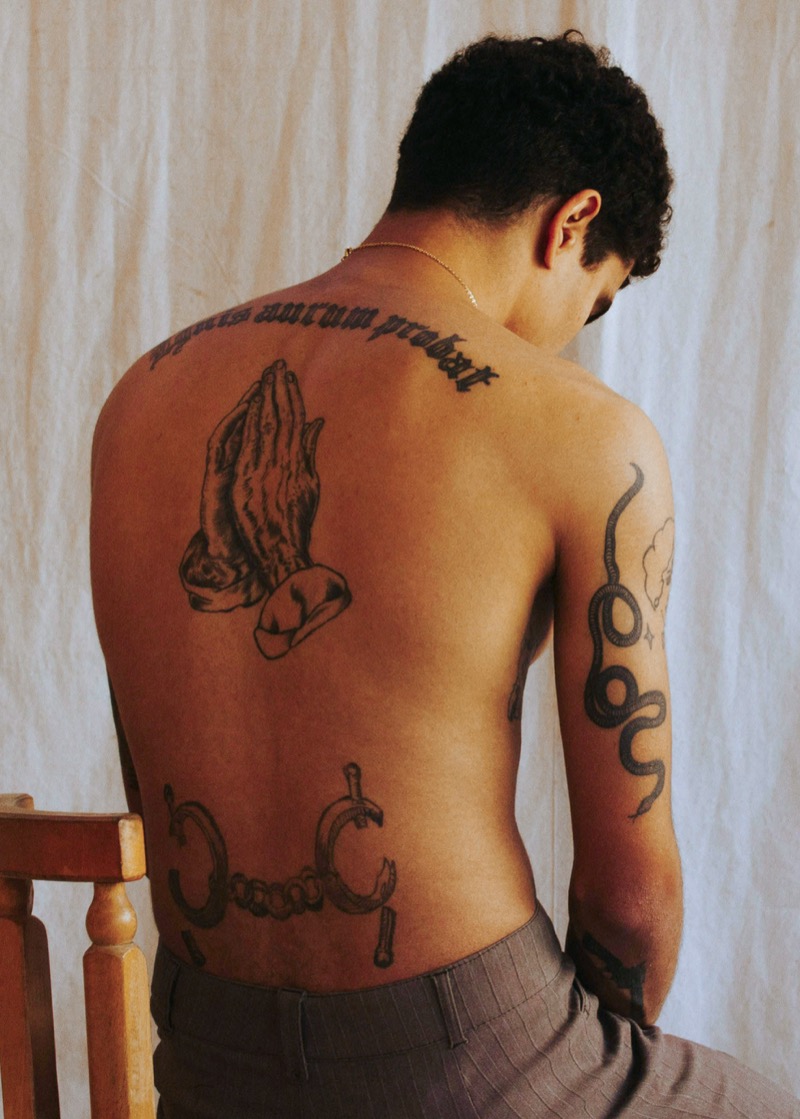
The lower back is a distinct zone with its own logic. It is hidden more than the upper back, visible only when your shirt is fully off or riding up. The surface is flatter and wider than the spine zone, which means it handles broader designs well.
Pain: 6 to 7 out of 10. The lower back sits over the lumbar region with less muscle padding than the upper back. The sensation is sharper than the shoulder blades but not as focused as the spine. The love handles on either side are the most painful part of this zone and rank alongside ribs in discomfort.
Works best for: Symmetric designs that sit in the small of the back, tribal and Polynesian bands, ornamental work, and pieces that connect upward to a larger back composition. The lower back also functions as a natural stopping point for designs flowing downward from the upper back.
Watch for: The lower back catches friction from waistbands and belts. Healing here requires loose pants and no tight waistlines for at least two weeks. Sun exposure is minimal, which helps color longevity.
Cost: $300 to $1,000.
Back-to-Shoulder Connection
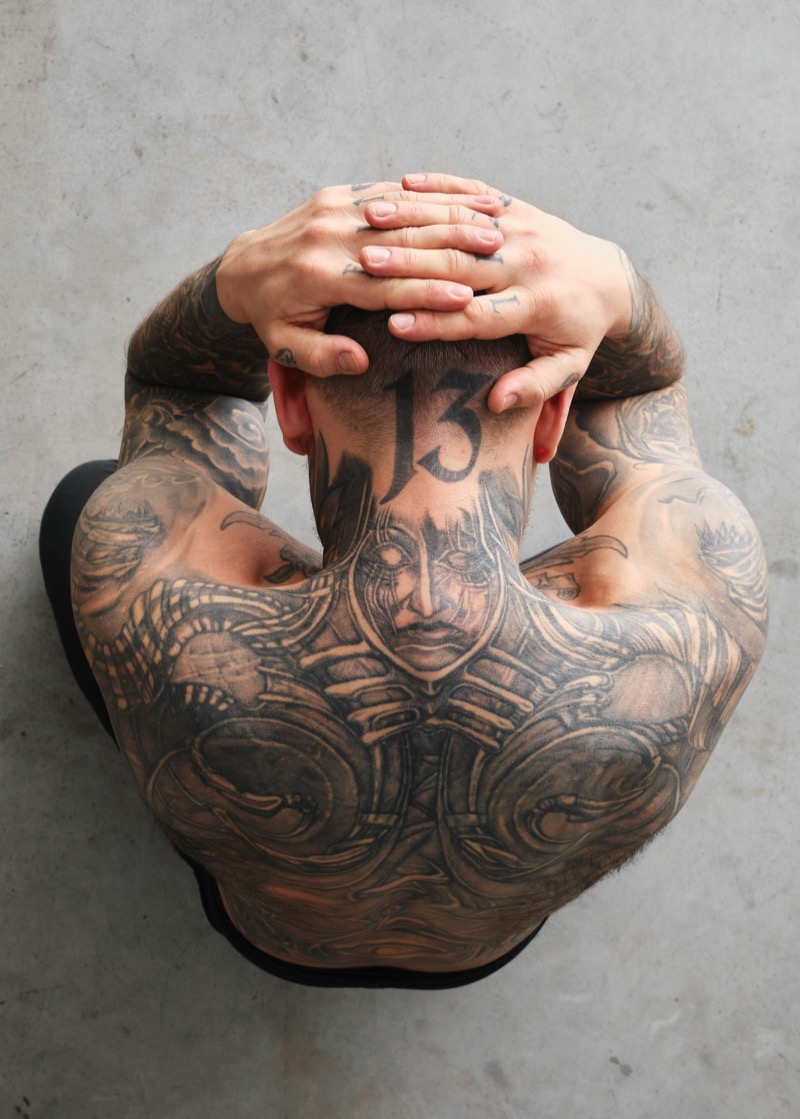
The back and shoulders share a border, and the decision to cross it or respect it matters. A back piece that stops at the shoulder line stays a back piece. A back piece that flows over the shoulder and onto the deltoid becomes the start of a bodysuit or a back-and-sleeve composition.
What crosses naturally: Japanese work (cloud bars, wind bars, water backgrounds that flow over the shoulder onto the arm), organic ornamental work, traditional American compositions designed for wraparound coverage.
What stays contained: Geometric borders, hard-edged blackwork, pieces with a clear frame or boundary line, realism with backgrounds that fade to skin.
If there is any chance you want sleeves or chest coverage later, tell your artist before the first back session. A back piece that ignores the shoulder line closes doors. One that leaves natural exit points keeps them open.
Best Tattoo Styles for the Back
The back handles every style, but scale changes everything. A style that works for a single shoulder blade piece may not scale to a full back, and a style designed for body-scale work may feel lost on a small zone.
Japanese & Irezumi
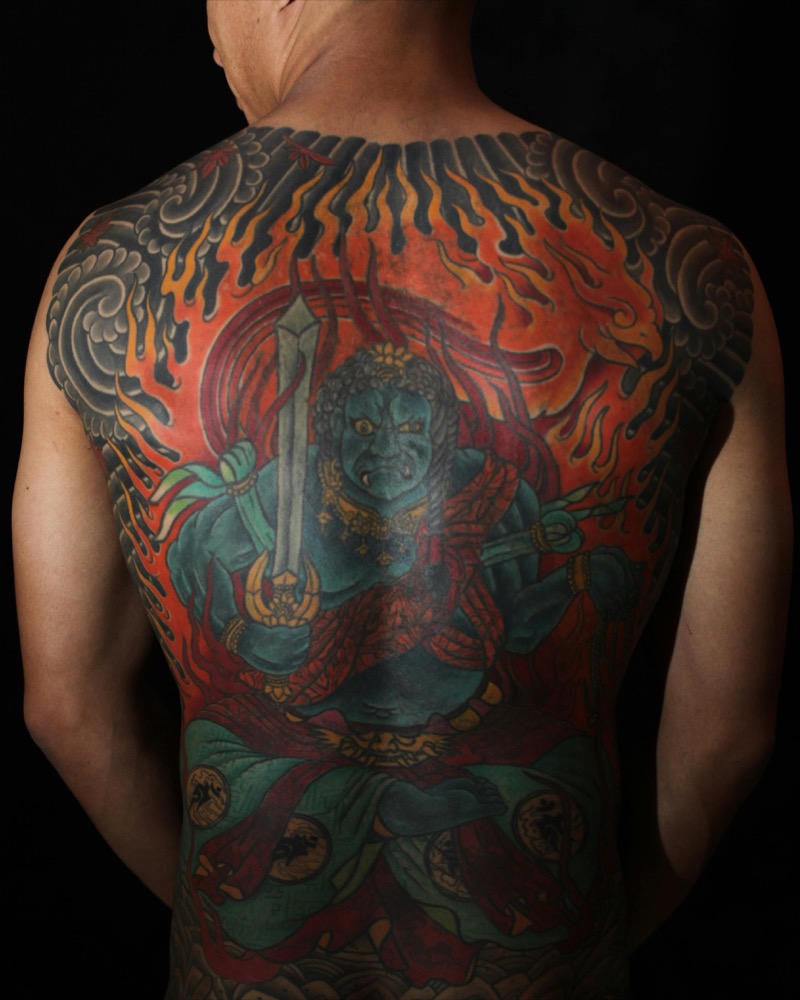
Japanese is the definitive back style. The tradition was designed for the back. Dragons, tigers, koi, phoenix, and full floral compositions with cloud, wind bar, and water backgrounds were conceived to fill the entire back as a single unified image. No other style uses the back as naturally or completely.
A traditional Japanese back piece assumes the composition will eventually extend to the buttocks, the sleeves, and the chest. If you are only getting a back piece, the composition stops at the waist and shoulders. If you are planning more, the artist leaves natural flow points open. The cost and time commitment are real. A full Japanese back piece takes 30 to 60+ hours across six to twelve sessions. The result is unmatched in scale and visual weight.
Traditional American
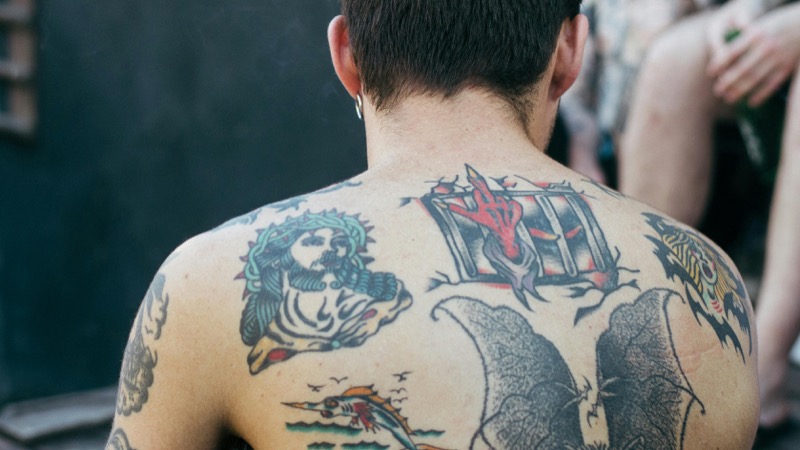
Bold outlines and saturated color read across a room, which is how back pieces get seen. At the beach, at the pool, from across a gym locker room. Eagles spanning the shoulder blades, ships across the full back, heart-and-banner compositions, and battle scenes all land on the back because the scale gives these designs room to tell a story.
Traditional American ages better on the back than anywhere else because of the combination of bold lines and zero sun exposure. A traditional back piece at 20 years looks closer to fresh than the same work on any other placement.
Blackwork & Tribal / Polynesian
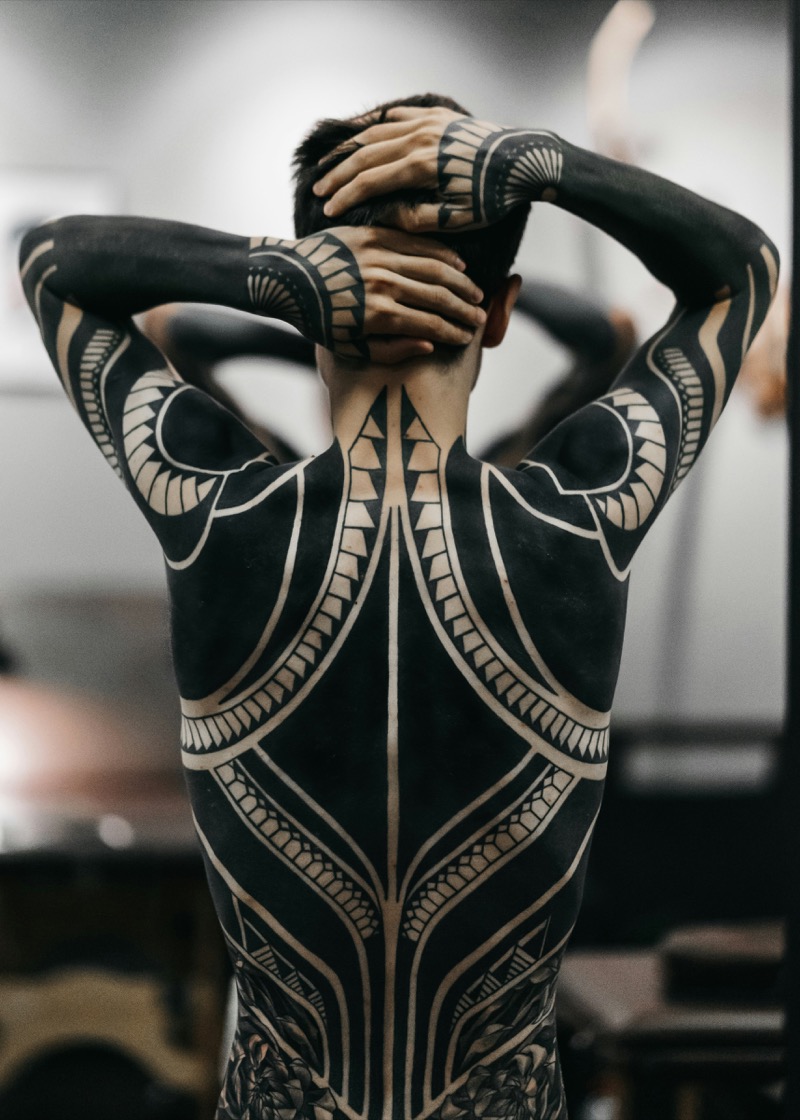
Heavy black saturation across the full back is one of the most striking choices a guy can make. Polynesian work in particular was designed for back-and-torso scale. The patterns follow muscle groups and body lines in ways that enhance the physique, conforming to anatomy instead of ignoring it.
The tradeoff is saturation time. Packing solid black across a full back takes multiple sessions, and the later passes over already-healed skin are the roughest part of the project. The finished piece, however, ages cleanly with no color maintenance required. Black stays black.
Realism
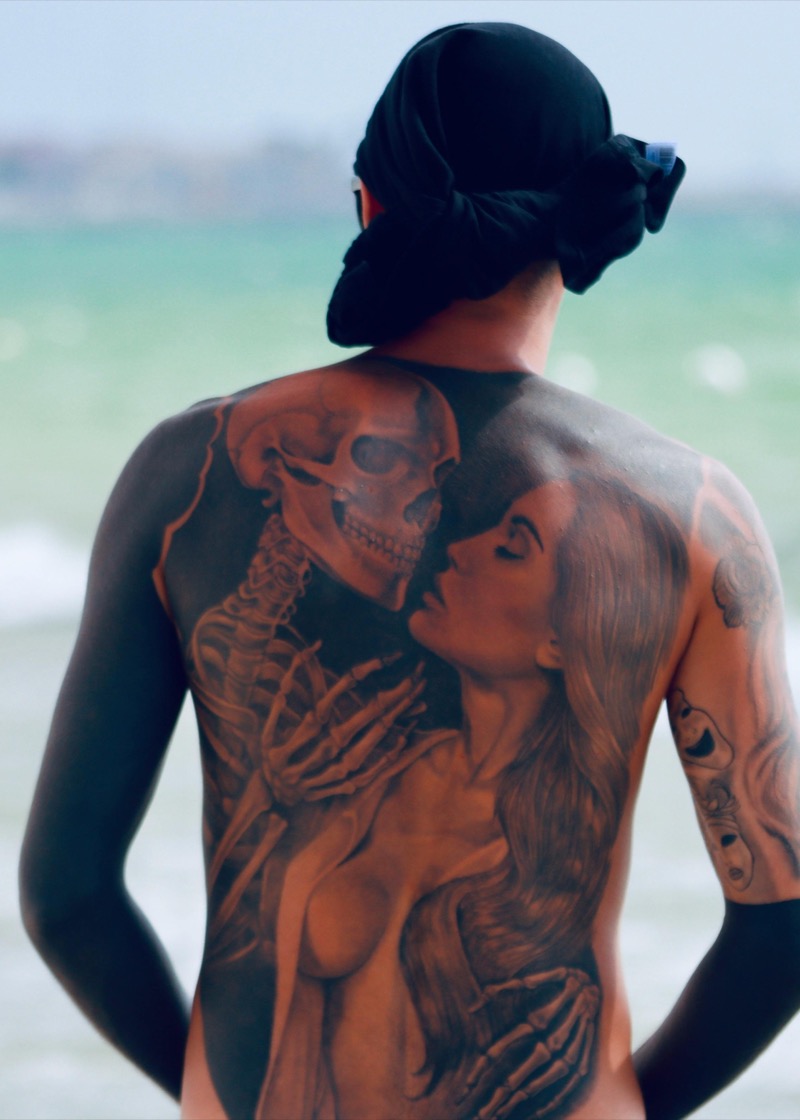
The back is the best realism canvas on the body. The surface is large enough for an artist to execute at full photographic scale, and the flat planes of the upper and lower back hold detail with less contortion distortion than the deltoid or pec.
Religious scenes, nature landscapes, family portraits, and animal compositions all work at back scale. The cost is high ($250 to $500 per hour), the session count is significant (four to eight sessions minimum for full-back realism), and the artist selection is critical. A realism piece at back scale exposes every flaw because there is nowhere for a mistake to hide.
Geometric & Ornamental
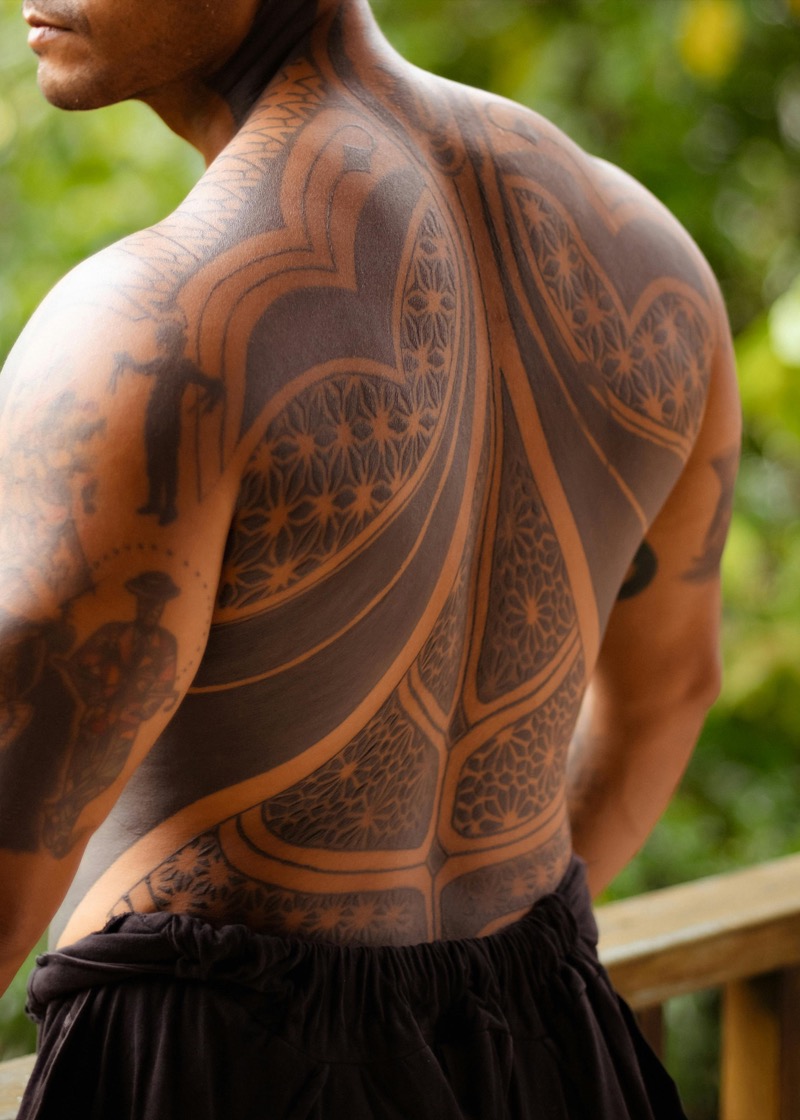
Sacred geometry, dotwork mandalas, and ornamental filigree work best on the upper back and spine. The symmetry of the shoulder blades frames geometric work naturally, and the spine line gives dotwork and ornamental chains a natural vertical axis to follow.
Geometric and ornamental styles age well on the back because they depend on lines and patterns, not graduated shading. The back’s minimal sun exposure helps dotwork in particular hold its crispness longer than it would on an arm.
Script & Lettering
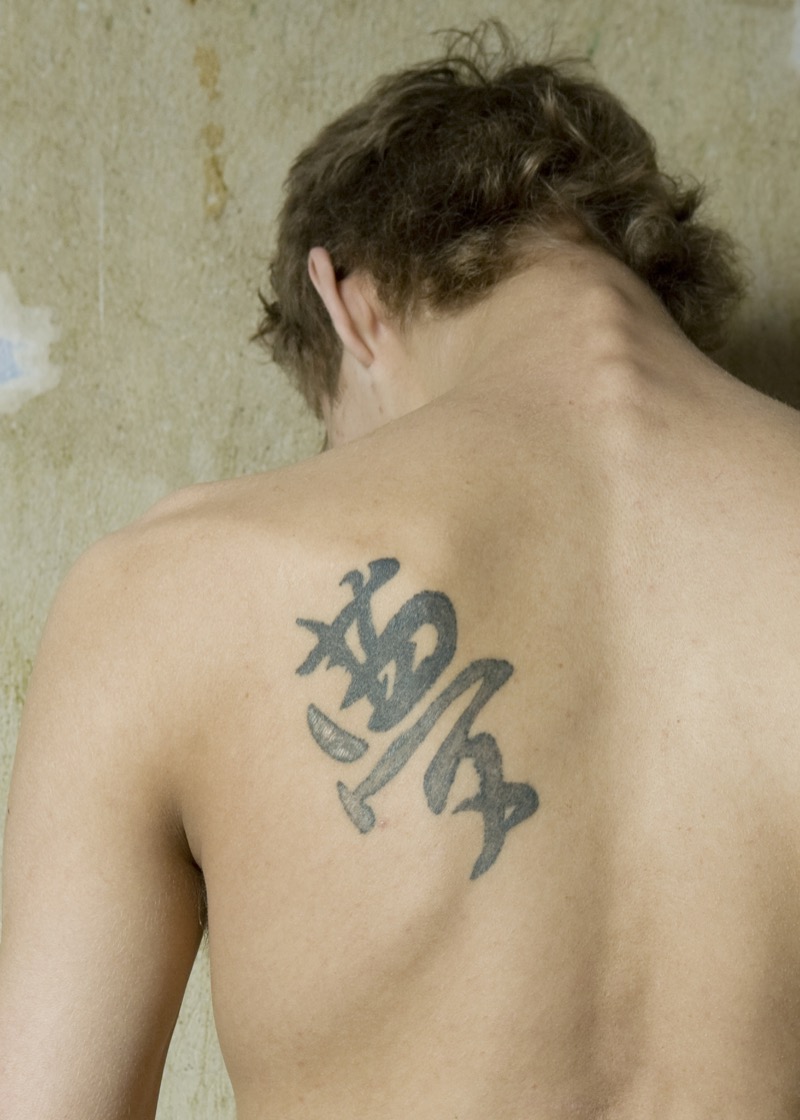
Script on the back works in two places. Across the upper back between the shoulder blades, or vertically down the spine. The upper back placement handles wider text. Quotes, names, multi-word phrases. The spine handles vertical text, Roman numerals, and single lines.
Font weight matters here more than on any other placement. The back is seen from a distance more than any other tattoo. Thin, delicate script that is legible at 12 inches disappears at six feet. Choose a font with presence, and print it at scale before committing.
Fine Line & Minimalist
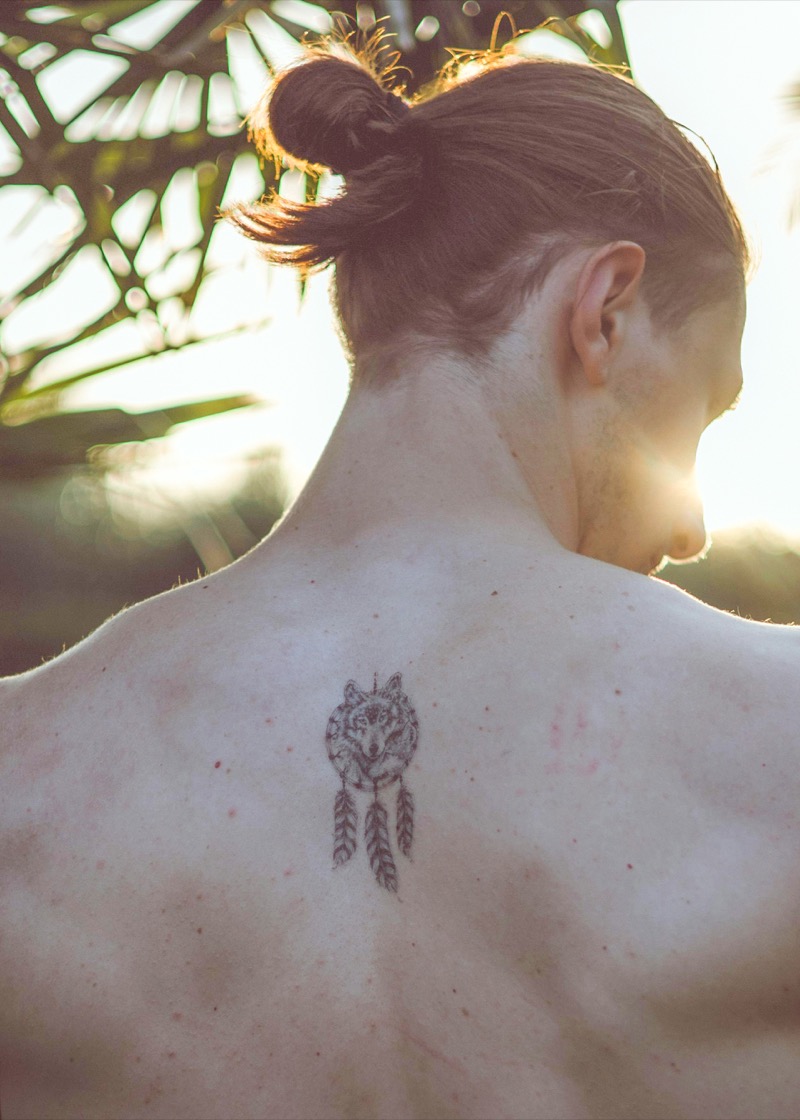
Fine line on the back works best on the upper back or spine. The skin here shifts less than the chest or deltoid, which means thin ink holds its definition longer. A fine-line spine piece or a single-needle geometric upper back design can age well, better than the same work on an arm or chest.
The caveat is scale. Minimalist work on the largest canvas on the body can look lost if the placement does not ground it correctly. Near the spine, between the shoulder blades, or centered at the top of the back. Those are the three spots where small, delicate work looks like it belongs and not like it got lost on the canvas.
Back Tattoo Ideas for Men
Upper Back Tattoos for Men
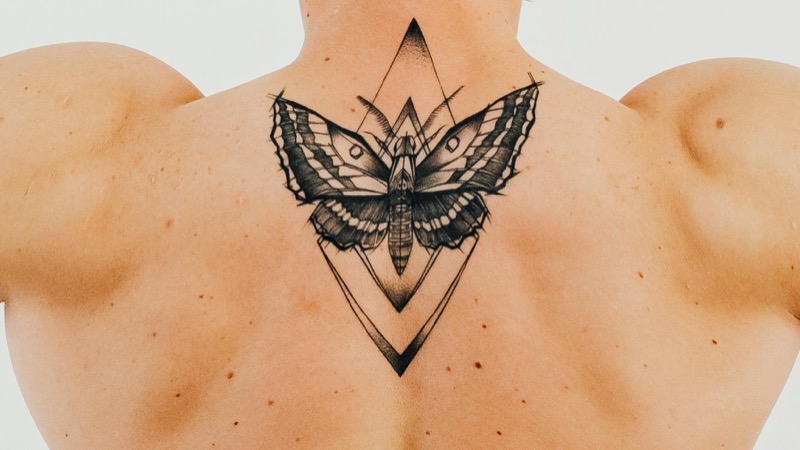
The upper back is the most popular starting point for mens back tattoos. A single piece between the shoulder blades or spanning both sides works as a complete composition on its own. Eagles, wings, crosses, mandalas, script, and single-symbol work all fit this zone. For guys researching upper back tattoos for men, this is the lowest-commitment entry point. One session, one piece, and the option to expand later if you want to.
Full Back Tattoos
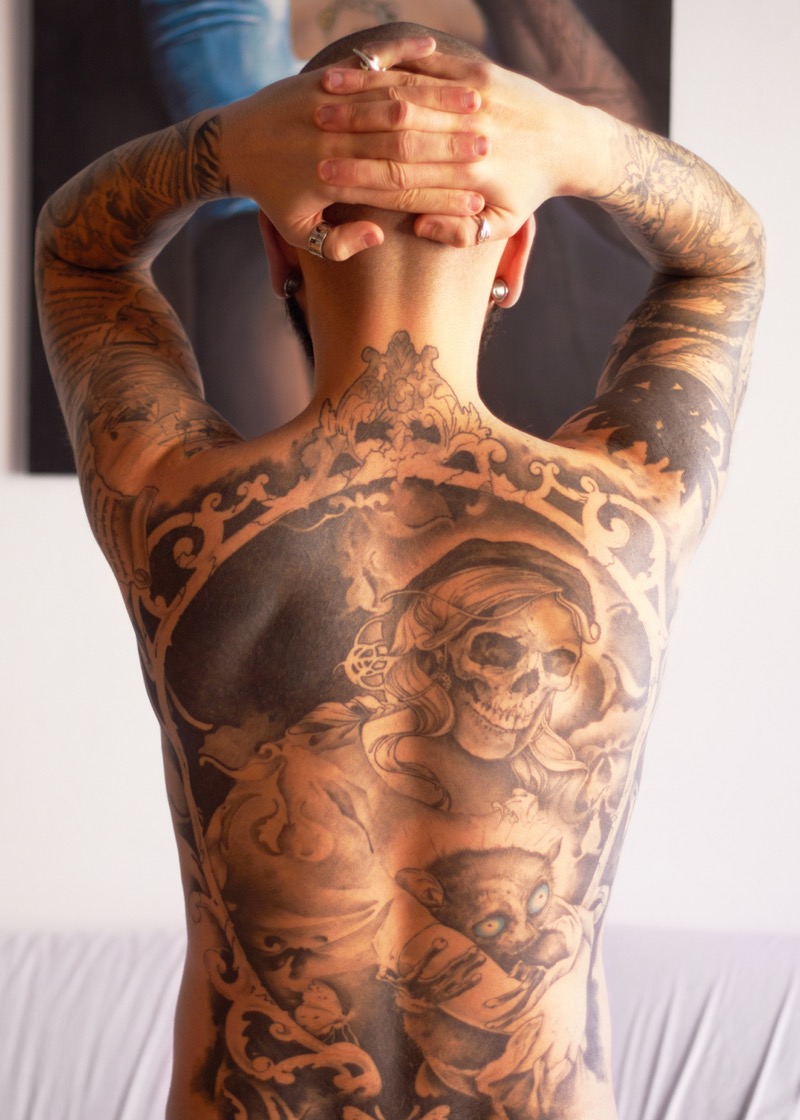
A full back piece is a project, not a tattoo. It commits you to months of sessions, thousands of dollars, and a healing process that dominates much of a year. The result is the most visually commanding tattoo on the male body. Japanese, traditional American, and black-and-gray realism are the three styles that scale to full-back coverage. Do not start a full back piece until you have seen your artist’s healed full-back portfolio. This is not the placement to be someone’s first large-scale project.
Spine Tattoos
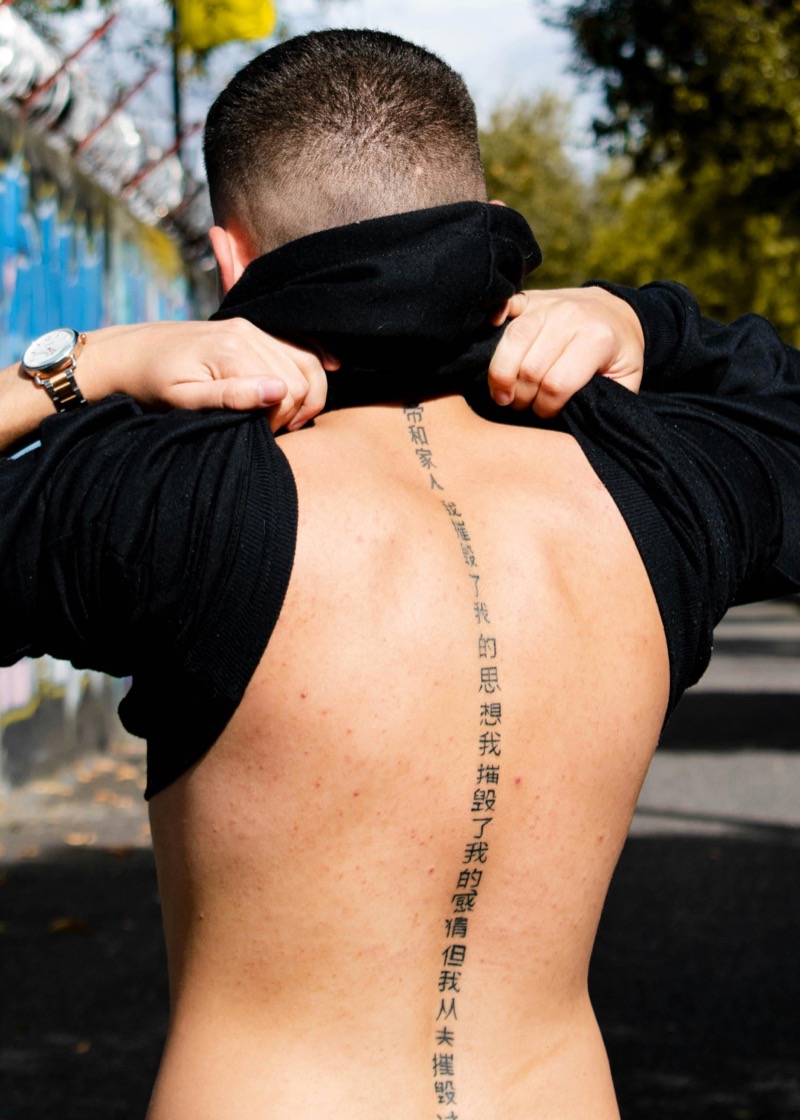
A vertical script, ornamental chain, or single-line geometric piece down the spine uses the body’s natural center line as a frame. The pain is real. Bone under thin skin. But the result is a design that looks structurally anchored in a way no other single-line placement can match. One session, high pain, high reward.
Small Back Tattoos for Men
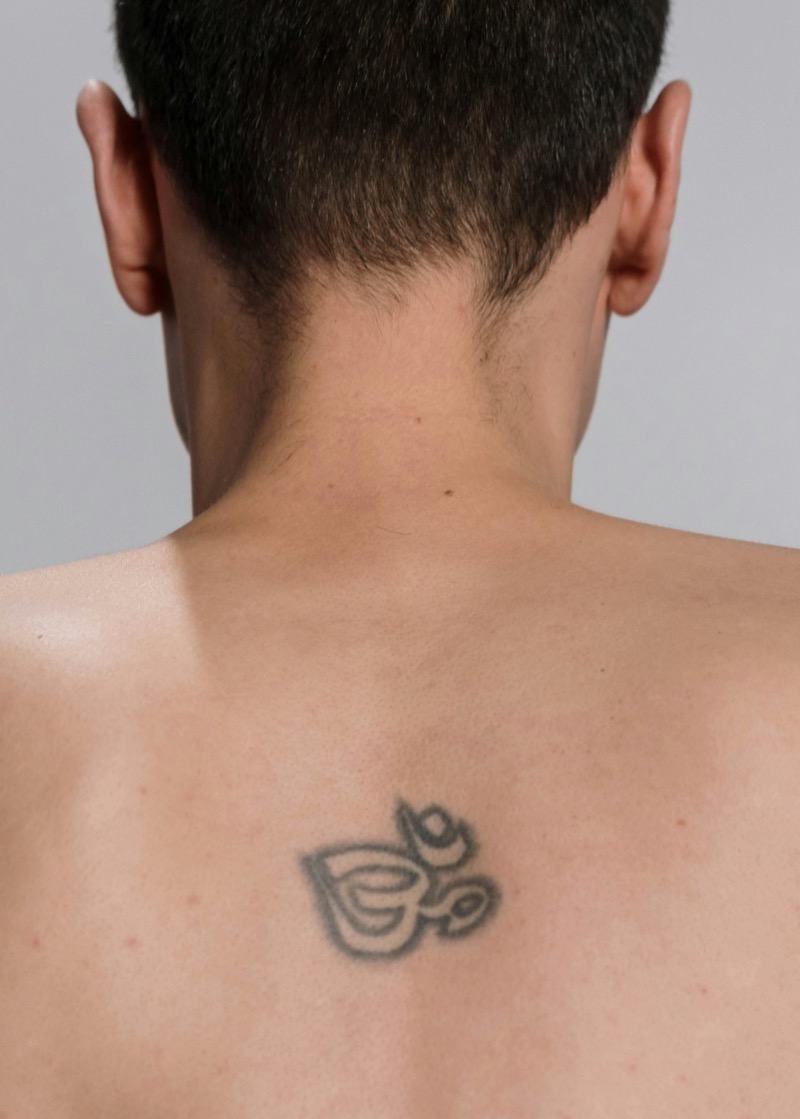
A small back tattoo can work, but placement determines whether it looks good. Between the shoulder blades, at the top of the spine, or centered in the upper back. Those are the three spots where a small piece looks like it belongs. Anywhere else, a small tattoo on the back’s large canvas looks isolated and unfinished. Shop minimum pricing applies. A two-inch piece often costs nearly as much as a four-inch piece, so consider sizing up slightly for better visual return.
Meaningful & Memorial Designs
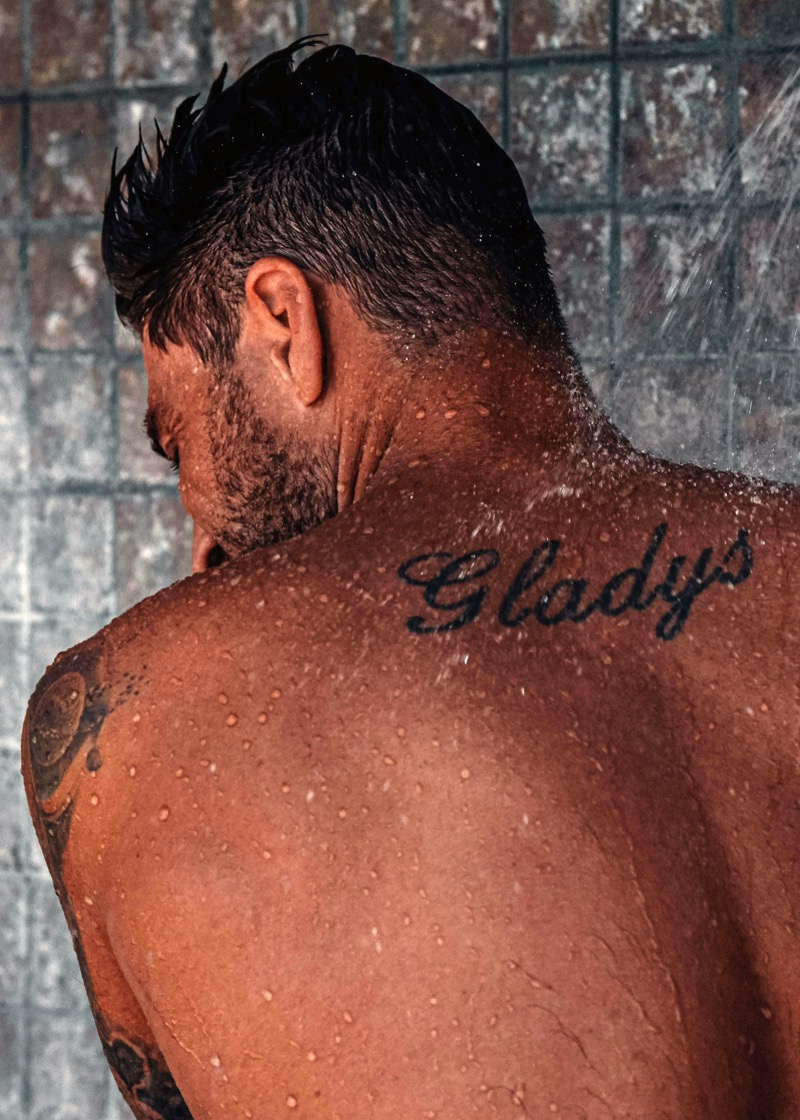
The back handles meaning differently than any other placement. A memorial piece here is the most private tattoo a guy can get. It is seen only by people close enough to see him shirtless. Names, dates, coordinates, portraits, and full-scene memorials all land on the back. The upper back between the shoulders is the most common spot for memorial script and dates.
Wing & Angel Designs
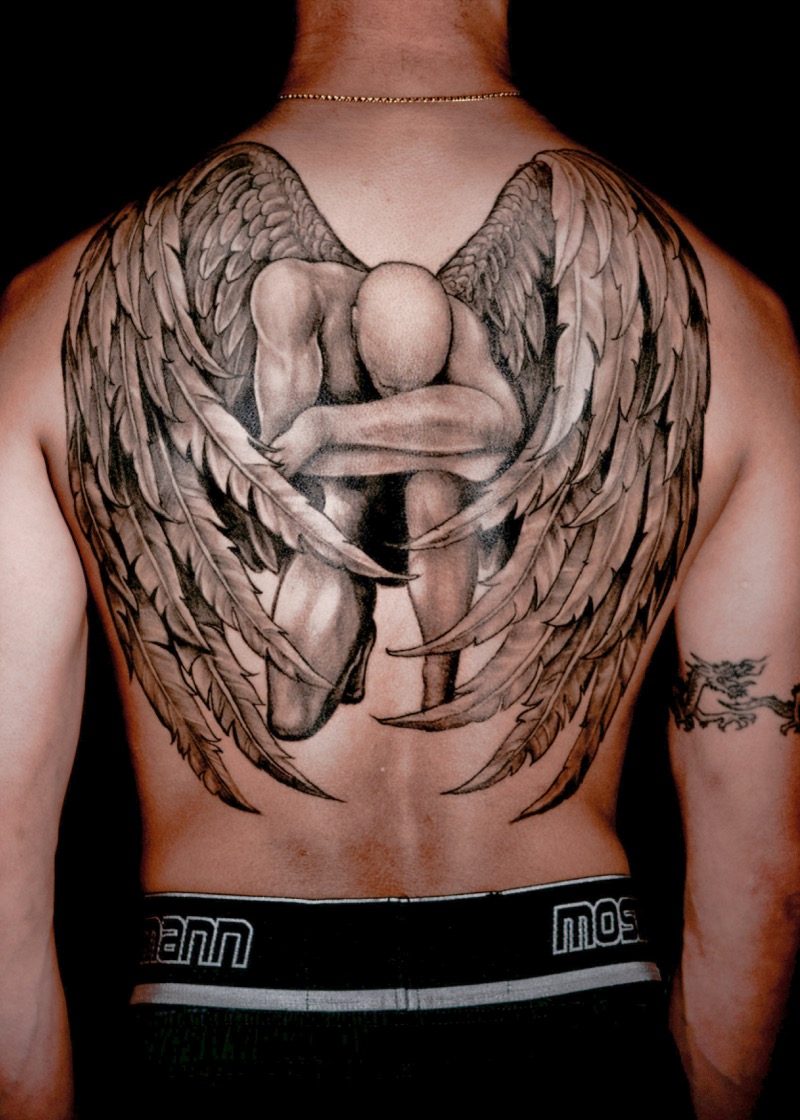
Wings spanning the full upper back are one of the most iconic back tattoo designs for men. The natural symmetry of the shoulder blades frames wing compositions perfectly, and the scale of the back gives wings room to extend fully. No other placement delivers that wingspan. Angel, demon, and mythological wing designs all follow the same placement logic. The shoulder blades are the origin points, and the wings spread outward from center.
A Note on Skin Tone
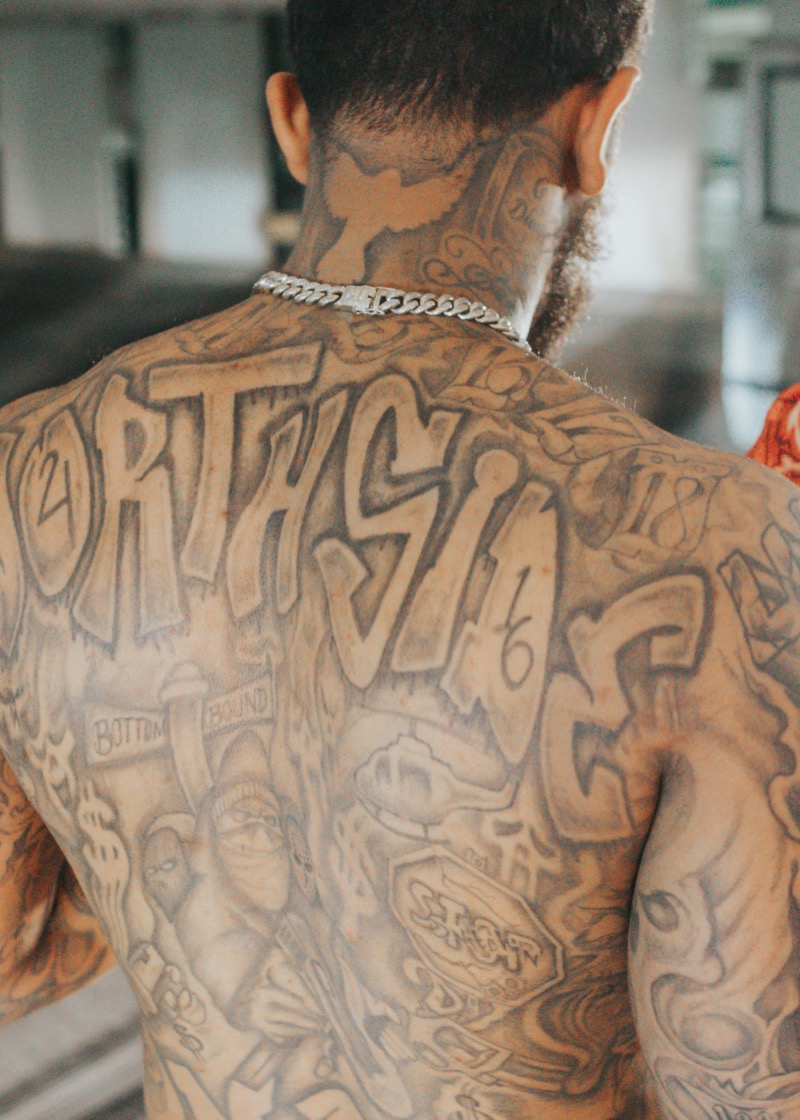
Bold black ink and high-contrast designs show best on darker skin tones. Fine line and pale color washes lose definition. Tribal, blackwork, Japanese (with heavy black background elements), and traditional American are the strongest options for back work on darker skin. Realism and color work require an artist experienced with darker skin. Ask to see their portfolio for clients with your skin tone specifically. Do not let anyone tell you “all ink works the same on every skin tone.” It does not.
How Back Tattoos Age
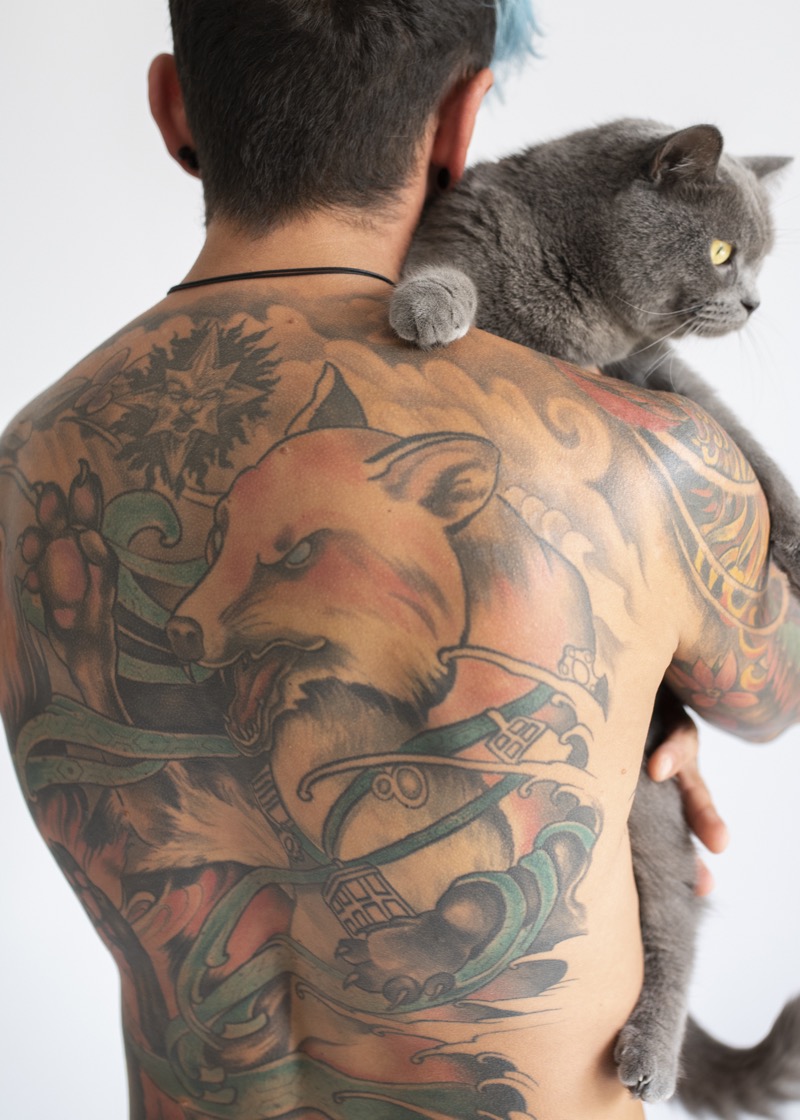
The back ages better than any other major placement. It sees almost no UV exposure compared to arms, chest, or shoulders. Color fades slower and black stays blacker longer. A well-done back piece at 20 years often looks better than a forearm piece at 10 for one simple reason. The sun rarely touches it.
The back stretches less than the chest or stomach with weight changes. The skin across the shoulder blades and upper back is relatively stable through weight fluctuation. The lower back moves more but still less than the stomach or chest. Muscle changes from training affect the upper back more than the lower back. A guy who puts on significant lat and trap muscle will see more movement in designs that span the shoulder blades than in designs that sit on the spine or lower back.
What holds up: Japanese (heavy saturation, black background), traditional American (bold lines, zero UV), blackwork and tribal (density-based aesthetic, no color shift), geometric (structure over subtlety).
What struggles: Fine line across the shoulder blades (muscle movement from training), pale color on the lower back (friction from waistbands), tiny text (smaller at back-viewing distance than you expect).
Touch-up timeline: Color work on the back can go 15 to 25 years with no touch-up because of minimal UV exposure. Black and gray can go 20+. The back is the lowest-maintenance placement on the body.
Pain & Healing
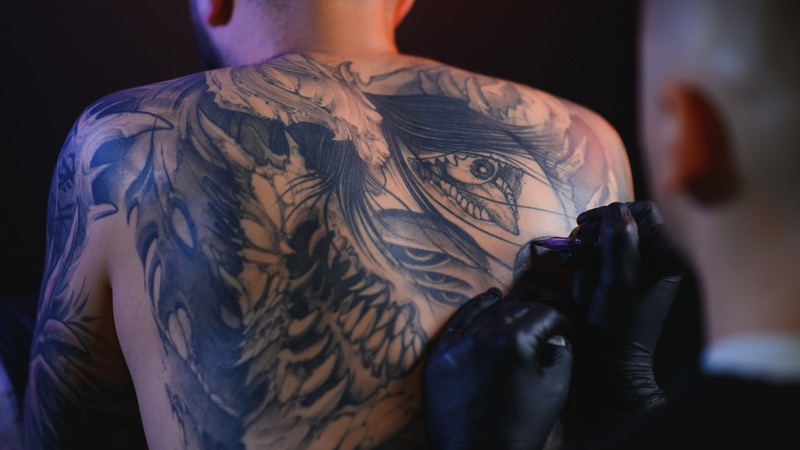
The back has the widest pain spectrum of any placement on the body. The upper back is easy. The spine and love handles are not. If you are getting a full back piece, you will feel everything from manageable warmth to sharp, sustained discomfort in the same project.
Upper back and between shoulder blades: 4 to 5 out of 10. Thick skin, solid muscle. A warm, consistent scratch. Among the most comfortable spots on the body to get tattooed.
Shoulder blade edges near spine: 5 to 6 out of 10. The flat center of the blade is fine. The ridge and inner edge sharpen into a more focused sensation.
Spine: 7 to 8 out of 10. Bone, thin skin, dense nerves. A focused sting that tracks along the vertebrae. Sharp, specific, and sustained. Consistently ranked near ribs and sternum.
Lower back: 6 to 7 out of 10. Less muscle padding than the upper back. The love handles are the worst part of this zone. Thin skin, rib proximity, and a ticklish-sensitive nerve response that makes every pass feel worse than it is.
Full back (composite): You will experience everything from 4 to 8 in the same project. The sessions get harder as you go because later work passes over already-tattooed, healed skin.
Healing Timeline
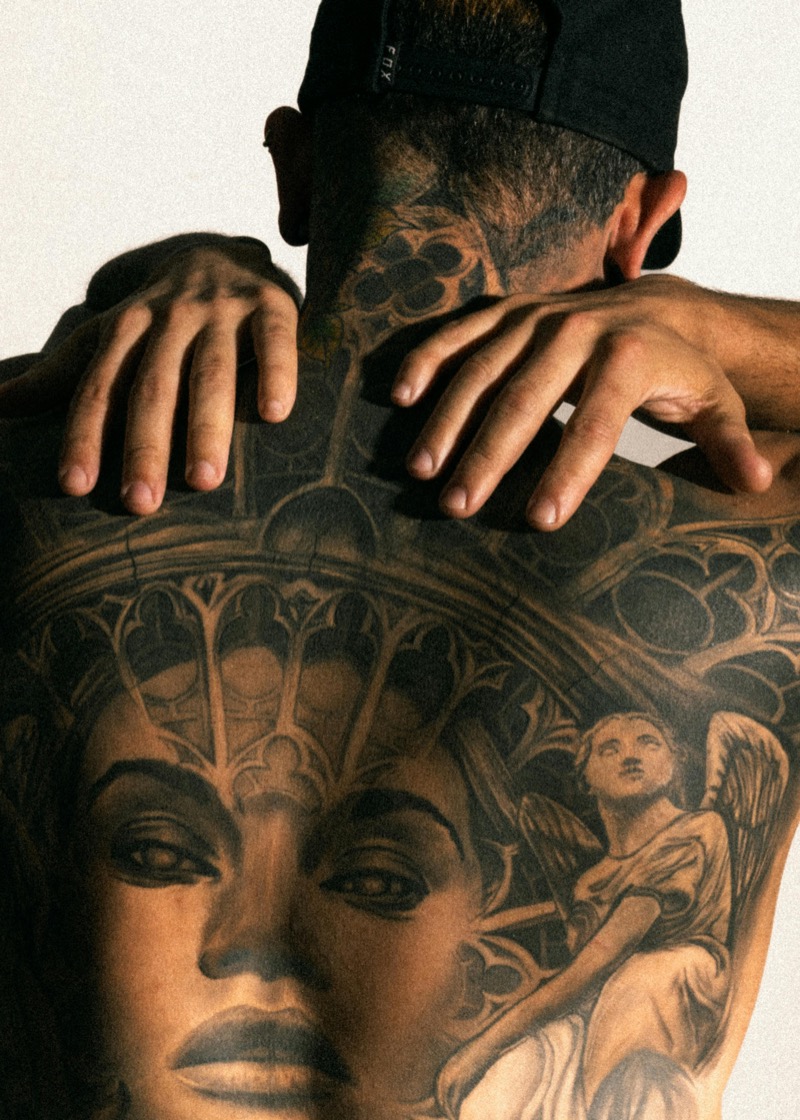
Surface healing: Two to three weeks. The tattoo will look healed on the outside.
Deep healing: Four to six weeks before the skin fully settles.
Sleep position: Stomach or side only for the first week minimum. You cannot sleep on your back with a fresh back tattoo. Full stop.
Clothing: Loose t-shirts only. Nothing tight, nothing that rubs. Shirt-off time helps the tattoo breathe. Working from home during healing is ideal if you have the option.
Chair contact: Avoid leaning back against chairs, car seats, and headboards for at least a week. The friction and pressure slow healing and risk infection.
Gym: No back work, no exercises that stretch the back skin, no sweat on the tattoo for minimum two weeks. Full back pieces may need three to four weeks before upper body training resumes.
Swimming: No pools, oceans, saunas, or hot tubs for three to four weeks minimum.
Reach limitation: You cannot apply aftercare lotion to your own back easily. Have someone help, or use a lotion applicator with a long handle. This is the one placement where solo aftercare is a logistical problem.
For a full breakdown of pain by body zone, check the tattoo pain chart.
Frequently Asked Questions
Are back tattoos painful?
The back has the widest pain range of any placement. The upper back and shoulder blades sit at a manageable 4 to 5 out of 10, with thick skin and solid muscle absorbing most of the work. The spine jumps to 7 to 8 out of 10 because of thin skin over bone and dense nerve endings that produce a sharp, focused sting. The love handles rank alongside ribs as some of the worst spots on the torso. A full back piece takes you through the entire spectrum.
How much does a back tattoo cost?
An upper back piece between the shoulder blades runs $400 to $1,500 for a single session. A spine piece runs $300 to $1,200 depending on length and complexity. A full back piece costs $2,500 to $8,000+ across three to six sessions depending on style, detail, and artist rate. Japanese and realism work sit at the higher end because of background fill and shading requirements. For a deeper breakdown, see the tattoo cost guide.
What style looks best on the back?
Japanese is the definitive back style. The tradition was designed for back-scale compositions and flows naturally into sleeves and chest work. Traditional American holds up longest because of bold outlines combined with the back’s minimal sun exposure. Black-and-gray realism delivers the highest visual impact for single-scene compositions. Blackwork and Polynesian work age cleanly with zero color maintenance required.
Is the back a good spot for a first tattoo?
The upper back between the shoulder blades is a strong first-tattoo placement. The pain is manageable, the canvas is large enough for a meaningful design, and you control the visibility completely. It is a better first-tattoo choice than ribs, sternum, or spine. The lower back and spine zones are not ideal first tattoos because of higher pain levels and more difficult healing logistics.
How many sessions does a back tattoo take?
An upper back piece or spine piece typically takes one session of three to five hours. A full back piece takes three to six sessions across six to twelve months depending on size, style, and detail. Japanese and realism work take the longest because of background fill, shading layers, and color packing. Each session runs three to six hours depending on your tolerance and the artist’s pace.
Do back tattoos stretch with weight changes?
The back is less affected by weight fluctuation than the chest or stomach. The upper back and shoulder blade area stays relatively stable. The lower back moves more but still less than the abdomen. Muscle gains from significant back training (lats, traps) affect designs that span the shoulder blades more than designs that sit on the spine or lower back. If you are actively building muscle, tell your artist so they can account for potential stretch in the composition.
Can a back tattoo connect to sleeves or a chest piece later?
Yes, but plan for it from the first session. Japanese work extends most naturally from back to sleeves or chest because the tradition assumes multi-zone compositions. Traditional American can extend but requires planned border work at the shoulders. A back piece with hard borders or closed framing at the shoulder line is difficult to extend later. Tell your artist at the consultation if sleeves or chest coverage are in your future. A good artist leaves natural exit points at the shoulders and sides for future expansion.